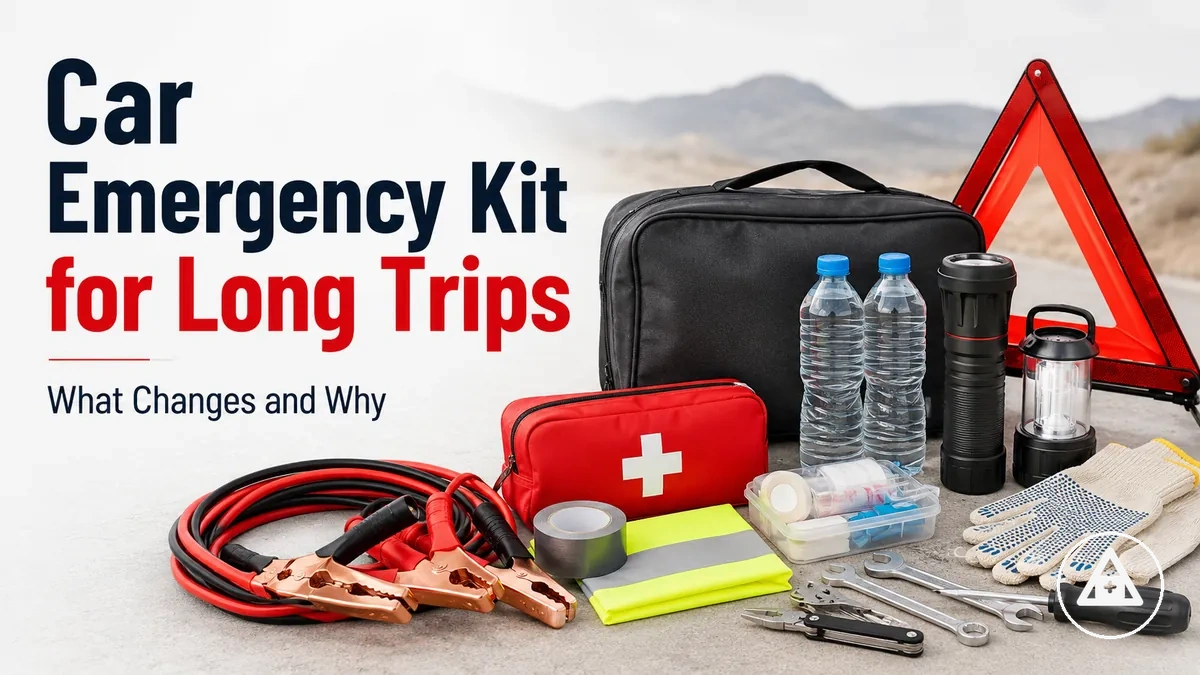
Car emergency kit for long trips: road trip readiness and selection criteria
A car emergency kit for long trips depends on the level of coverage needed for distance, delay risk, and highway driving exposure. Longer trips usually increase the chance of extended waits, changing conditions, or reduced access to assistance, which is why long trips often require greater kit depth than routine local driving.
The road trip decision frame focuses on matching travel readiness to likely conditions rather than simply carrying more supplies. Coverage may vary based on route type, weather, passenger needs, and how long a delay could last. A roadside emergency kit is most useful when its contents align with the situations a driver is more likely to face during extended travel. The main selection criteria are distance, delay risk, highway exposure, route type, weather, and passenger needs.
A car emergency kit for long trips should be evaluated as a selection topic rather than a product catalogue. A standard kit foundation may be suitable for everyday driving, while a long-distance driving kit may need additional coverage depending on travel conditions and expected risks. This page focuses on how coverage and readiness requirements can change across different road trip scenarios. It does not focus on survival-kit planning, camping equipment, or product-led recommendations.
What changes in a car emergency kit for longer driving
A car emergency kit for long trips changes because longer driving usually increases exposure time, distance from help, and delay risk. While the purpose of the kit remains the same, the coverage may need to expand to address road trip conditions that are less common during short local journeys. Understanding these changes helps separate baseline preparedness from long-distance readiness.
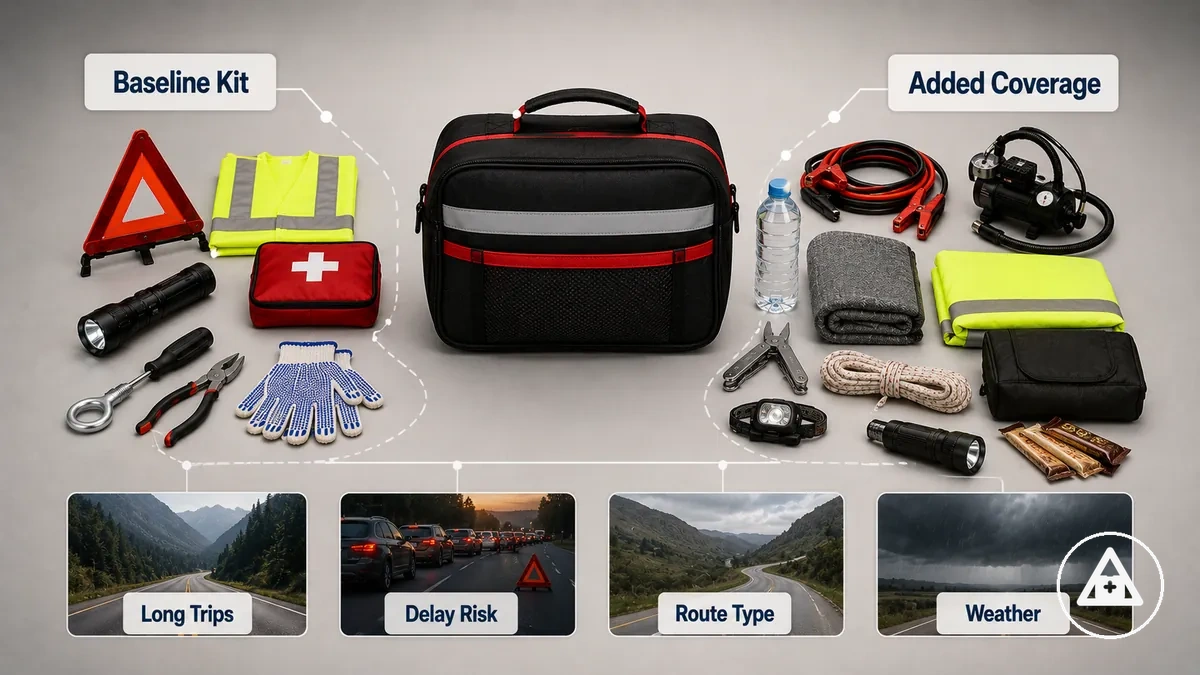
A baseline kit often focuses on common roadside issues and short disruptions. Long trips may introduce additional considerations related to route length, passenger needs, weather changes, highway travel, and the possibility of a longer roadside stop. As these conditions change, the level of added coverage that may be useful can also change, depending on the travel scenario.
The car emergency kit remains the central item in both situations, but the comparison below highlights what stays consistent and what may change when road trip conditions become part of the decision.
| Baseline Kit | Long-Trip Readiness |
|---|---|
| Focused on common local driving interruptions | Accounts for longer delays and greater distance from assistance |
| Supports routine roadside needs | May require added coverage for route, passenger, and weather variables |
| Prepared for shorter disruptions | Prepared for conditions that can extend a roadside stop |
This section focuses on how long-trip requirements can change a car emergency kit without replacing dedicated seasonal guidance or a full checklist. For broader context across preparedness topics, see the car emergency kit hub.
Standard kit contents that still matter
A car emergency kit for long trips still depends on the same baseline kit categories used for everyday preparedness. Longer travel may increase the need for added coverage, but the core purpose of the kit remains supporting common roadside conditions, delays, and minor disruptions. Understanding which categories remain essential helps clarify what should stay consistent before expanding for road trip conditions.
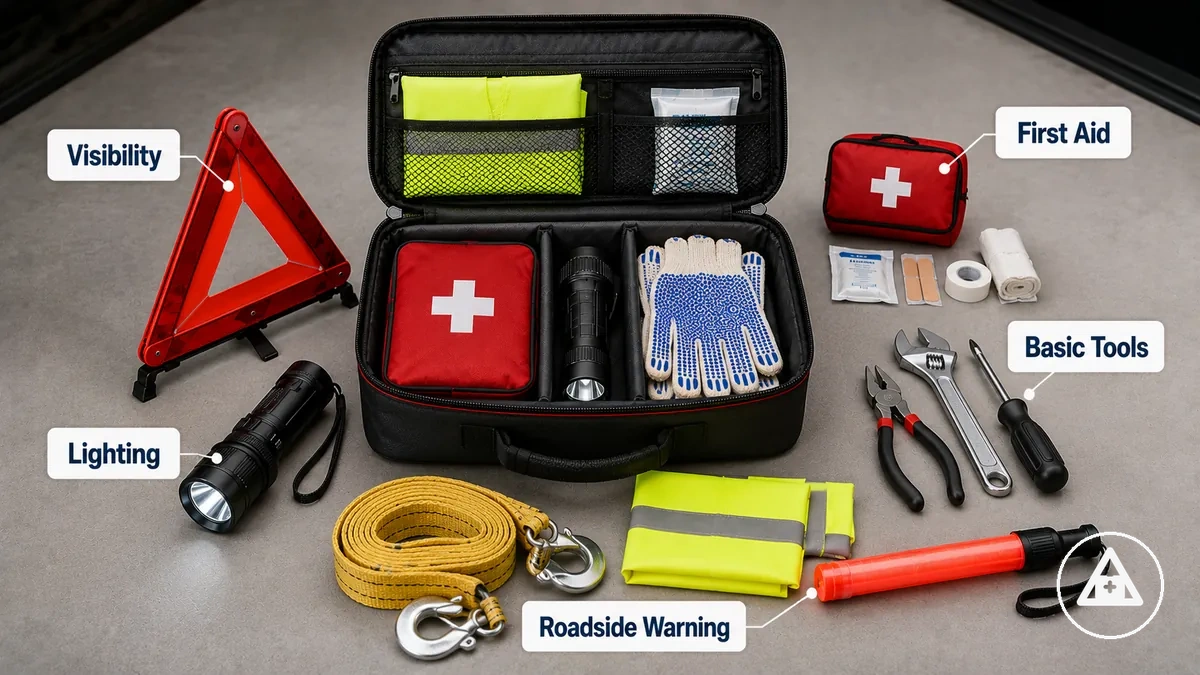
- Visibility: Supports awareness during a roadside stop, particularly when lighting conditions are limited.
- Lighting: Helps with inspection or temporary roadside tasks when visibility is reduced.
- First aid: Provides basic support for minor injury response during travel.
- Basic tools: Can assist with simple vehicle-related situations where temporary support may be useful.
- Roadside warning supplies: Help make a stopped vehicle more noticeable to approaching traffic.
These baseline categories usually remain relevant whether the trip is short or long. The main difference is often added coverage depth rather than a completely different kit, with decisions shaped by route, passenger, weather, and delay considerations. For a broader explanation of category planning and coverage depth, see kit contents for longer driving.
Added coverage for distance, delay, and highway exposure
Long-distance driving can increase exposure to delays, higher-speed roadside stop conditions, and greater distance from services, which may change the depth of coverage needed in a car emergency kit. Added coverage for distance, delay, and highway exposure focuses on conditions that may extend waiting time or limit immediate access to support rather than replacing the baseline kit. Understanding these conditions helps connect route-related exposure to practical coverage decisions.
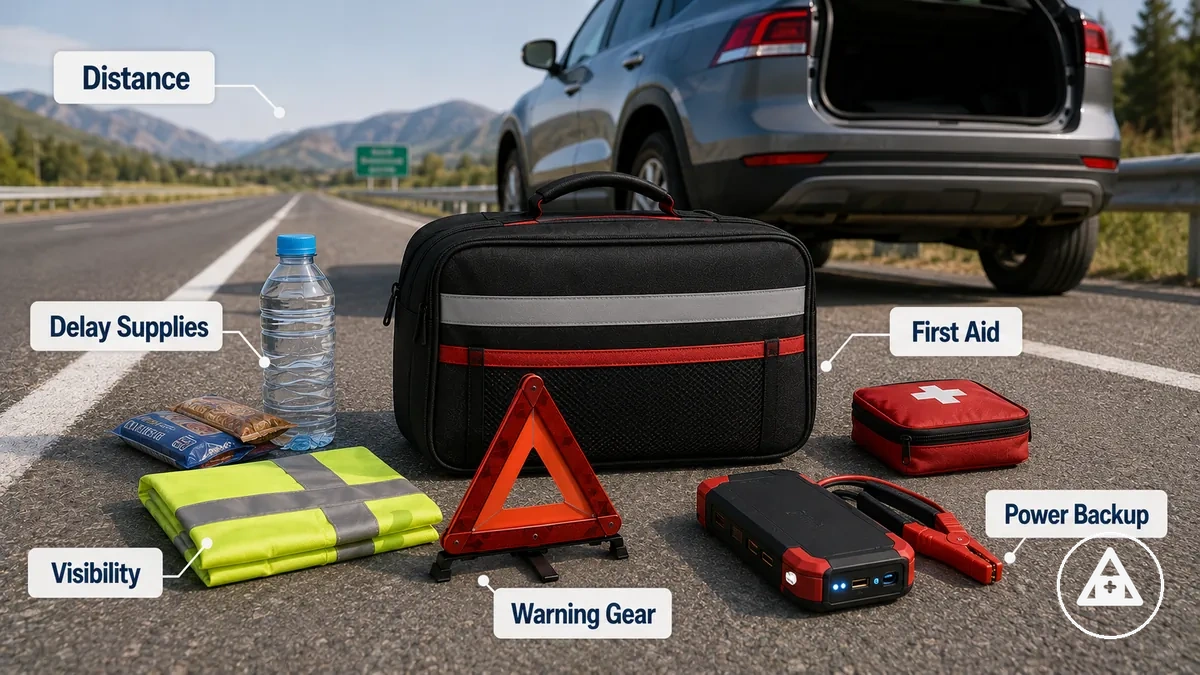
Added coverage for distance, delay, and highway exposure can be assessed by checking how travel conditions may affect a roadside stop and the supplies that support it.
- Distance from services: Greater travel distance may increase the value of delay supplies because assistance availability can vary by route.
- Roadside stop duration: Longer waiting periods may justify additional comfort-focused items when a delay extends beyond expectations.
- Highway visibility: Higher-speed traffic conditions can increase the importance of visibility aids and warning gear during a roadside stop.
- Passenger safety: Additional occupants may increase the need for supplies that support comfort and minor needs during delays.
- Communication limits: Areas with reduced connectivity may increase the value of communication or power-related backup items.
- Minor injury response: First aid supplies may become more important when travel distance or waiting time increases.
Coverage needs can vary by route type. An urban highway trip may provide more frequent access to services, while a remote route may involve longer gaps between assistance options. Because conditions differ, the goal is usually to match added coverage to expected distance, delay, and highway exposure rather than assume every route carries the same level of risk.
Roadside repair and recovery items for long trips
Roadside repair and recovery items for long trips are support-focused components that can help address minor vehicle issues when distance, delay, or limited service access affects travel decisions. These item groups differ by the type of problem they address, the usable condition in which they may help, and their limitation when vehicle condition or damage extends beyond temporary support. Understanding these distinctions helps determine which recovery items may add practical value to a car emergency kit.
A tire inflator, jump starter, tools, and other recovery items serve different purposes even when they are carried in the same travel kit. A tire inflator may support temporary mobility when a tire experiences minor pressure loss, while a jump starter may assist with suitable battery-related starting conditions. Tools can help with inspection or simple adjustments, but effectiveness depends on the usable condition, damage type, road setting, and user skill. These attributes help connect item selection to realistic decision value rather than assumed outcomes.
Roadside repair and recovery items for long trips can be compared by the condition they address and the support they provide. The table below organizes the main item groups by attribute, use value, limitation, and decision effect.
| Item or condition | Attribute or criterion | Use value or limitation | Decision effect |
|---|---|---|---|
| Tire inflator | Inflation support | May help with minor pressure loss; limitation depends on tire condition | Can support temporary mobility assessment |
| Jump starter | Power support | May assist with suitable battery-related conditions; limitation varies by cause | Can help evaluate whether travel may continue |
| Tools | Inspection and adjustment support | Useful for simple checks; not a substitute for repair work | Can improve problem identification |
| Recovery items | Temporary support | Value depends on usable condition and roadside environment | Can reduce delay while assessing options |
| Safety and waiting aids | Roadside stop support | Do not repair vehicle-related issues | Can support preparedness during delays |
These item groups are most useful when viewed as temporary support tools rather than replacements for vehicle maintenance, roadside assistance, or professional repair. The key decision is matching each item’s attribute, usable condition, and limitation to the likely conditions of the road trip.
Tire inflator, tire repair, and pressure-check tools
Tire inflator, tire repair, and pressure-check tools are local support items that can help manage pressure loss, slow leaks, and pre-trip checks during a road trip. A tire inflator can restore tire pressure when the usable condition involves low inflation, while pressure-check tools help confirm whether a tire may need attention before or during travel. The key decision value is understanding which tire-related issues these tools may support and where their limitation begins.
Tire inflator, tire repair, and pressure-check tools differ by attribute, usable condition, and limitation. The table below organizes the main criteria that influence temporary support value.
| Item or condition | Attribute or criterion | Use value or limitation | Decision effect |
|---|---|---|---|
| Tire inflator | Inflation support capacity | May help with pressure loss when the tire remains in a usable condition | Can support temporary mobility evaluation |
| Pressure gauge | Gauge readability | Helps verify tire pressure but does not correct tire damage | Can improve pressure-related decisions |
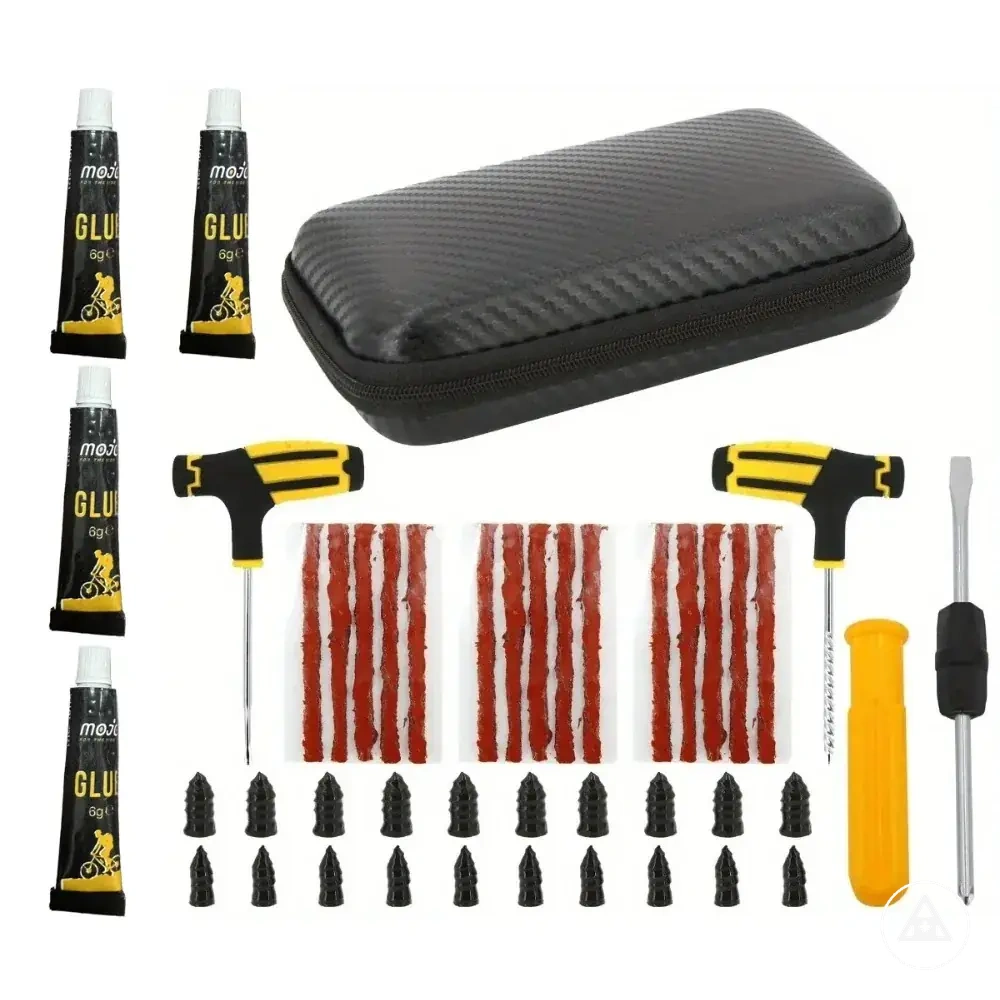
| Repair plug tools | Minor puncture support | Effectiveness depends on damage type and tire condition | May support limited temporary recovery |
| Sealant-based repair items | Temporary leak support | Limitation varies by leak location and tire condition | May assist with short-term mobility decisions |
| Valve compatibility | Connection suitability | Incorrect compatibility can reduce tool usefulness | Can affect roadside usability |
Severe tire damage, sidewall issues, or unsafe roadside stop conditions can exceed the limitation of tire repair and pressure-check tools. In those situations, these tools do not remove the need for professional assessment or assistance. The practical boundary is that these items support temporary evaluation and limited recovery under suitable conditions rather than guaranteed puncture repair.
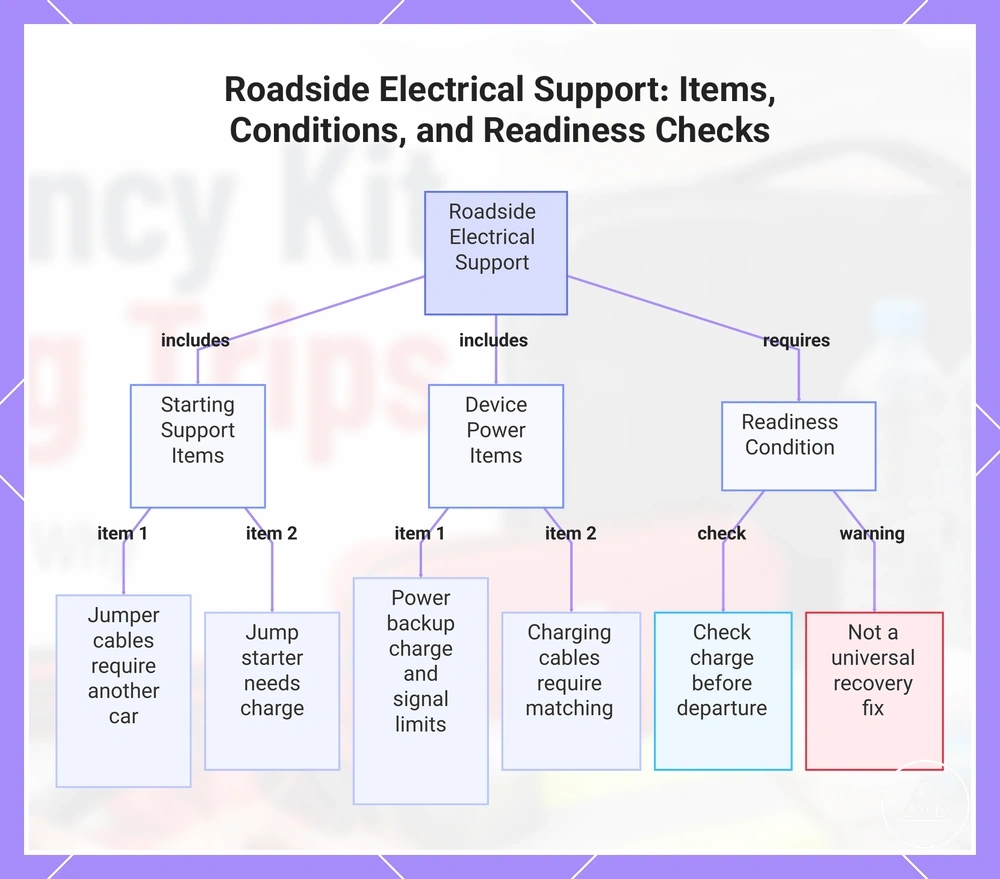
Jumper cables, jump starter, and power backup
Jumper cables, a jump starter, and power backup items support electrical readiness when a road trip involves battery discharge, device power needs, or delays away from easy help. These items can help with starting support or communication-device power under suitable conditions, but their value depends on charge state, vehicle condition, and the usable condition at the roadside. The main decision value is matching electrical support to likely delay and power-access needs without treating it as a universal recovery fix.
Jumper cables may be useful when another suitable vehicle is available, while a portable jump starter may offer more independent starting support when it is charged and appropriate for the situation. Power banks and charging cables support device use during waiting periods, but they do not guarantee mobile reception or emergency contact. Charge readiness matters because stored electrical items can lose practical value if the jump starter or power bank is not checked before departure.
- Jumper cables: May help when battery discharge is the issue and another suitable vehicle is available.
- Jump starter: Can support starting attempts when charged and when the battery-related condition is suitable.
- Power backup: Helps keep phones or small devices powered during delays, with usefulness limited by charge level and signal access.
- Charging cables: Improve device compatibility only when the cable matches the device and power source.
- Charge-readiness check: Reduces the chance of carrying electrical recovery items that are present but not ready to use.
Before a longer trip, checking the charge status of a jump starter or power bank can be as important as carrying the item itself. A tire inflator, jump starter, tools, and other recovery items each have a usable condition and limitation, so electrical support should be selected for starting support and device backup rather than assumed to solve every roadside power problem.
This chart shows the main roadside electrical support items, the conditions that affect their usefulness, and the critical readiness check needed before a trip.
Tow strap, gloves, and basic tool support
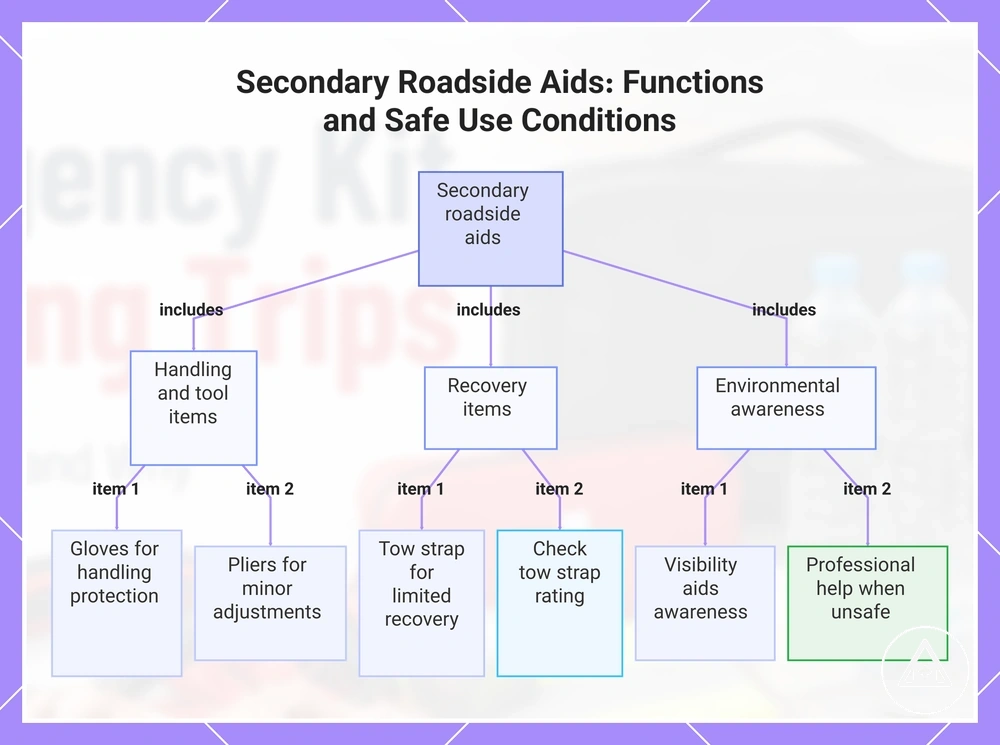
Tow strap, gloves, and basic tool support items are secondary aids that can help with handling tasks, minor adjustments, and safer work around a vehicle during a road trip. These items may improve access, grip, visibility, or limited recovery support when the usable condition is appropriate, but each item also has a limitation that affects its practical value. The main decision value is understanding what these support items can assist with and when conditions may make their use unsuitable.
Tow strap, gloves, and basic tools provide different forms of support depending on the condition, task, and roadside environment. Carrying a support item does not automatically mean the conditions are suitable for using it safely. The decision should consider visibility, vehicle position, traffic exposure, and whether the task remains within the item's intended support role.
- Gloves: May improve handling protection when working around vehicle components, but usefulness depends on the task and roadside conditions.
- Pliers or multi-tool: Can provide simple tool access for minor adjustments, with limitations when repairs require specialized equipment or skill.
- Tow strap: May offer limited recovery support when conditions, compatibility, and the situation are suitable, but carrying a strap alone does not make recovery appropriate.
- Tow strap rating awareness: Helps evaluate whether the item matches the intended support situation, though suitability still depends on conditions.
- Visibility while working: Supports awareness during a roadside stop, especially when location or lighting conditions reduce visibility.
A tire inflator, jump starter, tools, and other recovery items each depend on a usable condition and have a limitation. When visibility is poor, vehicle positioning is unsafe, or the task exceeds basic support, professional assistance may be a safer option than attempting further roadside action.
This chart shows the main types of secondary roadside support items, their specific assistance roles, and the environmental conditions that determine safe use.
Safety, visibility, and first aid supplies for travel
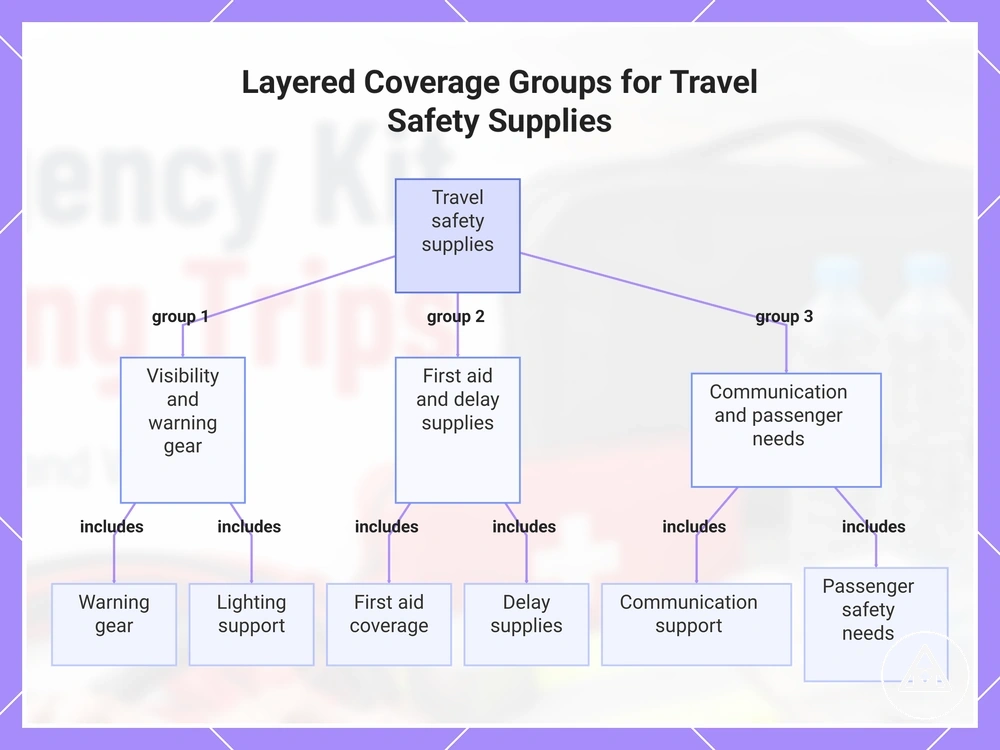
A roadside stop, unexpected delay, or minor incident can shift attention from vehicle recovery to occupant protection during a road trip. Safety, visibility, and first aid supplies help organize coverage around people-focused needs, especially when waiting conditions, passenger count, route characteristics, or weather create additional challenges. The key decision is selecting coverage that supports passenger safety during stops and delays rather than focusing only on vehicle-related issues.
Safety, visibility, and first aid supplies work as layered coverage groups because different travel conditions create different priorities. A daytime roadside stop may place more emphasis on warning gear and communication readiness, while a night stop may increase the value of lighting and visibility support. Longer waits can make delay supplies more relevant, especially when passenger comfort and basic needs become part of the decision. The appropriate coverage level usually depends on trip conditions rather than a fixed list of supplies.
Safety, visibility, and first aid supplies are easiest to evaluate when grouped by the travel risks they are intended to address. The checklist below helps verify whether the vehicle emergency kit includes people-focused coverage for common roadside stop scenarios.
- Warning visibility and warning gear: Supports awareness around a roadside stop when traffic, location, or lighting conditions reduce visibility.
- Lighting support: Helps improve visibility during night stops or low-light conditions when occupants may need to access supplies.
- First aid coverage: Provides basic preparedness for minor incidents without replacing professional medical care when needed.
- Delay supplies: Hydration, food, blankets, and similar comfort-focused items may become more relevant when waiting periods extend beyond expectations.
- Communication support: Helps maintain access to devices during delays, though effectiveness may depend on power availability and network conditions.
- Passenger safety needs: Coverage may need adjustment when passenger count, route length, weather, or personal requirements increase support needs.
This chart shows the three main coverage groups for travel safety supplies and the specific items within each group, helping you select appropriate supplies based on travel conditions.
Warning triangles, flares, and high-visibility gear
Warning triangles, flares, and high-visibility gear are visibility tools that can help other drivers notice a vehicle and its occupants during a roadside stop. Their usefulness depends on visibility conditions, weather, road speed, and the surrounding environment rather than the item alone. The key decision value is understanding which warning gear may improve visibility under specific conditions and where its limitations begin.
Warning triangles and reflective vests are passive visibility items because they rely on existing light sources to become more noticeable, while LED beacons and similar devices provide active visibility by producing light. Visibility distance may vary with darkness, rain, fog, traffic conditions, and road layout. Placement considerations can also depend on local safety expectations and legal requirements, which may differ by location. Because conditions vary, visibility tools are most useful when selected for the expected travel environment.
- Warning triangles: May help improve vehicle visibility when a stopped vehicle needs to be more noticeable, but effectiveness depends on road and lighting conditions.
- LED beacons: Can provide active visibility in low-light conditions, though usefulness may vary with weather and surrounding light sources.
- Flares where appropriate: May increase visibility in certain situations, but suitability can depend on local restrictions, weather, and safety considerations.
- Reflective vests: Can help make occupants more visible when outside the vehicle, particularly when visibility is reduced.
- Placement considerations: Visibility outcomes depend on conditions such as road speed, weather, sightlines, and the ability to position warning gear safely.
This chart shows the main types of roadside visibility tools, their passive or active nature, and the key factors that affect their usefulness during a roadside stop.
Flashlight, batteries, and communication backup
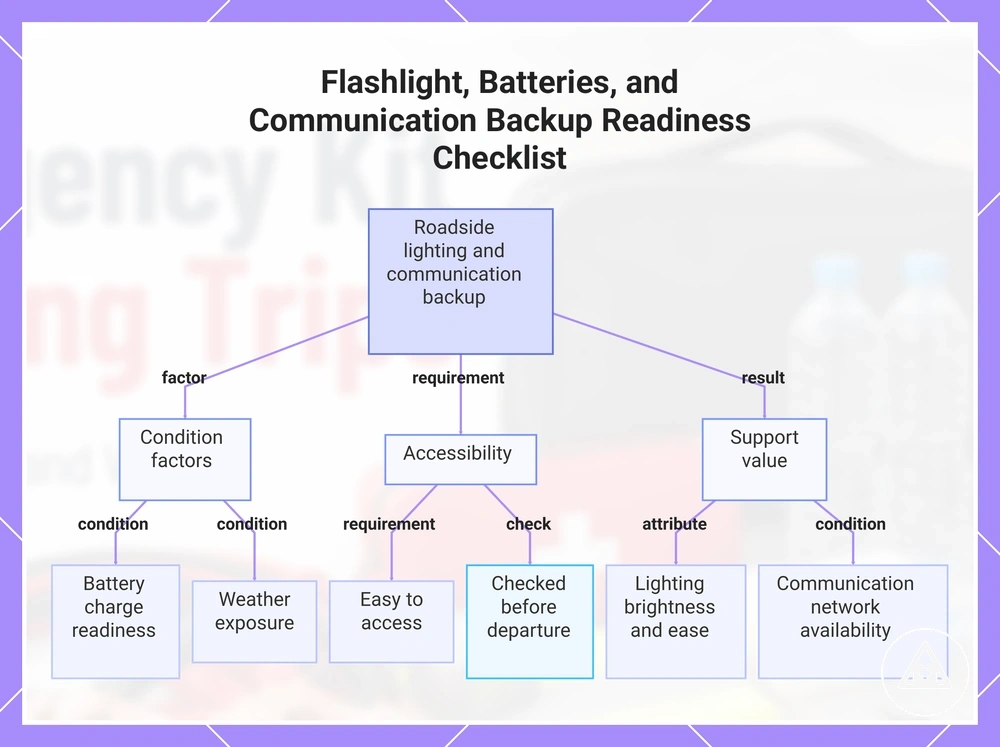
Flashlight, batteries, and communication backup items support visibility, inspection tasks, and contact attempts during a roadside stop, especially when travel continues after dark or a delay extends beyond expectations. These items help improve access to light and device power, but their usefulness depends on battery condition, charge readiness, weather, and the availability of communication networks. The key decision value is ensuring lighting and communication support remain usable when they are needed.
Flashlight, batteries, and communication backup are most effective when they are easy to access and checked before departure. A flashlight can support visibility during inspections or low-light conditions, while communication backup helps maintain access to phones and other devices. Battery life, charging status, and weather exposure can affect performance, and communication support may still be limited when reception is weak or unavailable. Because conditions vary, readiness often matters as much as the item itself.
Flashlight, batteries, and communication backup can be reviewed through a simple readiness checklist that focuses on condition, access, and support value.
- Flashlight type: Brightness, ease of use, and access can influence usefulness during low-light roadside situations.
- Spare batteries: May help maintain lighting support when battery-powered devices lose power during a delay.
- Power bank: Can support device charging when charged before departure, though usefulness depends on remaining capacity.
- Charging cable: Helps maintain device compatibility when the cable matches the device and power source.
- Signal-related items: Communication backup may support contact attempts, but reception can depend on route, location, and network availability.
- Pre-trip readiness check: Checking flashlight batteries and power-bank charge before departure may reduce the chance of carrying items that are unavailable when needed.
This chart shows the key factors, requirements, and outcomes that determine the usefulness of lighting and communication backup items during a roadside stop.
First aid, water, food, and delay supplies
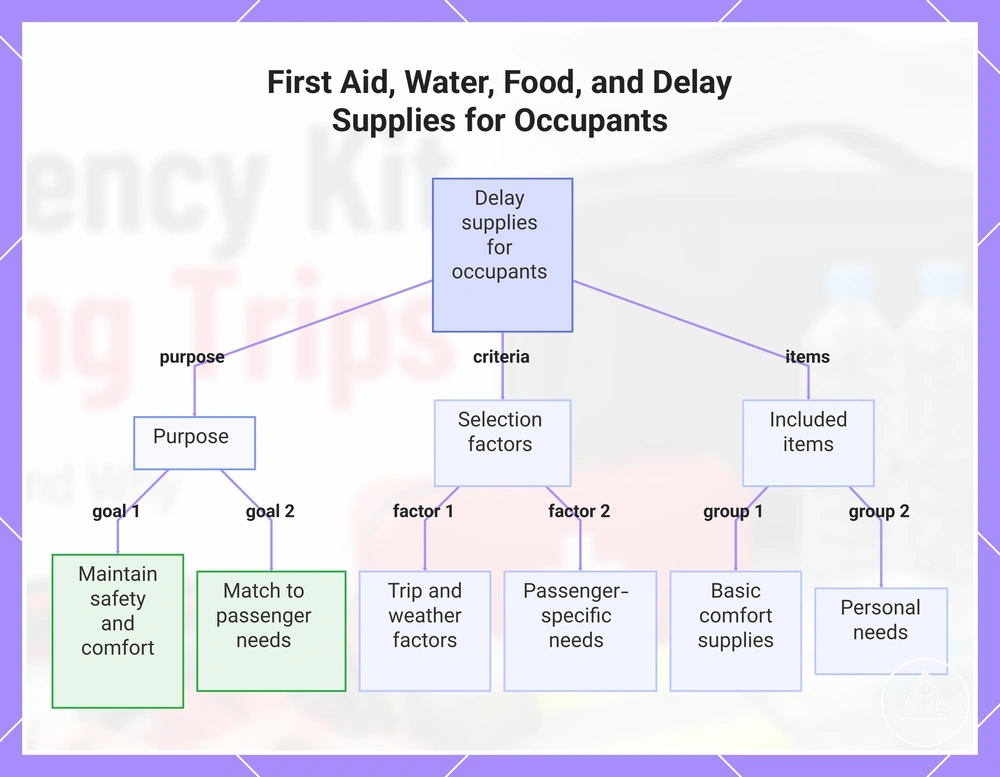
First aid, water, food, and delay supplies support occupants when a roadside stop creates waiting time rather than an immediate repair solution. These people-focused items help maintain passenger safety and basic comfort during a delay, especially on a road trip where route length, weather, or service availability may affect waiting conditions. The key decision value is matching delay supplies to likely passenger needs rather than focusing only on vehicle-related coverage.
First aid, water, food, and delay supplies are most useful when selected according to passenger count, trip duration, weather conditions, and personal requirements. Item choices that work for one vehicle emergency kit may not suit every travel situation. Children, older passengers, and longer remote stretches may increase the importance of certain occupant-support items. Because conditions vary, delay-supply planning is usually based on expected needs rather than fixed quantities.
First aid, water, food, and delay supplies can be reviewed with a simple readiness checklist that focuses on occupant support during waiting periods.
- First aid basics: Support preparedness for minor situations without replacing professional medical care when it is needed.
- Drinking water: May help support occupants during delays, with suitable amounts depending on passenger count, weather, and trip conditions.
- Non-perishable snacks: Can provide basic food support when waiting periods extend beyond expectations.
- Blankets: May improve occupant comfort when temperature conditions become less favorable during a delay.
- Medications or personal needs: Requirements can vary by passenger and may be more important on longer trips or remote routes.
- Passenger-specific considerations: Children, older passengers, or individuals with particular needs may require additional planning based on the travel situation.
This chart shows the purpose, selection factors, and included items for occupant delay supplies during roadside stops.
How to choose a road trip emergency kit by driving conditions
A road trip emergency kit depends on driving conditions, route type, passenger needs, and the level of roadside exposure that may occur during the trip. Matching kit attributes to realistic conditions helps determine an appropriate coverage level instead of using the same setup for every journey. The local decision is identifying when to increase coverage, when to keep the kit portable, and when separate specialist supplies may be more appropriate.
Driving conditions influence selection criteria because route, weather, distance, and delay potential can change preparedness needs. A vehicle emergency kit that suits frequent access to assistance may not provide the same coverage value on routes with longer gaps between services. Coverage level should reflect expected conditions rather than trip length alone. This condition-based approach can support a more practical selection decision.
How to choose a road trip emergency kit by driving conditions becomes clearer when trip conditions, kit attributes, and coverage levels are compared directly. The table below organizes the main selection factors and their decision effects.
| Item or condition | Attribute or criterion | Use value or limitation | Decision effect |
|---|---|---|---|
| Urban or serviced routes | Frequent access to assistance | May reduce the need for expanded delay coverage | Often supports a more portable kit |
| Remote or extended routes | Longer distance between services | May increase the value of delay and recovery coverage | Can justify a higher coverage level |
| Multiple passengers | Occupant support requirements | Needs may vary by passenger count and condition | May require broader people-focused coverage |
| Changing weather conditions | Environmental exposure | Weather can affect waiting conditions and preparedness needs | May increase support-item coverage |
| Specialized travel activities | Activity-specific requirements | Not all needs fit within a standard travel kit | May be better addressed with separate specialist supplies |
Selection criteria should balance coverage level against portability and realistic use conditions. When route type, passenger needs, weather exposure, or delay risk increase, additional coverage may be reasonable. When conditions remain less demanding, a compact travel kit may be sufficient. For a broader framework on choosing by driving situation, apply the same condition-to-coverage approach rather than treating every road trip as equal.
Trip length, route type, and passenger needs
Trip length, route type, and passenger needs determine how much coverage a travel kit may require and whether add-on supplies are appropriate for the journey. A shorter trip with frequent service access may need less coverage depth than a longer route where delays and assistance gaps are more likely. The local decision is matching coverage level to realistic travel conditions rather than assuming every road trip needs the same setup.
- Short regional trips: When service access is frequent and travel duration is limited, a more portable vehicle emergency kit may provide sufficient coverage.
- Multi-day drives: Longer travel periods may increase the value of add-on supplies that support occupants during delays or changing conditions.
- Passenger count and needs: More passengers, children, or condition-specific requirements may justify broader coverage when space and trip conditions allow.
- Luggage space: Available storage can influence how much coverage is practical, which may require prioritizing the most relevant add-on supplies.
- Route type and service access: Remote routes or limited access to assistance may support greater coverage depth than routes with frequent service availability.
A solo highway commute and a family road trip may use the same emergency kit categories, but the coverage level can differ because passenger needs, luggage space, and expected delays are not always the same. Coverage decisions should remain proportional to trip length, route type, and occupant requirements rather than based on distance alone.
This chart shows how trip length, route type, and passenger needs influence the coverage level of a travel emergency kit.
Highway driving, remote routes, and service gaps
Highway driving, remote routes, and service gaps affect kit suitability because road environment influences how much self-support and visibility a vehicle emergency kit may need to provide. Highway exposure can involve high-speed shoulders and limited stopping areas, while remote routes may involve longer waits when service access, mobile reception, or nearby assistance are less predictable. The local decision is matching coverage to route conditions rather than assuming the same support level fits every road trip.
Highway driving, remote routes, and service gaps can be compared by the type of support they may require from a travel kit. The comparison below focuses on route-condition compatibility rather than product differences.
| Route condition | Kit suitability consideration |
|---|---|
| Highway driving | May place greater emphasis on visibility support, roadside stop safety, and conditions where stopping space is limited. |
| Remote routes and service gaps | May increase the value of delay coverage when waiting time, service access, mobile reception, or fuel availability are less certain. |
Weather exposure, long distances between towns, and variable service access can influence coverage needs, but conditions differ by route and circumstance. This subsection informs kit compatibility with route conditions and does not replace route planning. When service gaps or extended waits are more likely, broader coverage may be appropriate depending on the route environment.
Weather exposure without turning the kit into a seasonal checklist
Weather exposure affects kit suitability because road conditions can change the type of support a vehicle emergency kit may need during a road trip. Highway driving, remote routes, and service gaps can increase the effect of heat, rain, cold, or low-light conditions when a roadside stop or delay occurs. The local decision is adjusting coverage for expected weather exposure without expanding the travel kit into a full seasonal checklist.
Weather exposure can influence kit suitability through a small set of condition-based additions rather than a complete change in coverage.
- Heat: Hydration support and weatherproof storage may become more relevant when delays occur in warmer conditions.
- Rain: Weatherproof storage and visibility support may help protect supplies and improve roadside stop readiness when conditions are wet.
- Cold: Blanket or thermal support may add value when lower temperatures increase occupant discomfort during a delay.
- Low-light conditions: Visibility-related items may become more important when darkness affects awareness around a roadside stop.
- Traction-adjacent awareness: Route conditions may influence coverage decisions when surface conditions can affect mobility or waiting circumstances.
Weather needs are not universal and usually depend on route conditions, expected exposure, and the likelihood of delays. Detailed adjustments for seasonal driving conditions belong in a dedicated seasonal readiness context, while this subsection focuses on weather-related compatibility within general car emergency kit selection.
Pre-made travel kits versus adding long-trip supplies
Pre-made travel kits versus adding long-trip supplies depends on what coverage already exists in the car emergency kit, how much preparation time is available, and the expected demands of the road trip. A pre-made kit may reduce setup effort and missing-item risk, while add-on supplies may increase coverage depth when baseline items are already available. The local decision is choosing the option that best matches current preparedness, route conditions, and inspection effort.
Pre-made travel kits versus adding long-trip supplies becomes clearer when the comparison focuses on readiness criteria rather than product assumptions. Coverage completeness, missing item risk, storage space, inspection burden, and existing ownership can all influence the decision. A user who already maintains a vehicle emergency kit may have different needs than a user starting with limited coverage. The most suitable direction usually depends on the trip burden, route conditions, and existing supplies.
The comparison below focuses on the tradeoff between a pre-made kit and add-on supplies for road trip coverage and long-distance driving supplies.
| Comparison criterion | Pre-made kit | Add-on supplies |
|---|---|---|
| Coverage completeness | May provide broader starting coverage in one package | Depends on what is already included in the existing kit |
| Missing item risk | May reduce the chance of overlooking common items | Depends on review and selection accuracy |
| Storage space | Can include items that are not needed for every route | Allows coverage to be adjusted to trip conditions |
| Cost-value | May suit users seeking speed and simplicity | May suit users who already own baseline supplies |
| Inspection burden | Usually requires checking included contents | Requires evaluating existing coverage and additions |
For a roadside stop, delay, safety concern, passenger need, or changing weather condition, neither option is universally better. A pre-made kit may suit users who want quicker preparation and broader starting coverage, while add-on supplies may be more appropriate when an existing roadside emergency kit already covers most long-trip needs. The choice depends on portability, coverage depth, and the tradeoff between convenience and customization.
Here are product examples that may make comparison easier. Before buying, always review the compatibility criteria, essential features, and product details.
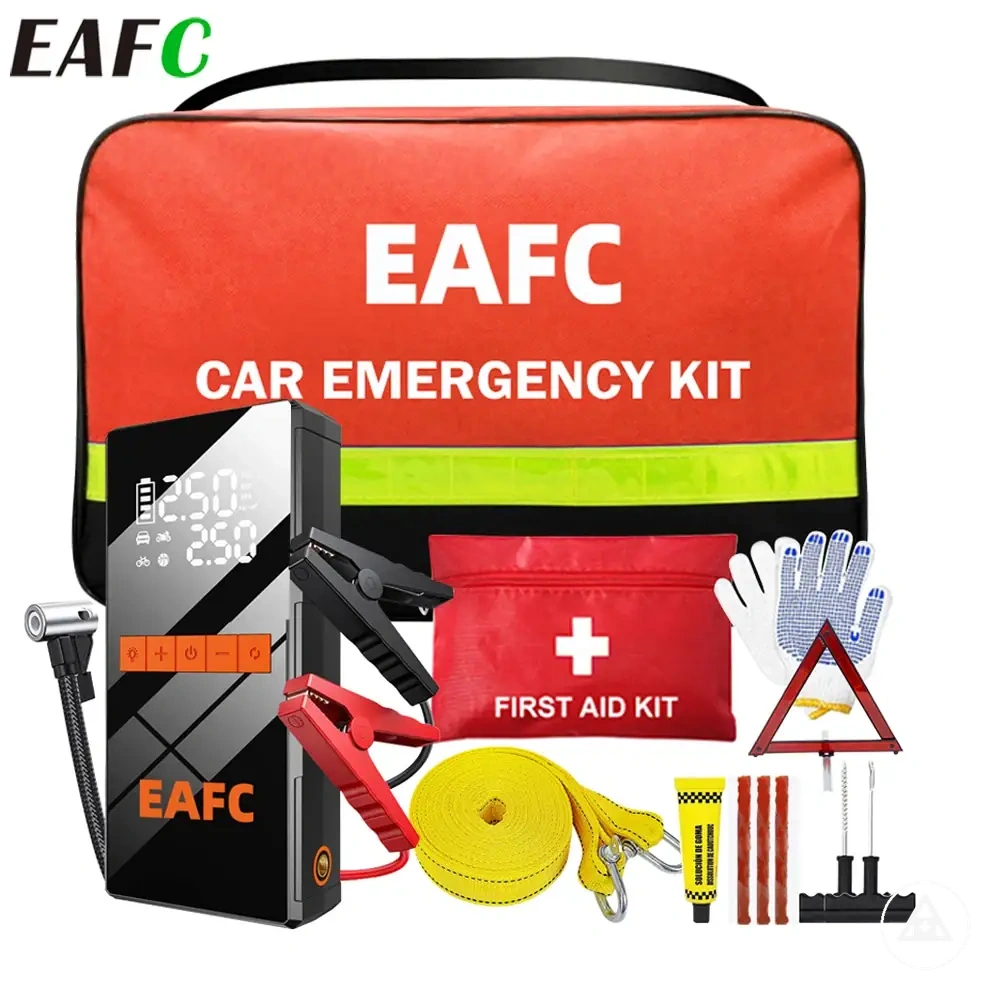
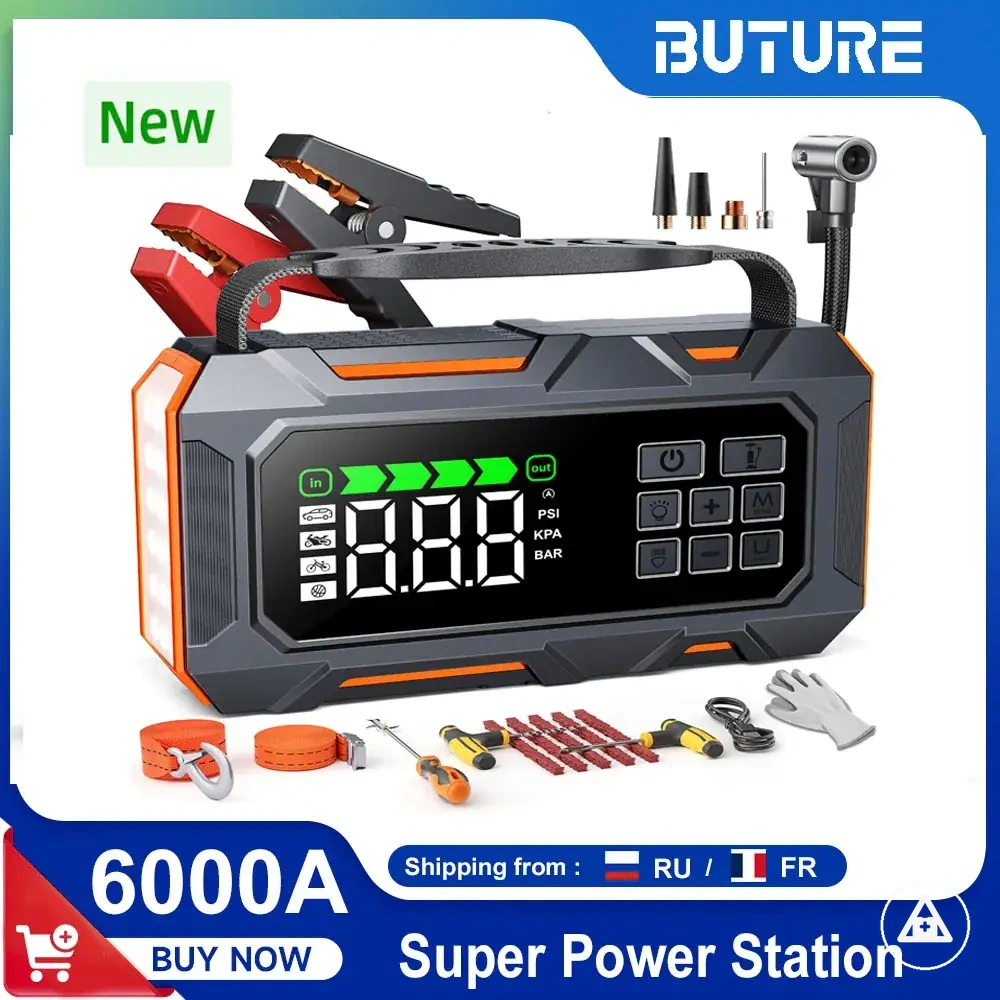
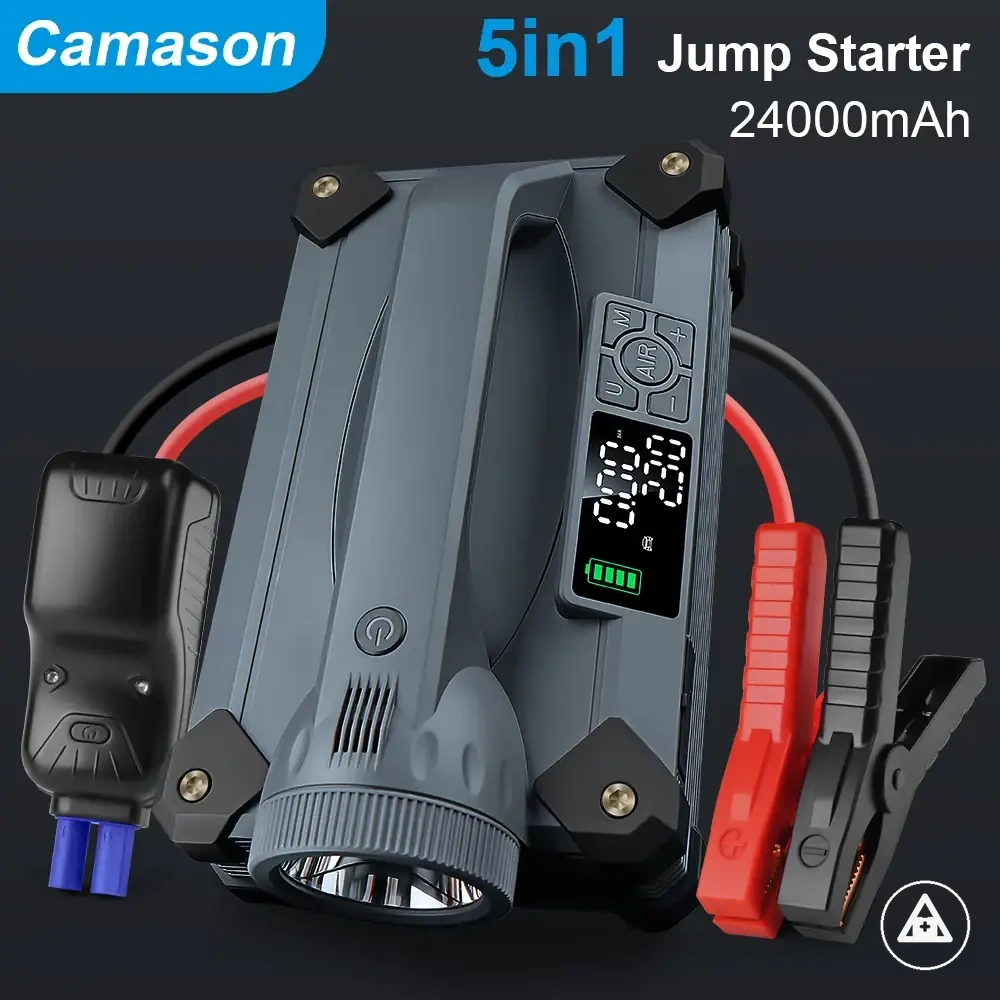
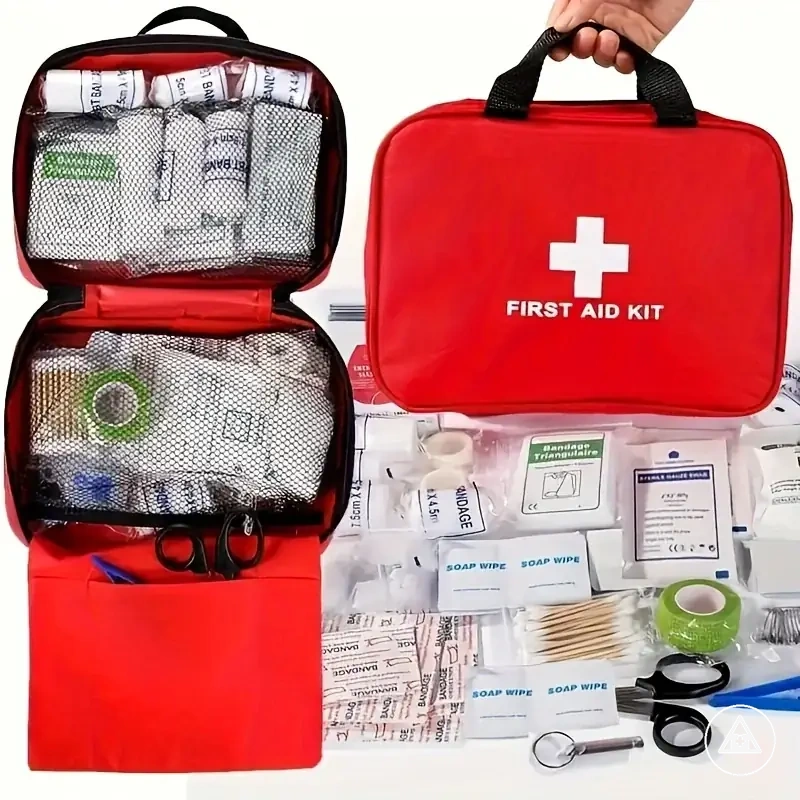
When a standard kit needs travel-specific additions
When a standard kit already covers core safety categories, the need for add-on supplies depends on trip length, route type, passenger needs, and service access rather than replacing the entire car emergency kit. A vehicle emergency kit may remain suitable for routine travel while still needing targeted additions for a road trip. The local decision is identifying practical coverage gaps that are specific to the planned journey.
Baseline kit adequacy should be reviewed before adding long-distance driving supplies. If core safety categories are already covered, add-on supplies may be more practical when route conditions, passenger requirements, weather exposure, or delay risk create additional needs. Expiry checks can help identify items that need updating without replacing the whole travel kit. This approach is usually most useful when missing categories are limited and clearly defined.
- Longer trip length: Extended travel may justify delay-related add-on supplies when the existing kit already covers basic roadside stop and safety needs.
- More passengers: Greater passenger needs can increase the value of additional support items when delays or weather conditions affect comfort and preparedness.
- Older vehicles: Additional tire or power-related supplies may be appropriate when existing coverage does not address those categories.
- Night driving: Reduced visibility conditions may support adding lighting or visibility items instead of replacing the roadside emergency kit.
- Limited service access: Remote route type or reduced service access may justify extra delay-focused supplies when assistance could take longer to reach the location.
For example, when an existing kit already covers core safety categories, adding tire support, power backup, or delay supplies may address a specific coverage gap without replacing the entire kit. The choice should remain tied to the condition, attribute, and decision requirements of the trip rather than assuming add-on supplies address every preparedness concern.
When a fuller roadside kit is the safer choice
A road trip emergency kit may be the safer choice when driving conditions, route type, and coverage level create needs that are difficult to address with a compact or lightly supplemented kit. Fuller coverage can be more practical when preparation time is limited or when the travel environment increases the impact of a roadside stop or delay. The local decision is determining when broader coverage better matches the expected trip demands.
Selection criteria should focus on whether a higher coverage level addresses realistic travel conditions rather than assuming a larger kit is automatically better. Route remoteness, passenger count, travel frequency, and organization needs can all influence the decision. A fuller roadside emergency kit may reduce preparation effort when assembling and reviewing individual supplies is less practical. The value of additional coverage usually depends on the route, vehicle, passenger, and weather context.
- Remote route type: Greater distance from assistance may justify a fuller coverage level when delays or service gaps are more likely.
- Frequent long-distance driving: Regular road trip use may support broader coverage when exposure to changing driving conditions increases.
- Limited DIY assembly time: A fuller vehicle emergency kit may be more practical when reviewing and organizing individual supplies is difficult.
- Multiple occupants: Passenger needs can increase support requirements during a roadside stop, delay, or weather-related disruption.
- Integrated storage preference: Organized storage may simplify access and inventory checks when managing a larger range of supplies.
A fuller travel kit can provide broader coverage, but it still requires suitability checks for vehicle requirements, route conditions, and expected weather exposure. Coverage should remain aligned with the specific trip rather than assuming that a larger kit addresses every preparedness need.
Portable storage and coverage tradeoffs for travel kits
Portable storage and coverage tradeoffs for travel kits depend on balancing portability against coverage depth for the expected road trip. A pre-made kit or a setup with add-on supplies may provide broader coverage, but larger storage requirements can affect accessibility, cargo space, and whether the kit remains in the vehicle. The local decision is choosing a travel kit that remains practical to carry while supporting the route’s most likely needs.
Portability and coverage depth create a tradeoff because increasing supplies often affects storage size, organization, and ease of access. A compact travel kit may be easier to store and retrieve during a roadside stop, while broader coverage may require additional space and planning. The value of either approach depends on route conditions, passenger needs, weather exposure, and available vehicle storage. The most practical choice is usually the one that remains accessible throughout the trip.
Portable storage and coverage tradeoffs for travel kits become easier to evaluate when the relationship between storage attributes and coverage needs is compared directly.
| Item or condition | Attribute or criterion | Use value or limitation | Decision effect |
|---|---|---|---|
| Bag size | Storage footprint | Larger kits may support broader coverage but can require more cargo space | Should match available vehicle storage |
| Access speed | Item retrieval | Faster access may improve usability during a roadside stop | Supports practical kit placement decisions |
| Item organization | Storage structure | Better organization may reduce time spent locating supplies | Can improve accessibility without increasing size |
| Vehicle cargo space | Available storage capacity | Limited space may restrict coverage expansion | Influences kit size selection |
| Weight and weather resistance | Portability and protection | Additional weight may reduce convenience, while weather resistance may help protect contents | Requires balancing durability and portability |
| Bulky kit storage | Carry practicality | Larger kits may be left behind when storage becomes inconvenient | Can reduce actual preparedness despite broader coverage |
The tradeoff is not simply compact versus large. For a broader comparison of compact versus full coverage, consider how portability, coverage depth, and access requirements interact with the route rather than focusing on kit size alone.
The most suitable travel kit is the one that stays accessible while covering the route’s most likely risks. Coverage should remain proportional to storage constraints, passenger needs, and expected driving conditions rather than expanding beyond what is practical to carry and use.
Here are product examples that may make comparison easier. Before buying, always review the compatibility criteria, essential features, and product details.
Long-trip kit readiness before departure
A long-trip kit readiness check verifies that the car emergency kit is present, usable, and matched to the road trip before departure. This final check focuses on confirming condition, accessibility, and coverage rather than revisiting kit selection. The local decision is identifying and correcting gaps before the journey begins.
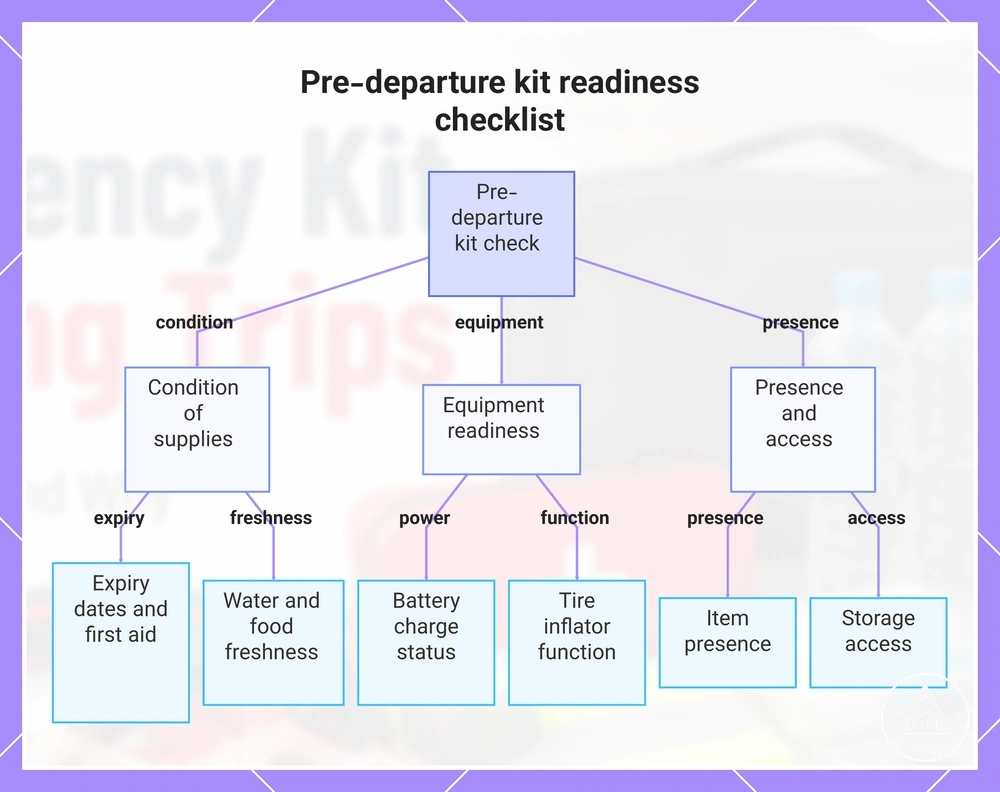
Long-trip kit readiness before departure depends on item condition, expiry dates, battery charge status, storage access, and route-specific needs. A travel kit may contain the right categories, but outdated, inaccessible, or untested items can reduce practical readiness during a roadside stop or delay. The checklist below verifies the main conditions that should be reviewed before departure.
- Item presence: Confirm that the vehicle emergency kit is in the vehicle and that key categories have not been removed or used without replacement.
- Expiry dates and first aid condition: Review dated supplies and inspect first aid contents for damage, contamination, or missing items.
- Battery charge and power readiness: Check that rechargeable devices, power banks, and similar equipment hold sufficient battery charge for the planned trip.
- Tire inflator function: Verify that the inflator, cables, and related components appear operational and accessible if needed.
- Water and food freshness: Inspect stored food and water for freshness, damage, or conditions that may affect suitability during travel.
- Storage access: Keep the roadside emergency kit positioned where it can be reached without unloading most cargo during a roadside stop.
- Passenger-specific additions: Confirm that any route-, passenger-, or weather-related additions are included when those conditions apply.
Any unresolved issue found during the readiness check should be addressed before departure rather than discovered during a roadside problem. A verified kit cannot guarantee a specific outcome, but it can help reduce the risk of relying on missing, expired, uncharged, or inaccessible supplies during a delay.
This chart shows the main categories of checks to verify before a road trip, covering condition of supplies, equipment readiness, and presence and access.