Car emergency kit contents and essential item categories
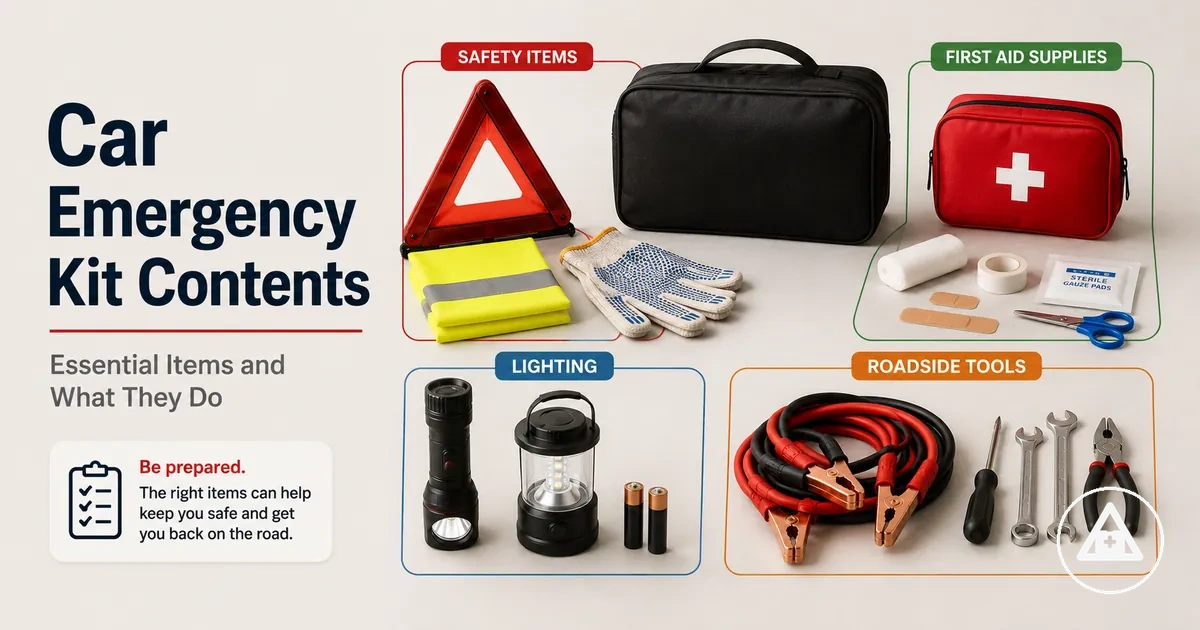
Car emergency kit contents are vehicle emergency supplies grouped to support roadside preparedness when a vehicle problem, delay, or unsafe stopping situation changes normal travel. These contents usually include visibility items, first aid supplies, lighting, basic tools, comfort supplies, and readiness items that help drivers understand what belongs in the kit and why each group matters. The kit is best framed as grouped roadside preparedness contents.
Car emergency kit contents should be read as essential item categories, not as a single fixed inventory for every vehicle. The priority of each category can vary by vehicle condition, driving distance, weather, road environment, storage space, and local safety needs. This keeps the contents focused on roadside purpose rather than a universal list.
A stopped vehicle in low light may need a warning triangle, reflective gear, or other visibility items so the vehicle and driver are easier to notice. A minor injury may make first aid supplies, gloves, and safe handling items more useful. A flat tyre, weak phone power, bad weather, or a long wait can shift attention toward basic tools, flashlight support, communication, and comfort supplies. Roadside visibility, first aid, tools, lighting, and waiting supplies connect the item groups to common vehicle-emergency conditions.
Contents explain purpose, while checklist pages verify inclusion. This page stays macro-first by showing how the main item groups support driver readiness before moving into narrower criteria, replacement signals, or seasonal priorities. For the broader article context, see the main car emergency kit guide.
What car emergency kit contents include
Car emergency kit contents are the supplies kept in a vehicle to support visibility, minor injury response, basic roadside problems, communication, and waiting safely. Car emergency kit contents are vehicle supplies intended for roadside support.
What car emergency kit contents include becomes clearer when the supplies are grouped by function rather than viewed as a long inventory. The image below shows the main content groups at a basic level and helps separate safety-related items from support-related items. These groups explain how emergency kit items support different situations by function rather than by a fixed universal inventory.
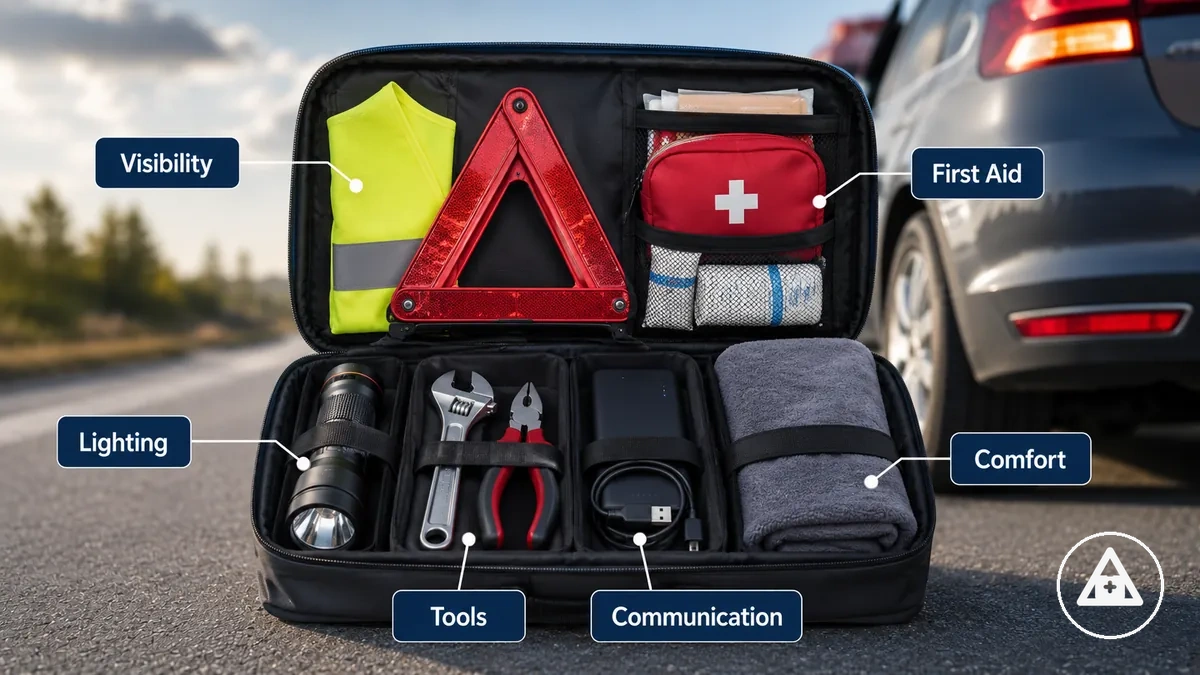
- Visibility group: Supplies that help make a stopped vehicle and its occupants easier to notice through warning and visibility support.
- First aid group: Supplies that support minor injury response and safe handling, including items such as gloves and bandages.
- Lighting group: Supplies that help with visibility and communication in low-light conditions, including flashlight-related support.
- Roadside problem group: Basic tools and support items that can assist with common vehicle-related roadside problems.
- Communication and power group: Supplies that help maintain communication when phone power becomes limited.
- Comfort and waiting group: Supplies that can improve comfort while waiting safely for assistance or changing conditions.
A common misconception is that car emergency kit contents must follow the same inventory for every driver. In practice, the importance of emergency kit items can vary by vehicle, travel conditions, and personal needs. A contents guide explains item purpose, while a checklist verifies final inclusion.
Essential item categories inside a car emergency kit
Essential item categories are the clearest way to understand the contents of a car emergency kit because they group supplies by function rather than by individual items. Category grouping connects visibility, first aid, lighting, tools, recovery items, and comfort supplies to the roadside condition they are intended to support and the practical effect they can provide. This category grouping is the most useful way to understand kit contents.
Essential item categories act as attribute groups that connect example contents to a primary function, a roadside condition, and a practical effect for the driver. The table below serves as an attribute map for those relationships.
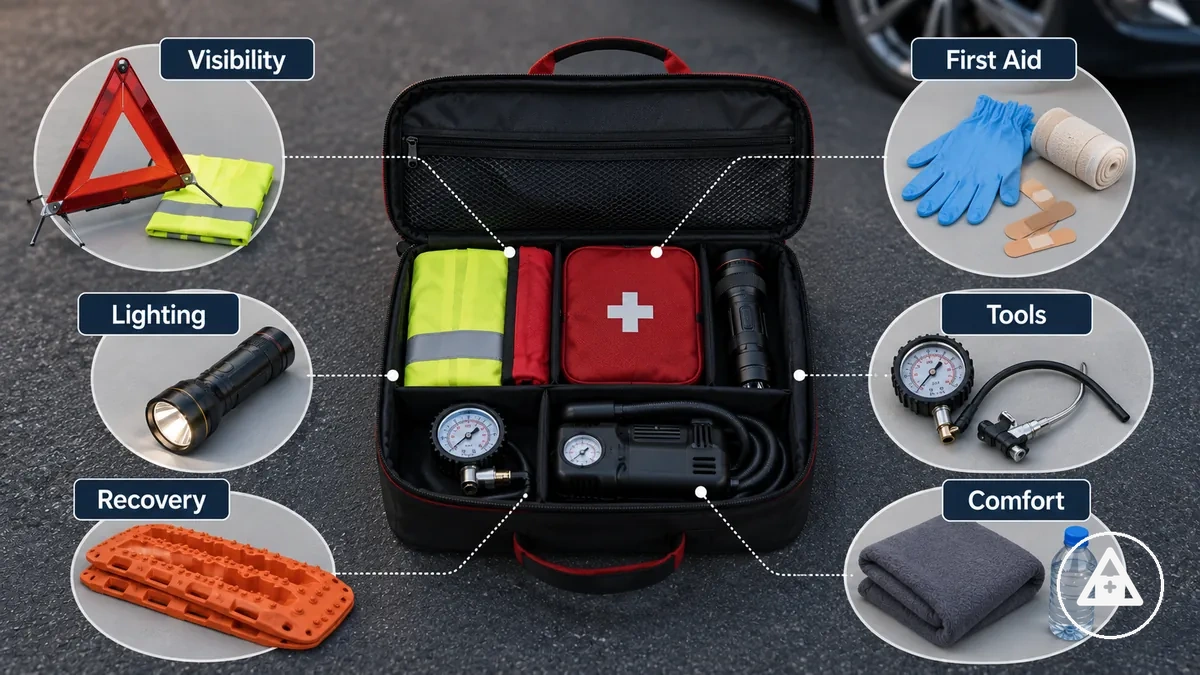
| Item category | Example contents | Primary function | Roadside condition supported |
|---|---|---|---|
| Visibility | Warning triangle, reflective gear | Improve vehicle and occupant visibility | Traffic exposure or a stopped vehicle |
| First aid | Gloves, bandages | Support minor injury response | Minor injury or safe handling needs |
| Lighting | Flashlight, light source | Improve visibility in low light | Nighttime or reduced visibility conditions |
| Tools | Tyre gauge, inflator | Assist with limited roadside handling | Minor vehicle-related issues |
| Recovery items | Towing or traction support items | Assist with vehicle movement challenges | Restricted traction or recovery situations |
| Comfort supplies | Blanket, water | Support comfort during delays | Cold conditions or extended waiting |
Essential item categories provide a practical framework for connecting item groups to functions, roadside conditions, and likely practical effects. The exact inventory may vary by vehicle type, road environment, and trip context; for inclusion criteria and item selection, refer to the car emergency kit checklist.
Roadside warning and visibility items
Roadside warning and visibility items help make a stopped vehicle and driver easier to notice during a roadside problem. These visibility items support awareness when traffic exposure, low light, poor weather, or reduced visibility can make a stopped vehicle harder to detect. Their primary purpose is to improve noticeability near a stopped vehicle.
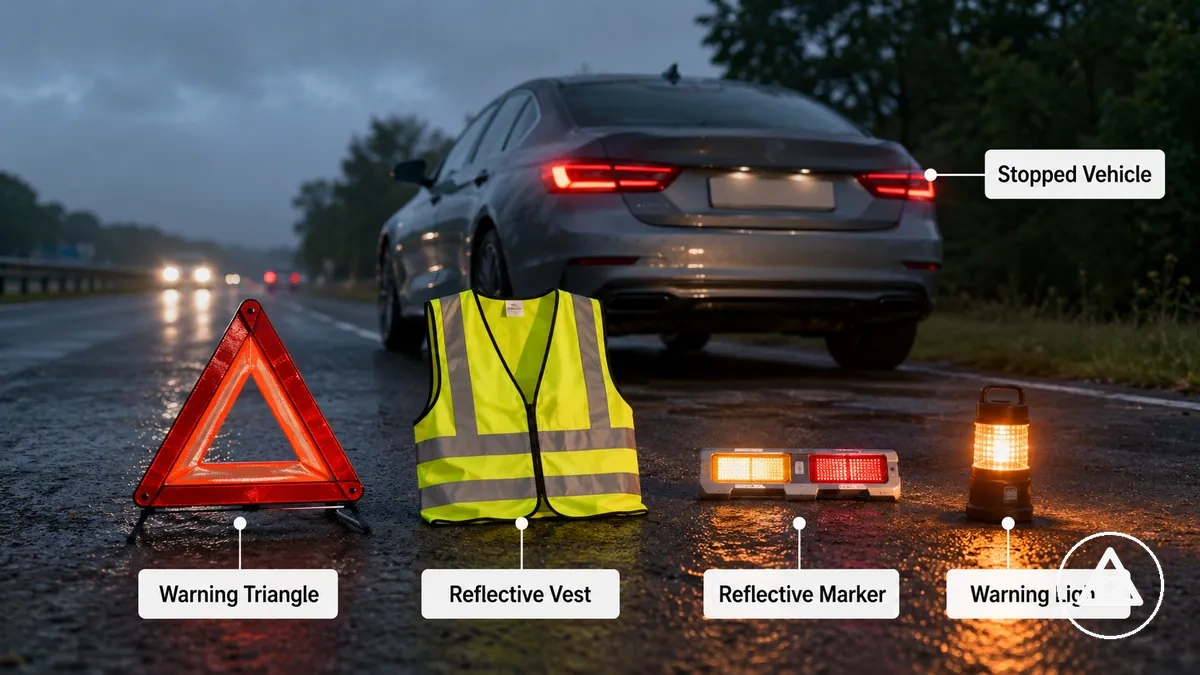
The list below organizes common visibility risks and the roadside warning items associated with them.
- Warning triangle: Helps signal the presence of a stopped vehicle when traffic exposure may reduce noticeability.
- High-visibility wear: Helps a driver stand out more clearly in low light or poor weather conditions.
- Reflective markers: Help mark a vehicle location when reduced visibility may make roadside hazards harder to notice.
- Lights: Help increase visibility range during a night breakdown or other low-light conditions where roadside risk may be higher.
In a low-light roadside situation, visibility items can provide clearer visual cues that help distinguish a stopped vehicle from its surroundings. Their effectiveness may vary with weather, traffic conditions, visibility range, and driver behavior. For a broader view of related safety items for roadside problems, see the dedicated category overview.
First aid and personal protection supplies
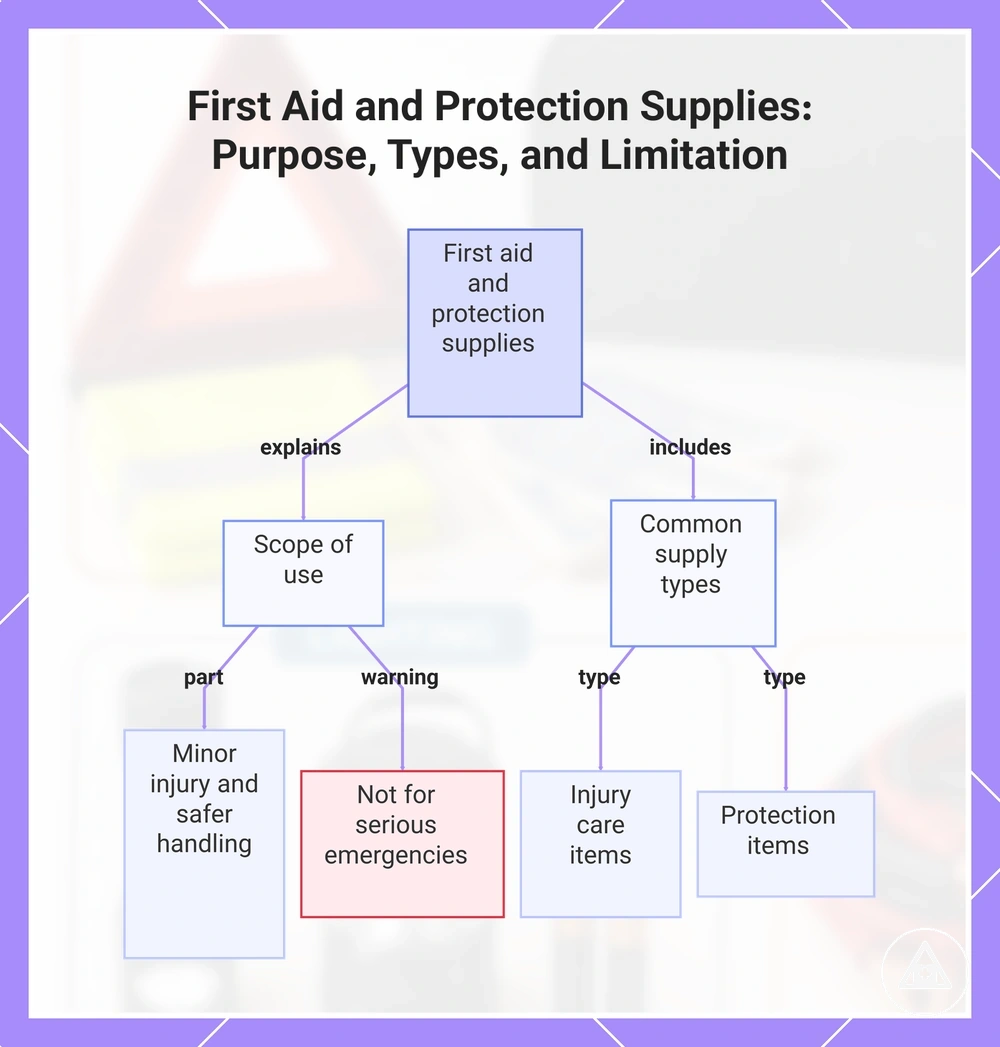
First aid supplies and personal protection supplies support minor injury response and safer handling of roadside tasks. These supplies can help cover small cuts, create a protective barrier during handling, and reduce direct contact with contaminants when basic support is needed. Their role is limited to minor injury support and safer handling.
The list below separates common personal safety needs and the supplies associated with them.
- Bandages: Help cover minor cuts or scrapes and provide basic support for small injuries.
- Antiseptic items: Help clean affected areas as part of limited-use care for minor injury situations.
- Gloves: Create a protective barrier during roadside tasks where contamination risk may be a concern.
- Protective barriers: Help reduce direct contact during handling tasks that may involve exposure to contaminants.
A common myth is that first aid supplies can replace professional emergency care during every roadside incident. In reality, basic first aid items and personal protection supplies are intended for limited support and safer handling. Serious injuries require professional emergency help rather than kit-only handling.
This chart explains the intended purpose, common types, and key limitation of first aid and personal protection supplies for roadside tasks.
Lighting, power, and communication items
Lighting, backup power, and communication items help the driver see, signal, and stay connected when visibility or battery access is limited. These items support practical readiness during roadside problems by connecting light, power availability, and communication support to changing conditions. Their local functions are seeing, signaling, and staying connected.
The checklist below verifies key functions, conditions, and readiness attributes for lighting, backup power, and communication items.
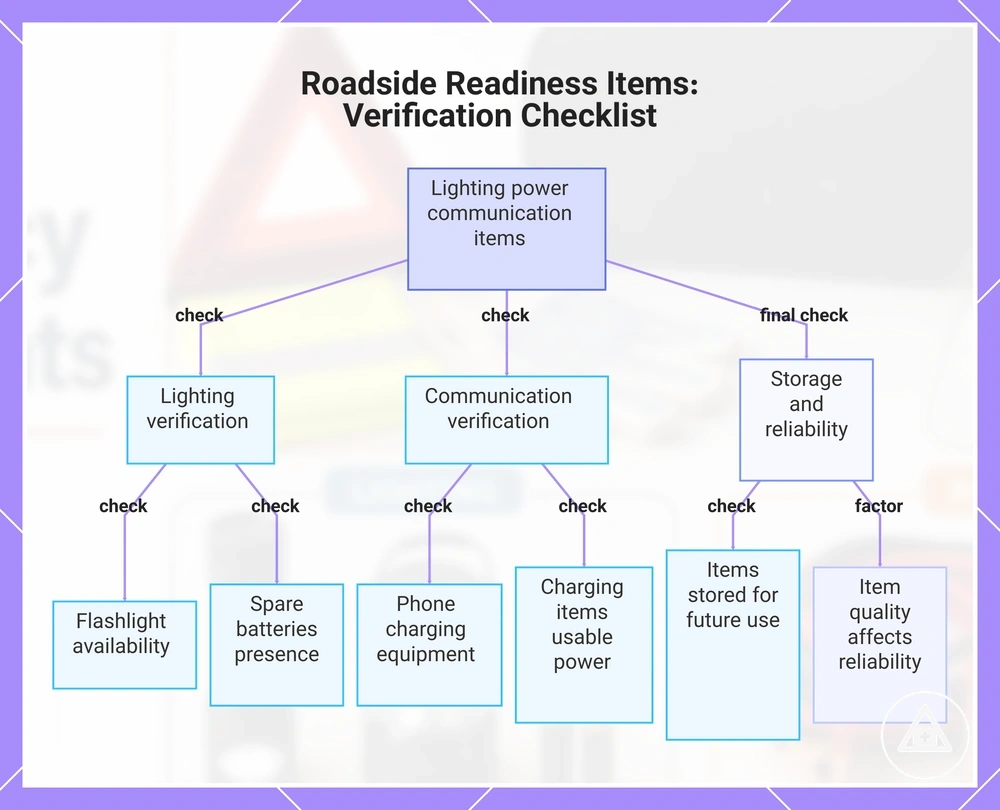
- Flashlight: Verify that a flashlight or portable light is available to help with visibility range in low-light conditions.
- Spare batteries: Verify that spare batteries or battery backup options are present when the flashlight depends on replaceable power sources.
- Phone power: Verify that charging equipment or a power bank is available to support communication when phone power becomes limited.
- Charging readiness: Verify that charging items have usable power before storage and travel.
- Storage readiness: Verify that lighting, backup power, and communication items remain stored in a condition suitable for future use.
During a low-light roadside problem or when phone power becomes depleted, these items can help maintain visibility and communication support. They may also help while waiting when access to normal power sources is limited. Reliability depends on item quality, charge state, storage conditions, and use duration.
This chart shows the key verification checks for lighting, backup power, and communication items to ensure practical readiness during roadside problems.
Basic tools, tire supplies, and recovery items
Basic tools, tire supplies, and recovery items support limited roadside handling when a vehicle issue can be checked or prepared for safely. These items can help with simple pressure checks, basic handling, jumper support, or recovery preparation, but this section stays at category-level roadside handling.
The table below separates tool function from the roadside condition where each group may help.
| Tool or supply group | Roadside function | Condition where it helps | Limitation |
|---|---|---|---|
| Gloves | Support safer handling | Dirty, rough, or exposed roadside tasks | Protection depends on material condition and the task being handled |
| Multi-tool and basic hand tools | Assist with simple adjustments or access needs | Minor handling tasks where the tool fits the situation | Not suitable for full repair or mechanical diagnosis |
| Tyre gauge | Check tyre pressure | Suspected pressure issue or routine readiness check | Usefulness depends on safe access to the tyre and correct use |
| Inflator-related supplies | Support limited tyre inflation | Low tyre pressure where the vehicle setup supports inflation | Compatibility and usefulness depend on vehicle setup and item condition |
| Jumper support | Prepare for battery-related assistance | Battery issue where safe use and compatibility are clear | Does not guarantee a restart and may require assistance |
| Tow-related items | Support recovery preparation | Recovery situation where appropriate assistance is available | Use depends on safe user ability, vehicle setup, and recovery conditions |
A common mistake is treating roadside tools as a guaranteed fix for every breakdown. Basic tools, tire supplies, and recovery items are most useful when the driver can use them safely and the vehicle setup supports them. Their usefulness depends on vehicle setup and safe user ability.
Water, food, blankets, and comfort supplies
Water, food, blankets, and comfort supplies help occupants manage delay, temperature, and basic needs while waiting for help. These comfort supplies support waiting safely when a roadside problem creates a longer pause than expected.
The checklist below organizes waiting conditions where comfort supplies may become more important.
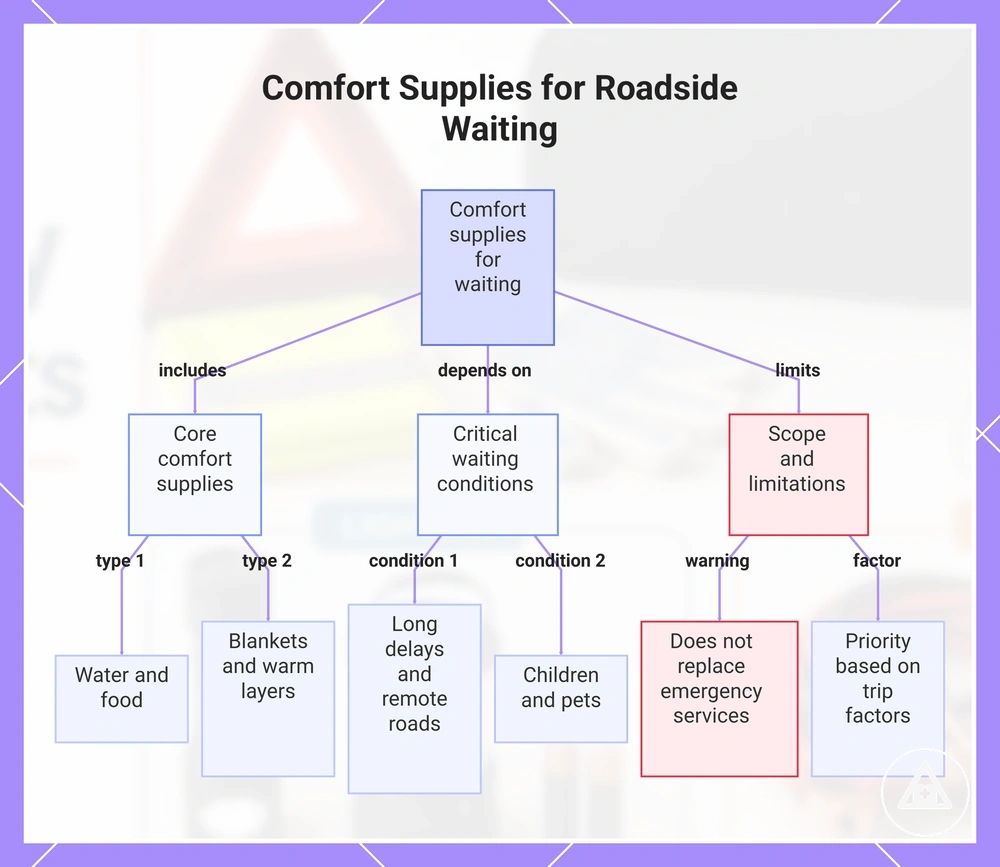
- Water: Helps support occupants during delay, especially when waiting time may be longer than expected.
- Shelf-stable food: May be useful during a long wait, particularly when trip length or remoteness limits access to nearby options.
- Blankets: Help occupants manage temperature when climate or cold conditions make waiting less comfortable.
- Warm layers: Can support comfort when weather changes or occupants are exposed to cooler conditions while waiting.
- Basic comfort items: May matter more for children, pets, remote roads, or long waiting times when tied to vehicle emergency preparedness.
On remote roads or during a longer delay, comfort supplies can shift from optional extras to practical waiting support. These items do not replace emergency services or turn the kit into camping gear. Item priority depends on trip length, climate, occupants, and remoteness.
This chart shows the types of comfort supplies useful during roadside waiting, the conditions that make them critical, and their limitations.
What each item category does during a roadside emergency
An item category supports a specific roadside job during a roadside emergency rather than serving as a general inventory entry. Each item category connects a function to a condition and a realistic outcome, helping drivers understand how visibility, injury response, communication, minor vehicle issue support, and waiting safely fit within the same preparedness framework. This section maps item categories to roadside jobs.
During a night breakdown, a visibility-focused item category helps make a stopped vehicle easier to notice. When a minor injury occurs, an injury response category supports basic response support rather than resolving the situation itself. If phone power becomes limited or a tyre issue interrupts travel, communication and minor vehicle issue categories may help maintain contact or support limited roadside handling. Different roadside emergencies require different item functions.
A common misconception is that every item category is intended to solve the emergency situation that caused the stop. In practice, each category provides a support role that may improve visibility, communication, injury response, or waiting support under a specific condition. Outcomes depend on the condition, available assistance, and the limits of the supplies, making support a realistic outcome rather than a guaranteed resolution.
| Item category | Roadside function | Condition where it matters | Realistic support outcome |
|---|---|---|---|
| Visibility | Improve noticeability | Night breakdown or reduced visibility | May help a stopped vehicle become easier to notice |
| Injury response | Support minor injury handling | Minor injury requiring response support | May assist with basic injury response |
| Communication | Support help contact and connectivity | Limited phone power or extended waiting | May help maintain communication with assistance sources |
| Minor vehicle issue support | Support limited roadside handling | Tyre issue or similar vehicle-related condition | May help assess or manage the situation before assistance |
| Waiting support | Help manage comfort and basic needs | Long waits or remote conditions | May support occupants while waiting safely |
Core contents versus optional or situation-specific supplies
Core contents are the supplies that address baseline needs across many roadside situations, while optional supplies depend on driving context, vehicle type, storage space, and risk exposure. The distinction is based on necessity, frequency of use, and condition sensitivity rather than on one required kit for every driver. Core contents versus optional supplies is best understood through need and context.
| Core contents | Optional or situation-specific supplies |
|---|---|
| Support baseline needs that may apply across many roadside situations | Support conditions that depend on driving context or risk exposure |
| Often relate to common roadside readiness requirements | May become more useful in specific climates, trip types, or locations |
| Usually justify space based on broader frequency of use | Priority may vary according to storage limits and expected conditions |
| Less dependent on vehicle setup or route characteristics | Often influenced by vehicle type, occupants, or operating environment |
Core contents are baseline contents that support common roadside preparedness needs. Their value comes from addressing conditions that many drivers may encounter regardless of route or trip length. Because these items are tied to broader necessity and frequency of use, they form the baseline contents of a vehicle emergency kit.
During remote driving, longer trips, or travel through more demanding climates, situation-specific supplies may become more relevant. The usefulness of these optional supplies often depends on risk exposure, available storage space, and the likelihood of encountering a particular condition. These factors help explain why situation-specific supplies may belong in one vehicle but not another.
Core contents and optional supplies should be evaluated through practical decision criteria rather than through a universal checklist. Urban driving and remote driving may create different priorities, while vehicle type, storage limits, and driver skill can influence which conditional supplies provide meaningful support. A useful decision process focuses on context, trade-offs, and important kit features.
A common myth is that every vehicle needs the same collection of optional items. In reality, item usefulness depends on driving context, vehicle type, storage space, risk exposure, trip conditions, and driver skill, making universal item claims unreliable.
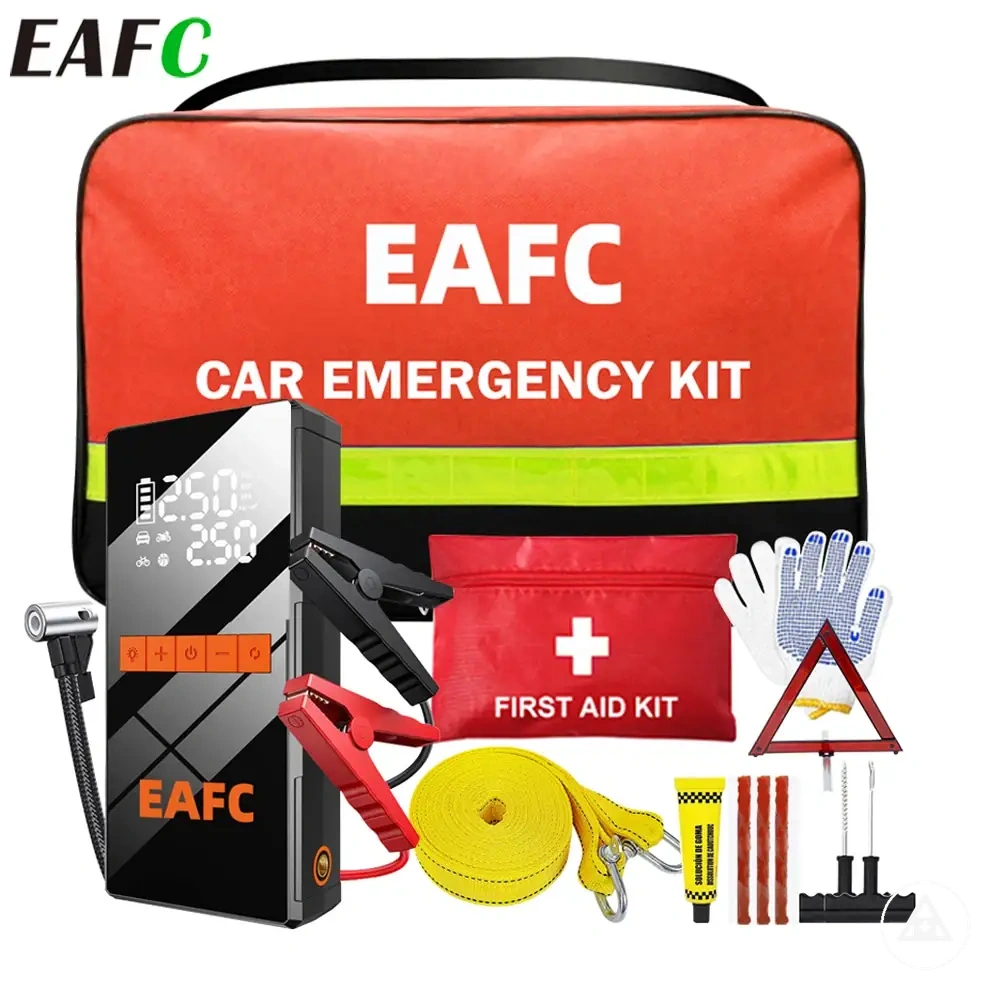
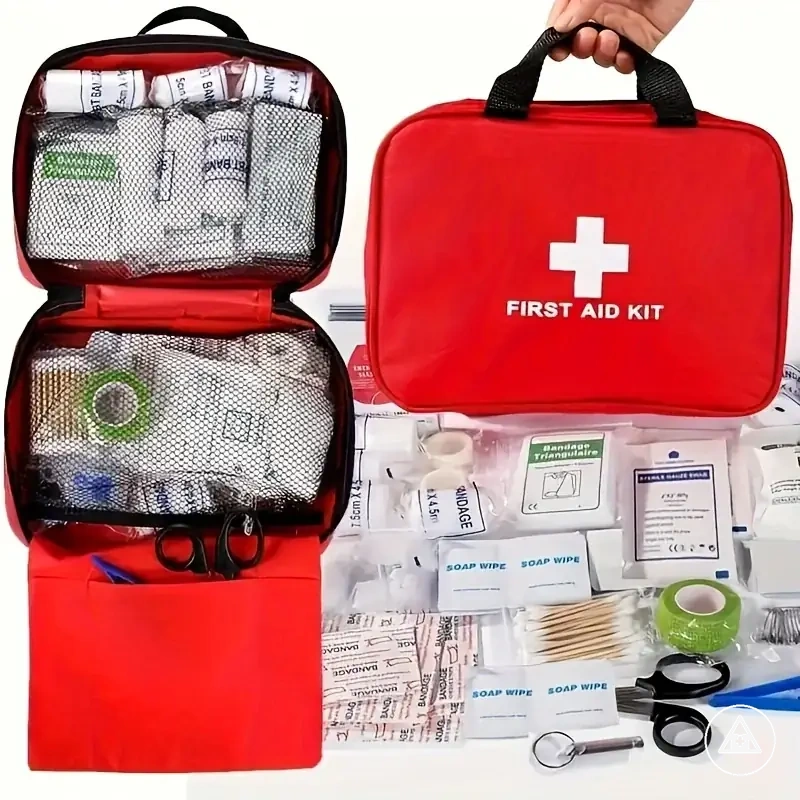
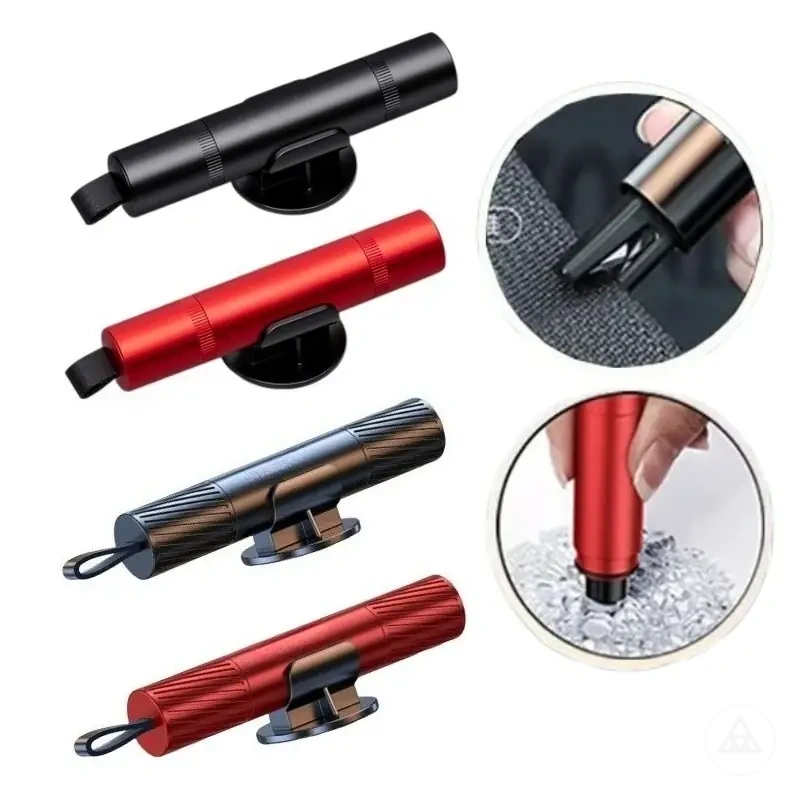
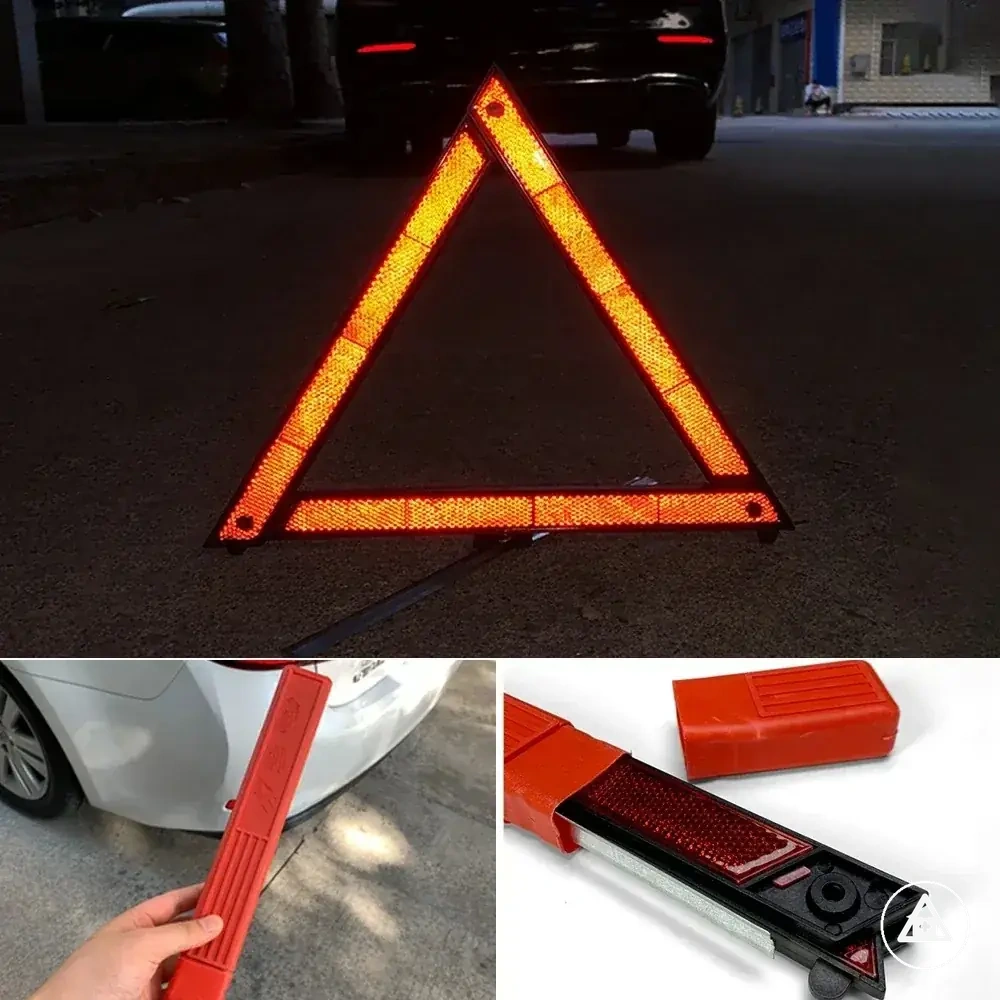
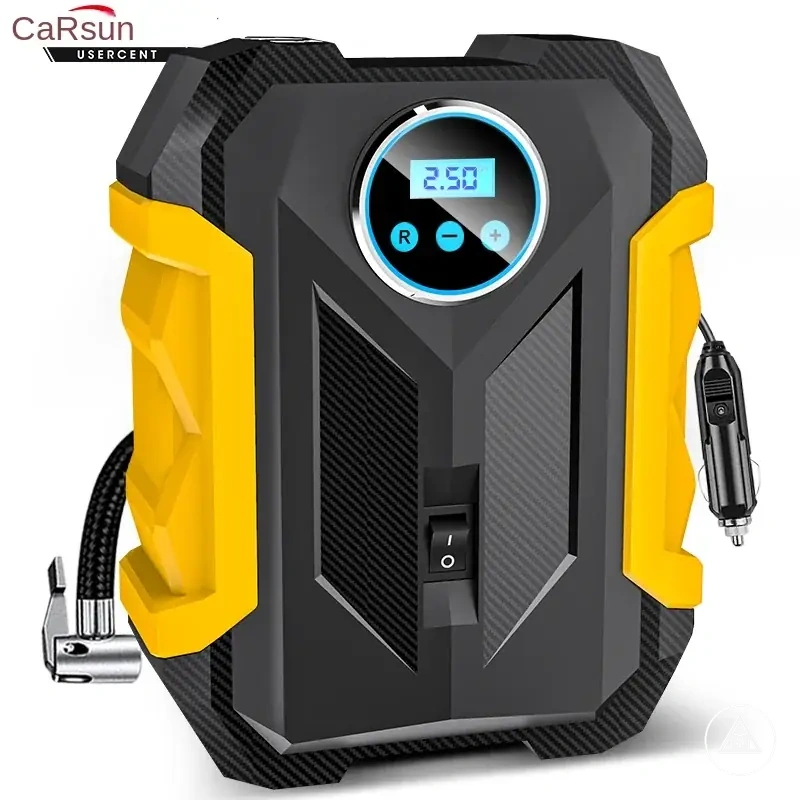
The products below are useful examples for comparing available options. Before buying, check that the compatibility criteria, key features, and product details match your needs.
How driving conditions affect which contents matter most
Driving conditions change item priority by making some car emergency kit contents more relevant in one setting and less relevant in another. Weather, distance, road remoteness, night driving, passenger needs, and travel frequency shift what matters most without changing this page into a separate seasonal or trip-planning checklist. Conditions change priority, not the whole topic scope.
In wet, cold, or low-visibility weather, blankets, water, visibility items, and storage choices may become more important. On longer routes or remote roads, communication support and waiting-time supplies can carry more weight than they would during short urban driving. Weather, distance, and road remoteness all change item importance by changing risk exposure and likely waiting conditions.
| Driving condition | Contents that become more important | Reason priority changes |
|---|---|---|
| Weather | Blanket, water, visibility items | Temperature, poor visibility, or changing road conditions may increase comfort and noticeability needs |
| Remoteness | Communication items, waiting supplies | Remote roads may increase waiting time and reduce access to nearby help |
| Night driving | Flashlight, warning items, reflective gear | Low light can make visibility and signalling more important |
| Passenger needs | Comfort supplies, water, basic waiting items | Children, pets, or other occupants may change what is useful during a delay |
| Travel frequency | Readiness-focused contents | Frequent travel may increase the value of items that remain easy to access and check |
The same item can be central in one driving context and only conditional in another. A blanket may matter more in cold weather, while communication support may matter more on remote roads or longer distances. For weather-specific context, seasonal kit items can help separate seasonal priority from the broader contents list.
A common myth is that changing conditions require a full seasonal checklist inside every contents section. In reality, this section only explains condition-based priority, while seasonal checklist details and long-trip planning belong in their own narrower guides.
Contents that need checking, replacement, or expiry control
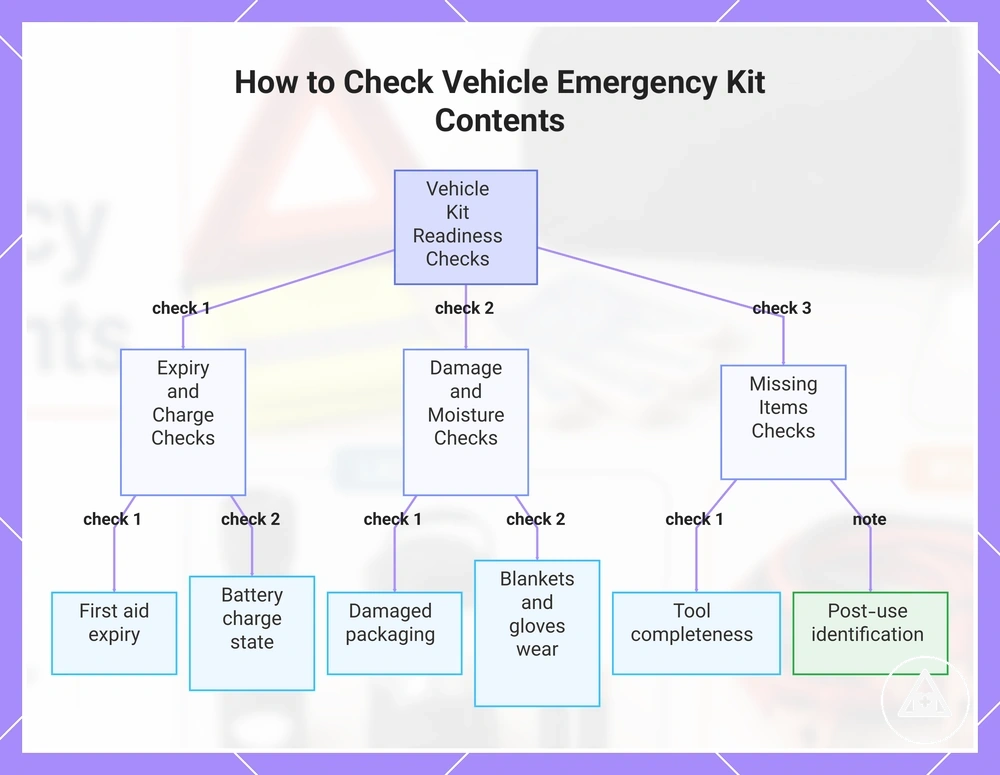
Contents that need checking, replacement, or expiry control can lose usefulness over time even when they remain stored inside a vehicle. Expiry, charge loss, damage, moisture exposure, and missing items can reduce how well a kit supports a roadside situation. Readiness depends on condition checks rather than ownership alone.
Condition checks are periodic reviews of kit contents to identify replacement signals before an item is needed. A stored item may appear present while still becoming less useful because of expiry, damage, missing parts, or reduced charge. Effective checking focuses on expiry, charge, damage, and missing-item signals.
- First aid supplies: Check for first aid expiry or signs that expired supplies may no longer be suitable for use.
- Battery-powered lighting: Check charge state, battery condition, and spare batteries because reduced power may affect reliability.
- Stored water and stored food: Check packaging and storage condition because deterioration may become a replacement signal.
- Damaged packaging: Check for tears, leaks, crushing, or moisture exposure that may affect item condition.
- Blankets and gloves: Check for wear, contamination, moisture, or damage that may reduce usefulness.
- Tool completeness: Check for missing tools, missing parts, or incomplete sets that may limit practical use.
After a roadside use event, replacement signals may become easier to identify because missing, damaged, or depleted items are more visible. Item-condition-risk logic is most useful when applied consistently across first aid supplies, battery-powered lighting, stored water, stored food, blankets, gloves, and tool completeness. For broader upkeep guidance, see maintaining kit contents.
A common myth is that a kit remains ready simply because it stays inside the vehicle. In reality, contents can expire, become damaged, lose charge, or become incomplete over time, which is why this section focuses on readiness signals rather than a full maintenance routine.
This chart shows the three main categories of condition checks to ensure kit contents remain useful, focusing on expiry, charge, damage, and missing-item signals.
The products below are useful examples for comparing available options. Before buying, check that the compatibility criteria, key features, and product details match your needs.