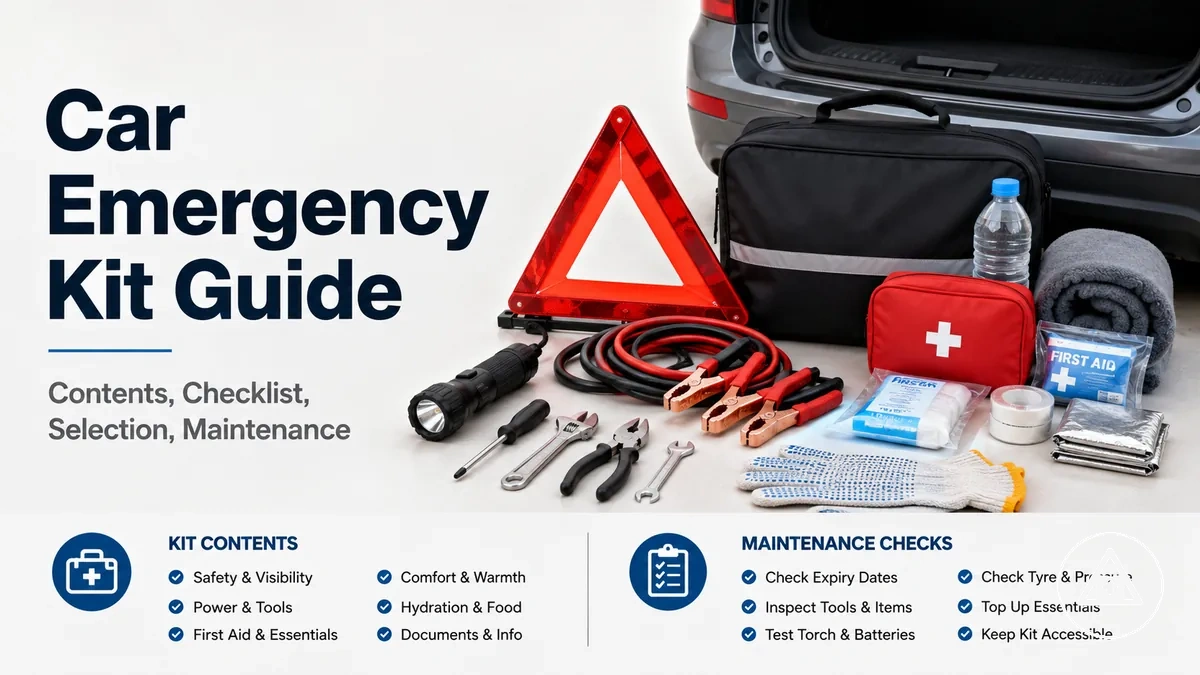
Car emergency kit guide for roadside preparedness
A car emergency kit is a set of vehicle safety supplies that helps a driver prepare for short-term roadside problems. It usually brings first aid, warning equipment, tyre support, storage, and basic readiness items into one accessible place for roadside preparedness.
A breakdown, low light, weather exposure, or a flat tyre can make a simple delay harder to manage. The right coverage depends on driving conditions, distance, vehicle storage, likely roadside problems, and how well the kit is maintained.
This guide helps Australian drivers understand what a car emergency kit is meant to support before comparing contents, checklist logic, selection factors, use, and maintenance. A roadside emergency kit can improve purchase-readiness when the user evaluates coverage by situation rather than by product count alone.
A car emergency kit supports roadside response, but it does not replace safe driving, vehicle servicing, emergency services, or professional roadside assistance. Its value is strongest when it is treated as a preparedness aid with clear limits.
What a car emergency kit should prepare for
A car emergency kit is a set of vehicle supplies for short-term roadside safety, visibility, basic response, and communication during common driving disruptions. A car emergency kit keeps key supplies together so they are easier to access when unexpected situations occur. Its role is to support short-term preparedness rather than provide a complete solution to every roadside event.
A breakdown, flat tyre, low light conditions, minor injury, weather exposure, or extended waiting time can create circumstances where basic supplies may help improve readiness. Communication challenges can also become more important when assistance is delayed or conditions change. What a car emergency kit should prepare for depends on the situation, but the goal is to organize support items around common roadside needs rather than provide procedures or repairs.
What a car emergency kit should prepare for can be grouped into the following preparedness situations. The image highlights the main categories and helps clarify the scope of roadside preparedness.
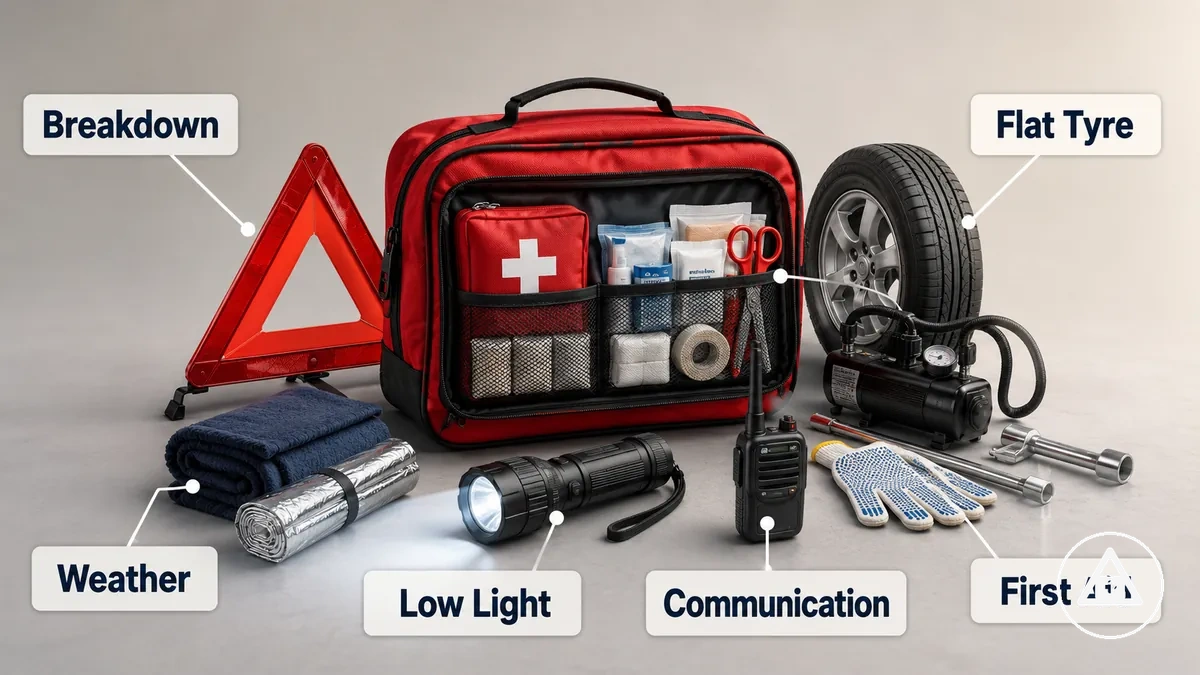
- Breakdown situations that may involve waiting for help and maintaining visibility.
- Flat tyre events where basic tyre support items may assist preparedness.
- Low light conditions that can affect roadside visibility and communication.
- Minor injury situations where first aid supplies may provide initial support.
- Weather exposure during delays away from immediate shelter.
- Communication constraints while waiting for roadside help or emergency services.
A common misconception is that a car emergency kit replaces roadside assistance or vehicle maintenance. A car emergency kit supports preparedness and can help organize a response to common disruptions, but professional help, lawful roadside behaviour, and ongoing vehicle maintenance remain separate responsibilities.
Essential item groups in a car emergency kit
Essential item groups in a car emergency kit organize coverage by roadside problem type and help explain what a kit may need to address different conditions. Grouping emergency supplies by purpose makes it easier to evaluate visibility, first aid, power, tyre support, communication, hydration, and weather protection needs. The table below shows how these groups connect a roadside problem to an attribute and a practical decision value.
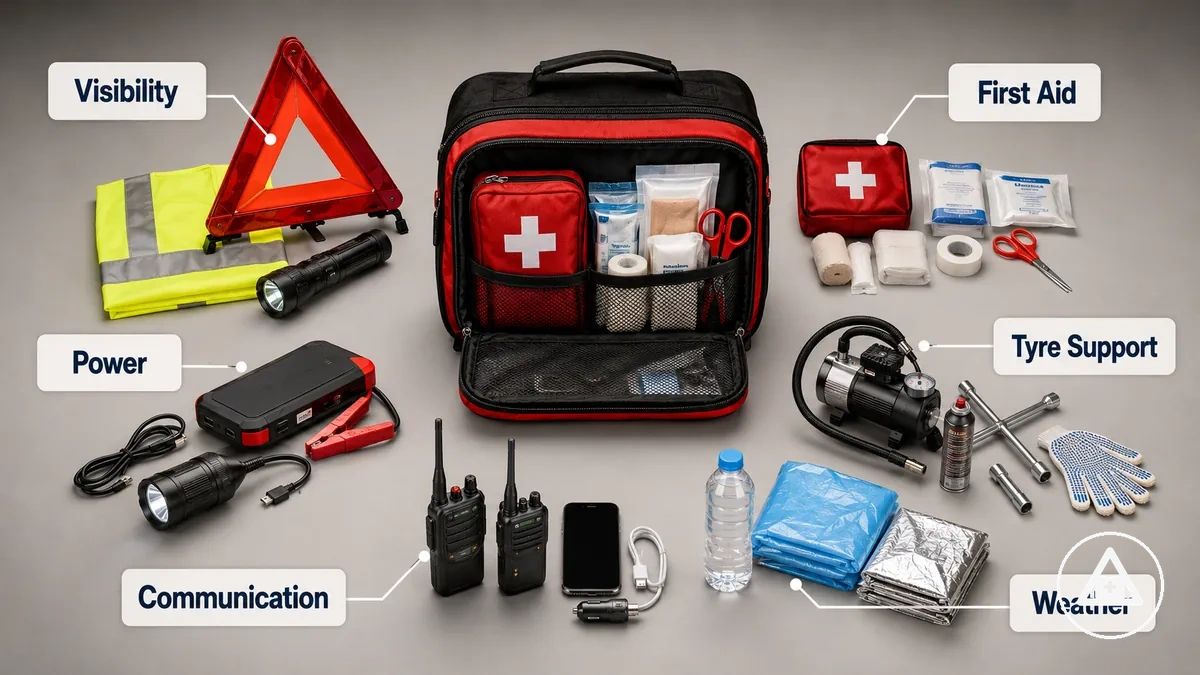
| Item group | Main attribute | Typical condition | Decision value |
|---|---|---|---|
| Visibility items | Visibility | Low light or roadside stops | May improve recognition in roadside situations |
| First aid supplies | First aid | Minor injury or discomfort | Can support initial care while awaiting assistance |
| Power and lighting support | Power | Reduced visibility or device power concerns | May assist awareness and communication |
| Tyre support items | Tyre support | Tyre-related roadside problem | Can provide basic support depending on conditions |
| Communication supplies | Communication | Waiting time or delayed assistance | May help maintain contact when needed |
| Hydration and weather protection | Weather protection | Exposure to changing conditions | Can improve comfort during delays |
Item groups follow simple EAV logic by linking an attribute to a condition and then to a decision value. This approach helps explain why a particular group matters without turning kit contents into a full product list or a fixed set of requirements.
These categories can guide later selection decisions because each group addresses a different roadside problem and contributes a different type of coverage. For more detailed category-level examples, see car emergency kit contents.
Roadside visibility and warning equipment
Visibility equipment helps other road users notice a vehicle and driver during a roadside stop. Visibility equipment improves recognition by making warning signals and roadside activity easier to see in changing conditions. The primary safety role is better recognition during a roadside stop.
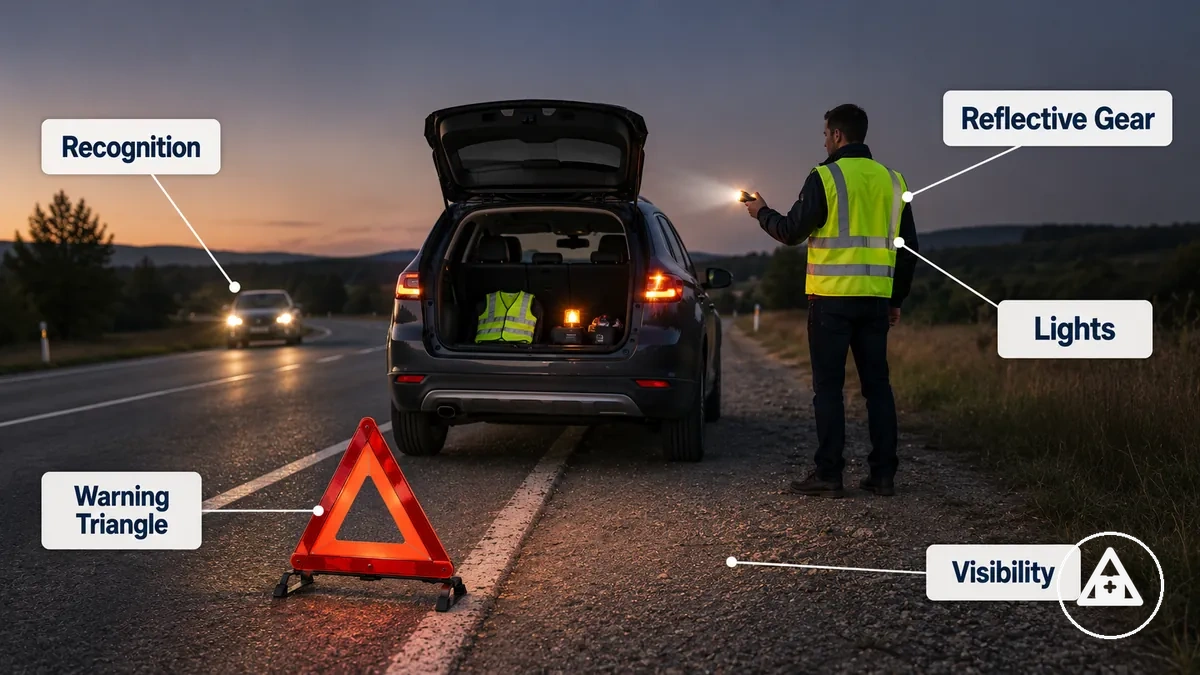
- Warning triangle — provides a visible warning marker that may improve recognition when a vehicle is stopped.
- Reflective gear — increases visibility and may help other road users notice a person near the vehicle.
- Lights — add visibility cues that can assist recognition when natural light is reduced.
- Placement readiness — helps visibility equipment remain accessible when conditions require prompt use.
In low-light conditions, visibility items can become more important because recognition may be reduced by darkness, weather, or traffic. Placement readiness depends on local conditions and applicable rules, so warning equipment should be positioned with consideration for the surrounding environment.
First aid and personal safety supplies
First aid and personal safety supplies support minor injury needs, personal comfort, and basic protection while waiting for help. These supplies can assist with short-term roadside situations and help maintain comfort in changing conditions. Their role is supportive and does not replace professional medical care for more serious situations.
First aid and personal safety supplies can be checked through simple categories that connect a condition to a support value.
- First aid items — may support minor injury situations and basic care needs.
- Gloves — can provide a protective barrier during handling or cleanup tasks.
- Thermal protection — may improve comfort during waiting time in cold or changing weather conditions.
- Hygiene items — can support cleanliness and personal comfort during roadside delays.
- Personal medications — may be useful when individual health needs require access to prescribed supplies.
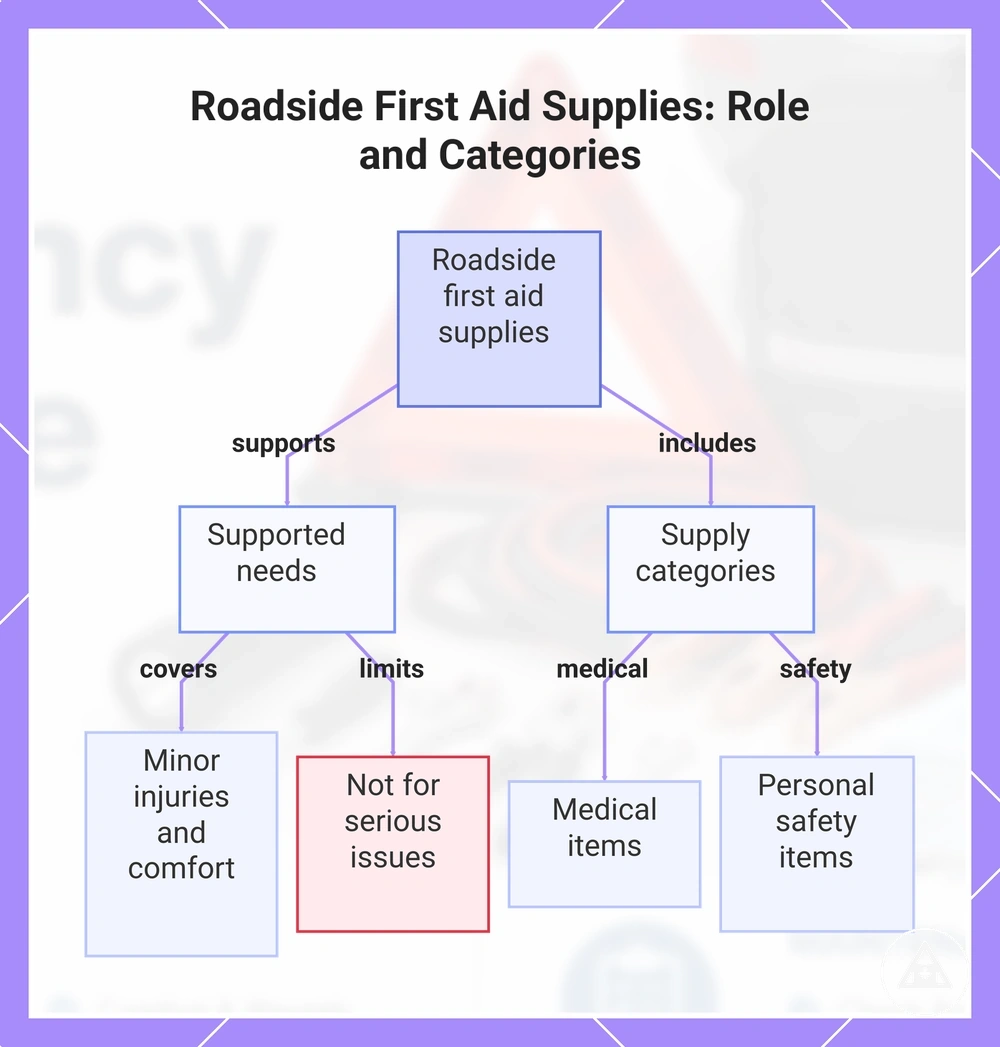
Serious injury or urgent medical situations require emergency help rather than kit-based self-management. Personal medications, first aid items, and comfort supplies should be used according to individual needs and circumstances, while professional care remains appropriate when a condition is more serious.
This chart shows the supportive role of roadside first aid supplies and their main categories, including when professional care is needed.
Power, tyre, and basic repair tools
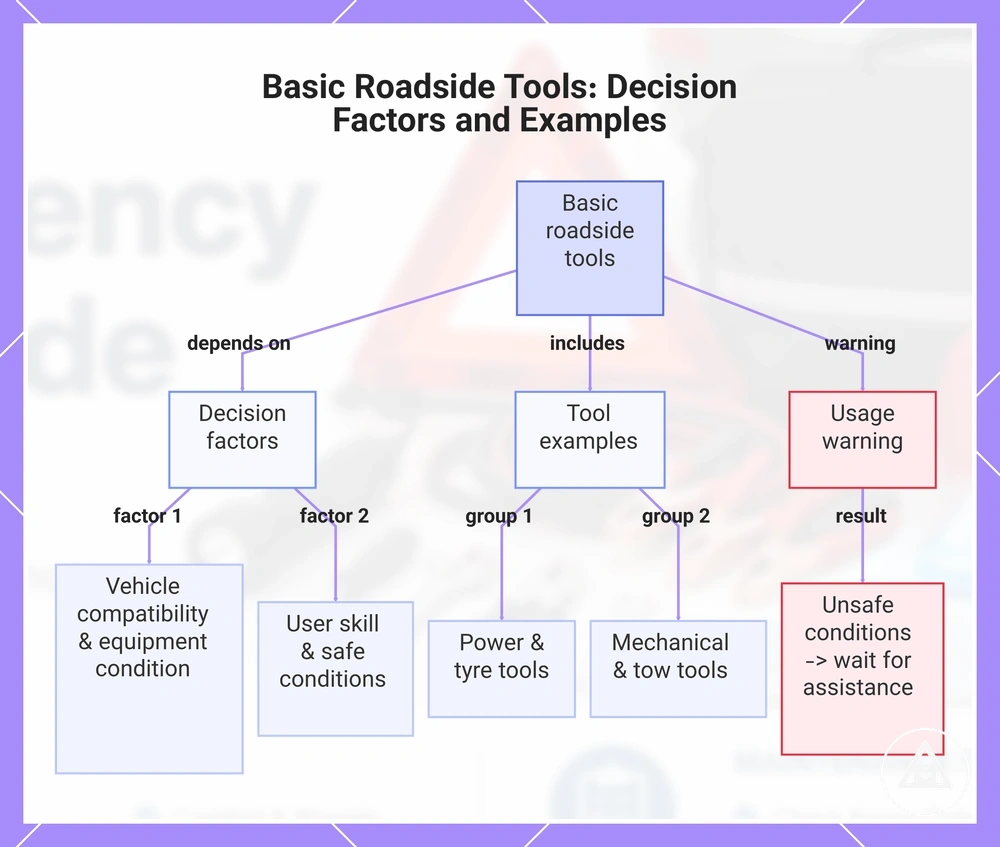
Power support, tyre support, and basic repair tools help with limited roadside response when they can be used safely and appropriately. These items provide capability for common vehicle-related issues, but decision usefulness depends on vehicle compatibility, equipment condition, and user skill. Their value is limited to situations that allow safe conditions for use.
Power, tyre, and basic repair tools can be assessed by matching capability to the condition where the tool may be useful.
- Jump-start support — may assist with a battery-related issue when equipment compatibility and safe conditions are present.
- Tyre inflation — can provide tyre support when pressure loss affects vehicle use, although suitability depends on tyre condition and the nature of the problem.
- Hand tools — may support simple adjustments when the task matches the user's skill level and can be performed safely.
- Tow-related items — can offer limited support when vehicle fit, equipment condition, and circumstances are appropriate.
- Batteries and power items — may help maintain access to lighting, communication devices, or other power support equipment during a roadside delay.
Carrying a roadside tool does not mean it should always be used. For example, a jump-start device may offer capability in one situation, but unsafe surroundings, uncertain vehicle compatibility, or limited experience can make waiting for assistance the more appropriate decision.
This chart shows the key factors that determine the usefulness of basic roadside tools and provides examples of common tools, along with a warning about unsafe conditions.
Communication, water, and weather supplies
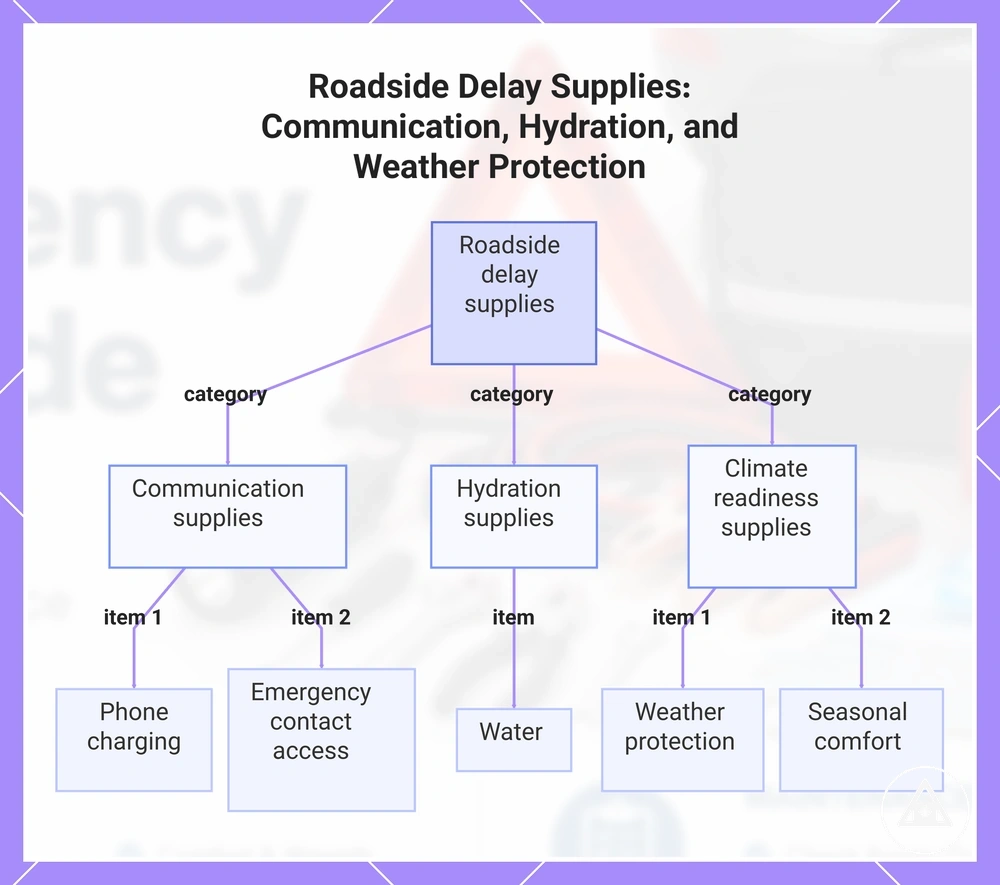
When waiting time increases or help is delayed, communication, water, and weather supplies can support readiness, comfort, and contact access. These items help address exposure, hydration, and communication needs that may arise during a roadside delay. Their usefulness depends on conditions, climate, trip length, and the nature of the situation.
Communication, water, and weather supplies can be grouped into waiting-readiness categories that connect an item to a condition and its readiness effect.
- Phone charging — may help maintain communication when device power becomes limited during delayed help scenarios.
- Emergency contact access — can support communication when assistance, service providers, or personal contacts need to be reached.
- Water — may support hydration during waiting time, particularly when climate or conditions increase comfort needs.
- Weather protection — can help reduce exposure to rain, heat, or cold while waiting for assistance.
- Seasonal comfort supplies — may improve comfort when changing weather conditions affect waiting-readiness.
Longer waits, remote areas, or changing weather can increase the readiness effect of communication, hydration, and weather protection supplies. The type and amount of support that may be useful often varies with climate, route conditions, and trip length.
This chart shows the main categories of waiting-readiness supplies for roadside delays and the specific items in each category.
Car emergency kit checklist structure
Car emergency kit checklist structure organizes readiness checks so supplies can be reviewed, verified, and updated in a consistent way. A car emergency kit checklist separates baseline items from context-specific additions and helps identify what needs attention before a roadside situation occurs. The structure works by combining baseline items, condition checks, and optional additions within the same readiness process.
When readiness gaps exist, check status helps identify what requires action and why. The verification process focuses on whether supplies are present, current, accessible, and suitable for the driving context. The table below uses a simple item → check status → action needed format.
| Checklist group | What to verify | When to adjust | Action needed |
|---|---|---|---|
| Baseline items | Core supplies are present | When items are used or removed | Replace missing items |
| Optional additions | Supplies suit weather or trip length | When driving context changes | Adjust items as needed |
| Expiry checks | Batteries, first aid supplies, and water remain suitable for use | When condition or dates require review | Refresh affected supplies |
| Missing items | Check status identifies gaps | During readiness reviews | Restore missing items |
| Storage verification | Bag location and access remain practical | When vehicle storage changes | Confirm accessibility and organization |
For detailed verification steps and a fuller readiness process, see the car emergency kit checklist. This section focuses on checklist structure and readiness logic rather than full checklist detail.
How to choose a kit for your driving conditions
The right kit depends on driving conditions because different situations create different coverage needs. To choose a kit effectively, match the likely driving environment to the supplies and readiness attributes that may be useful. The selection decision should be based on how well kit coverage aligns with typical driving needs.
Driver context influences which attributes deserve greater attention. A driver focused on daily commuting may prioritize compact storage, visibility, and quick access, while road trips or rural routes may place more emphasis on communication, water, tyre support, or extended waiting-time readiness. This context-matching approach follows EAV logic: driver context → required attribute → kit condition → selection decision.
Common driving situations create different coverage priorities. Family travel, weather exposure, trip length, passenger needs, and route conditions can all affect which attributes may deserve greater attention. The table below matches driving contexts to coverage needs and selection criteria.
| Driving condition | Coverage attribute | Kit condition to check | Selection implication |
|---|---|---|---|
| Daily commuting | Visibility and accessibility | Compact kit with convenient access | Coverage focuses on routine driving needs |
| Family travel | Comfort and readiness support | Coverage reflects passenger requirements | Broader coverage may be appropriate |
| Road trips | Communication, water, and tyre support | Supplies remain suitable for longer journeys | Coverage may extend beyond short-distance travel |
| Rural routes | Communication and waiting-time readiness | Support remains available if help is delayed | Additional preparedness may be useful |
| Weather exposure | Weather protection and seasonal readiness | Blanket, waterproof bag, or seasonal items suit expected conditions | Coverage adjusts to likely exposure conditions |
Selection criteria become clearer when the kit is evaluated against real driving situations rather than product rankings. For a deeper criteria-based evaluation, see how to choose a car emergency kit, which explores additional selection factors that may influence long-term readiness.
Daily driving, road trips, and remote routes
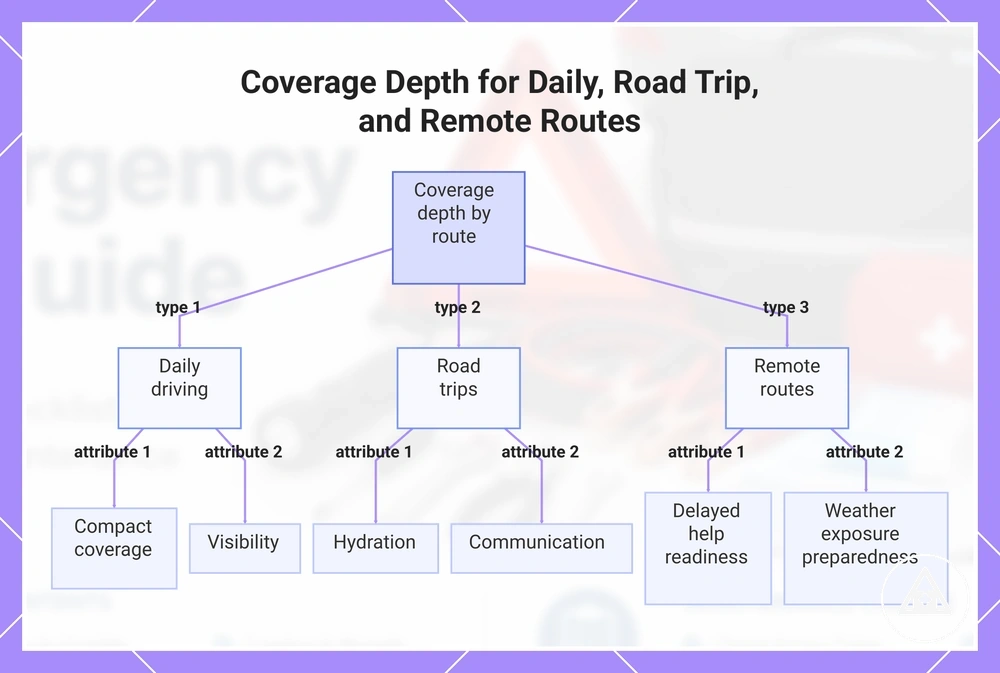
Route type changes coverage depth because distance, delay, and exposure can alter roadside preparedness requirements. Daily driving often benefits from compact coverage, visibility, and quick access, while longer journeys may increase the value of additional support items. The appropriate coverage depth depends on how route conditions may affect waiting time and exposure.
For daily driving, commuting conditions may place greater emphasis on compact coverage, visibility, and accessibility. For road trips, increased distance can raise the importance of water, tyre support, communication, and lighting when delays occur away from regular services. For remote routes, delayed help, weather exposure, and longer waiting periods may justify broader roadside preparedness coverage when conditions suggest a greater likelihood of extended disruption.
If travel regularly involves isolated areas or longer delays, communication, hydration, lighting, and exposure-related readiness may become more relevant. Coverage decisions are most useful when they reflect route type and likely delay conditions rather than a single kit configuration.
This chart shows how daily driving, road trips, and remote routes each demand different roadside preparedness coverage priorities based on distance, delay, and exposure.
Vehicle space, kit size, and fast access
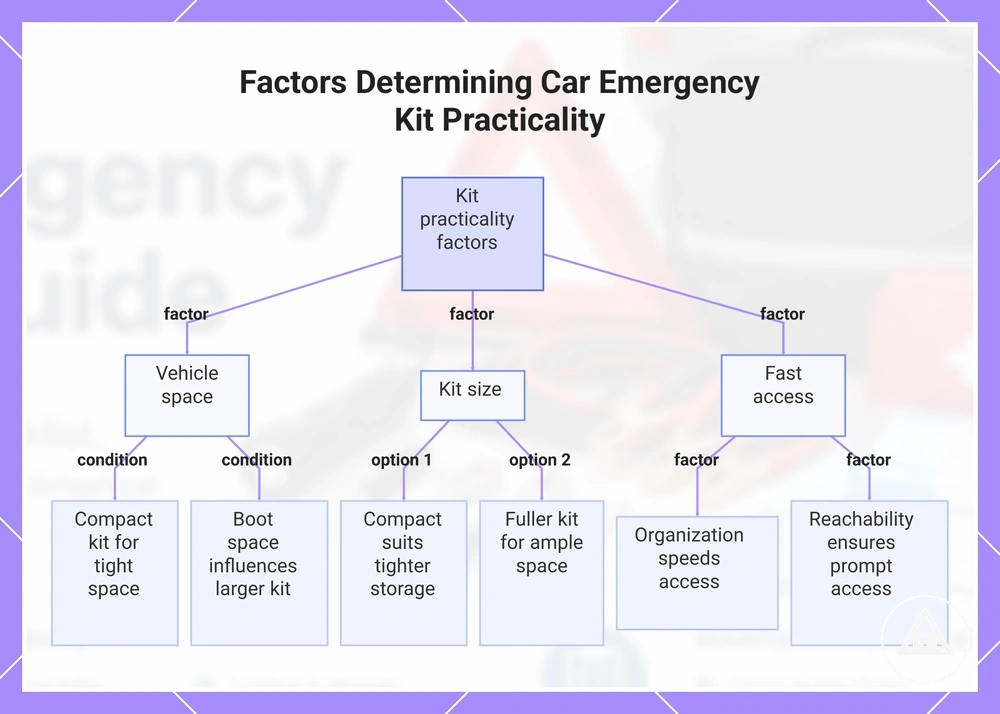
Vehicle space, kit size, and fast access determine whether a car emergency kit remains practical to store and use. A compact kit may suit tighter storage conditions, while a fuller kit may be more practical when vehicle size, boot space, and passenger needs allow additional coverage. The most effective choice depends on whether storage supports access-readiness when supplies are needed.
- Vehicle space: Limited vehicle space may favor a compact kit when storage constraints affect practical fit.
- Boot space: Available boot space can influence whether a larger kit remains practical without reducing storage flexibility.
- Bag durability: A durable bag may help maintain organization when the kit is moved or stored regularly.
- Organization: Clear organization can improve access speed when supplies need to be located quickly.
- Reachability: A kit may be more useful when reachability allows access without unnecessary delay.
- Access speed: Faster access can improve readiness when roadside conditions require prompt use of supplies.
Storage layout, passenger needs, and vehicle size can influence whether a compact kit or fuller kit is the more practical option. A hard-to-reach kit may reduce readiness even when the contents are comprehensive because reachability and access speed remain part of the overall selection effect.
This chart shows the main factors that determine whether a car emergency kit is practical to store and use, including vehicle space, kit size, and fast access conditions.
Pre-made, DIY, compact, and full kit trade-offs
Kit path choice depends on trade-offs between coverage, customization, storage, and maintenance burden. A pre-made kit, DIY kit, compact kit, or full kit can fit different needs depending on how much convenience, tailoring, portability, or broader coverage matters. The comparison below frames the main category-level trade-offs.
| Kit path | Main advantage | Main limitation | Best-fit condition |
|---|---|---|---|
| Pre-made kit | Convenience and faster setup | Less customization | When simplicity and immediate coverage are priorities |
| DIY kit | Greater customization | Higher maintenance burden and item-selection responsibility | When specific coverage needs require tailoring |
| Compact kit | Better portability and easier storage | More limited coverage | When vehicle space and daily storage constraints matter most |
| Full kit | Broader coverage | More space, weight, and organization requirements | When storage capacity supports additional trip readiness items |
A pre-made kit emphasizes convenience, while a DIY kit emphasizes customization. The trade-off is that a DIY kit may better reflect individual requirements, but ongoing maintenance and missing-item responsibility usually remain with the owner. The best-fit condition depends on whether convenience or customization is the stronger priority.
A deeper comparison of a pre-made or DIY car emergency kit is useful when standard coverage may not match the driver's specific storage, route, or passenger needs.
A compact or full car emergency kit comparison becomes more relevant when portability, storage space, and broader coverage pull the decision in different directions.
Portability versus coverage also affects maintenance burden. A compact kit may reduce storage pressure and be easier to keep organized, while a full kit may provide broader coverage but require more space, more review, and more refresh effort.
The most suitable path depends on how coverage needs, customization preferences, storage conditions, and maintenance burden align with the intended use of the car emergency kit. When one attribute becomes more important than the others, the trade-offs usually become easier to evaluate.
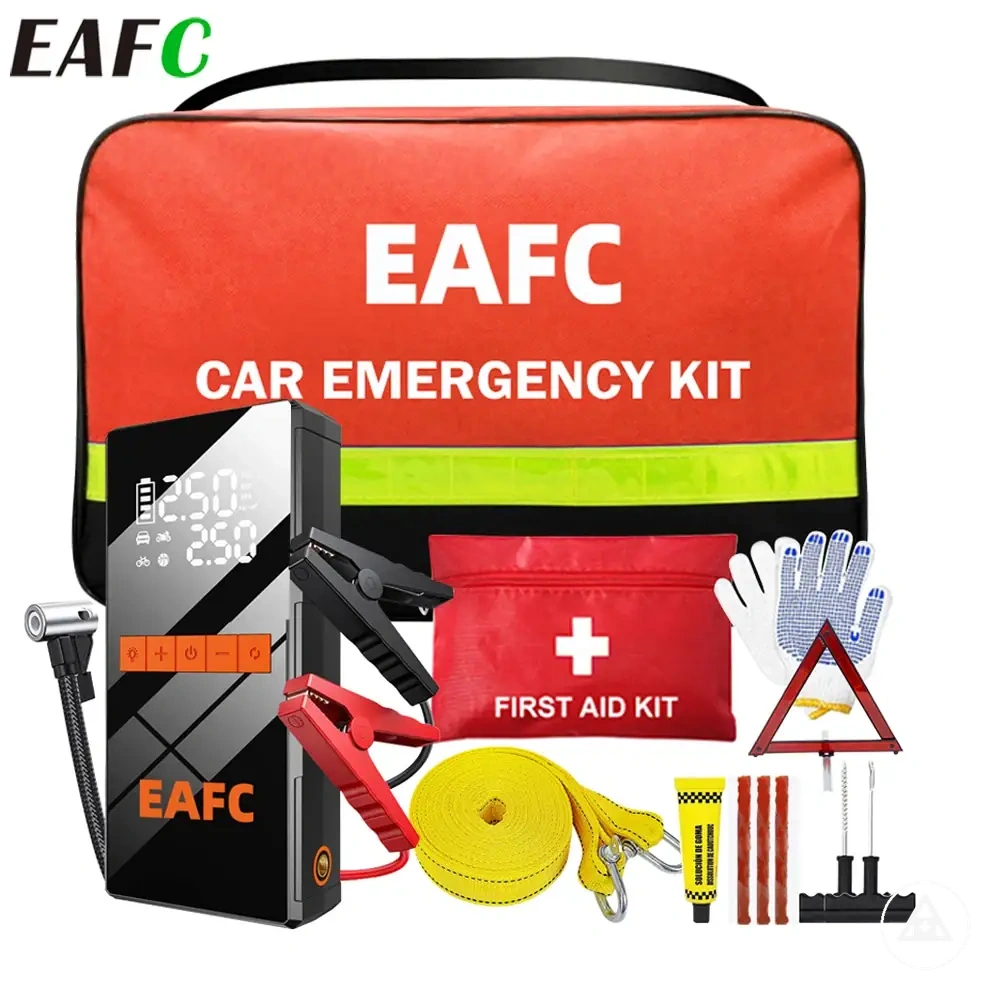
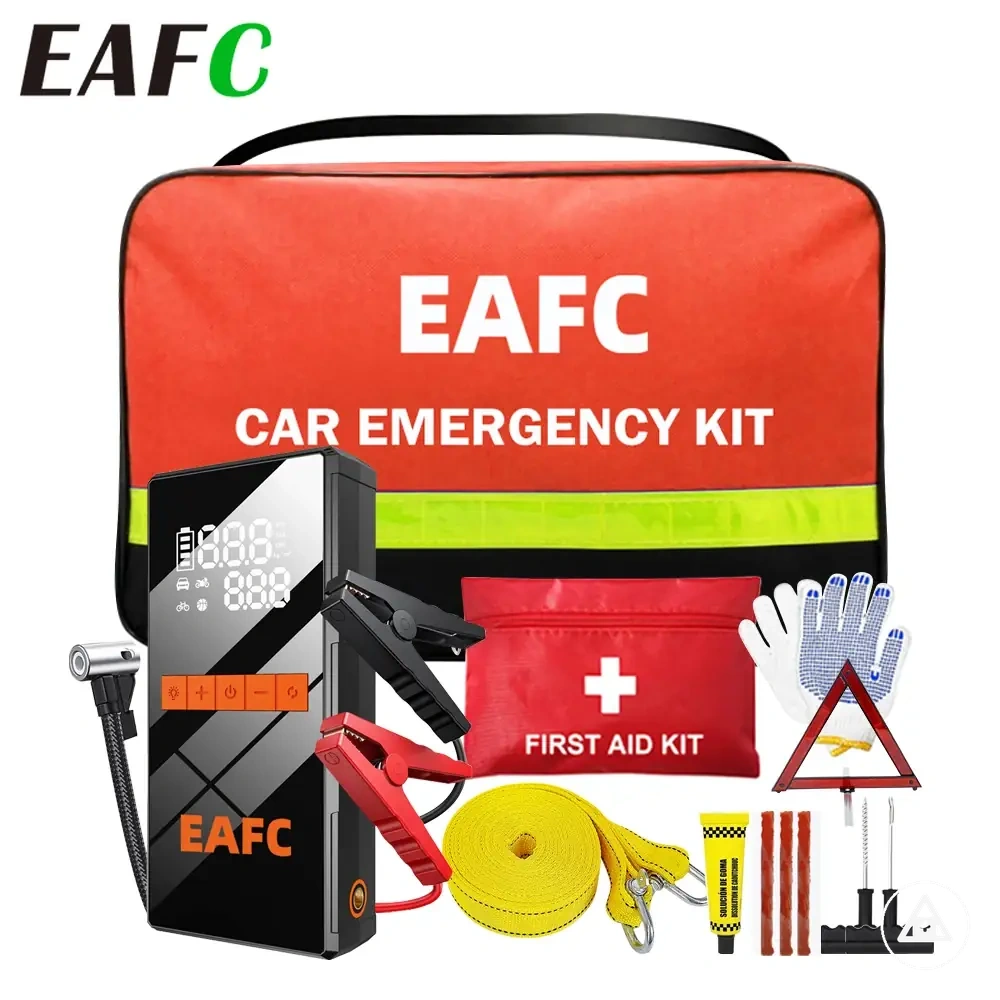
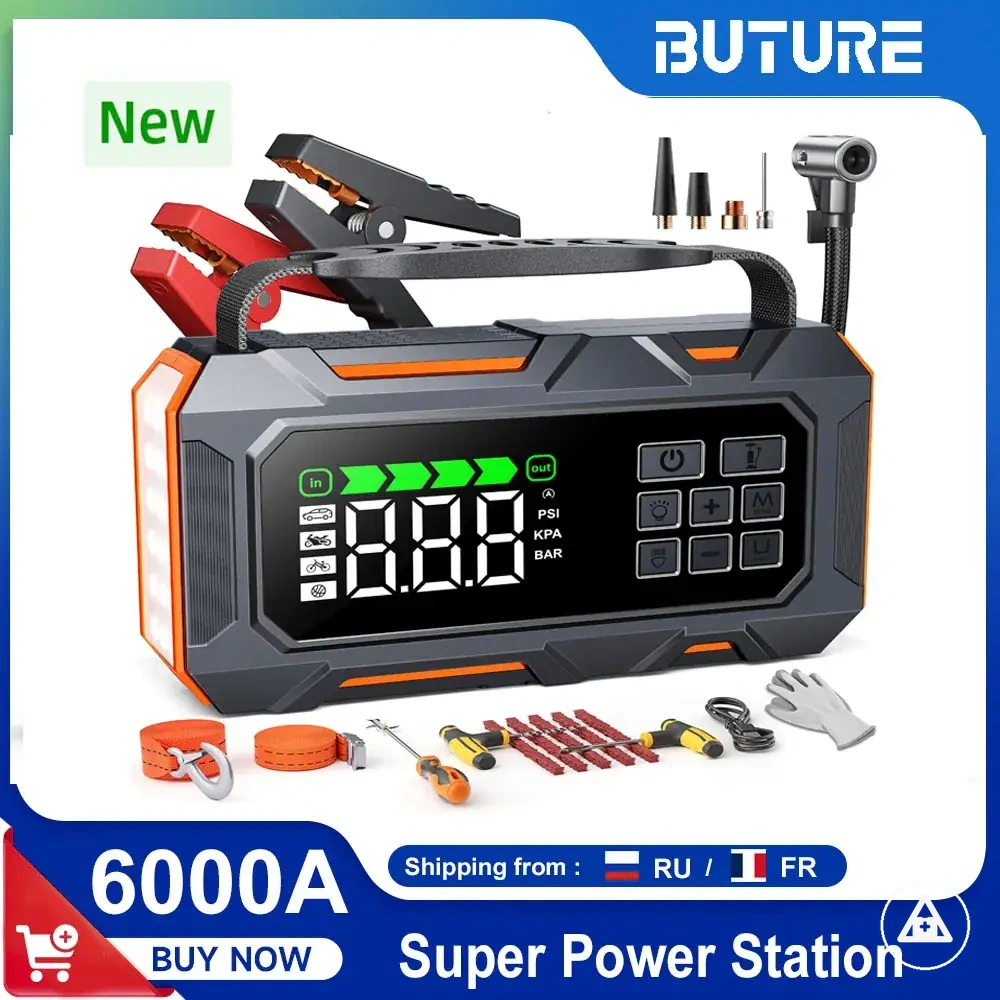
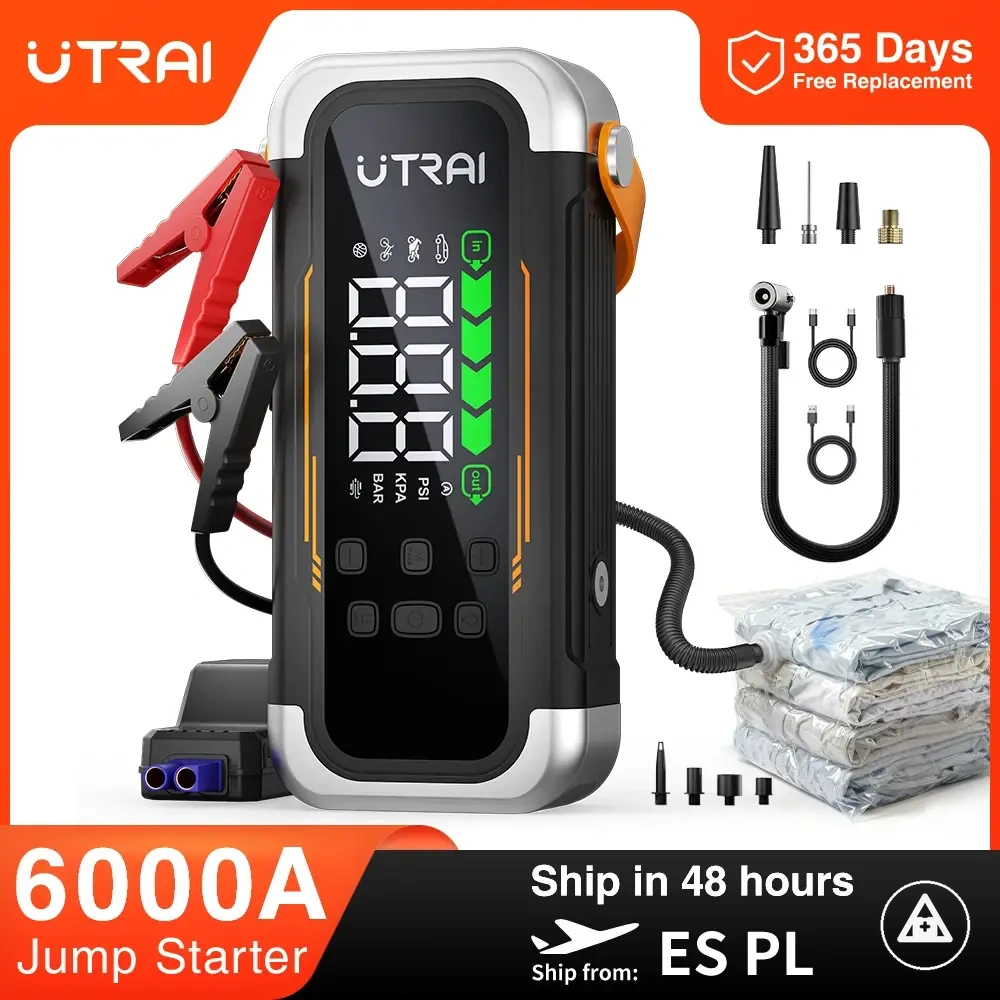
Here are product examples that may make comparison easier. Before buying, always review the compatibility criteria, essential features, and product details.
Coverage and value signals before purchase
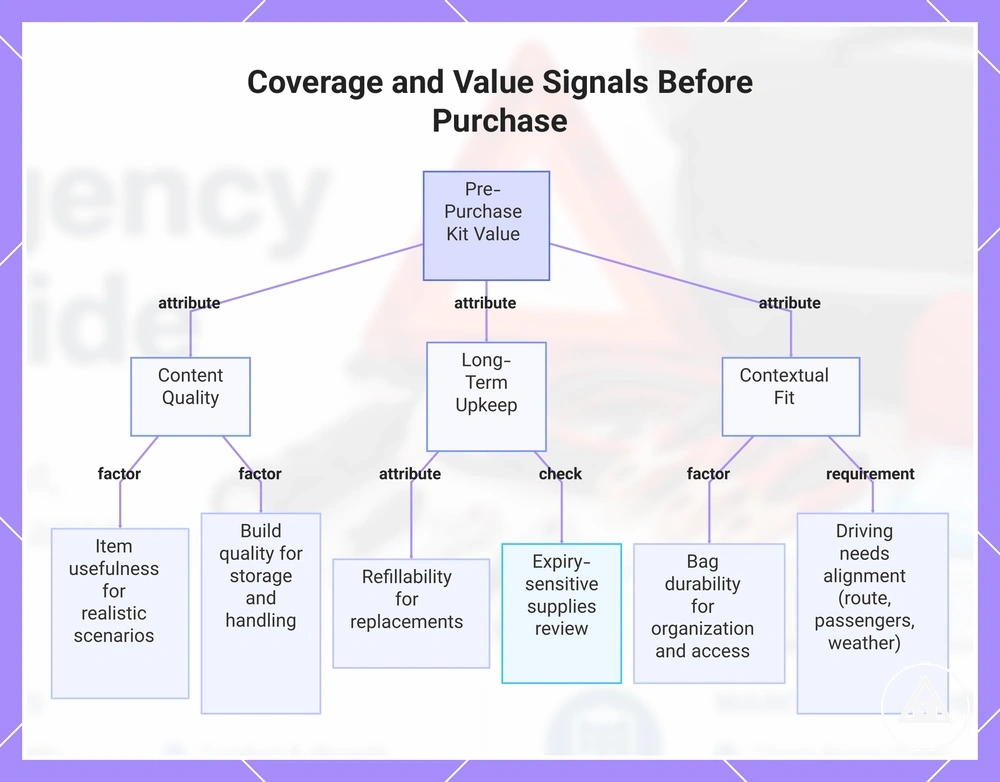
Coverage and value signals before purchase depend on usable coverage rather than item count alone. A kit with fewer useful supplies may provide stronger practical value than a larger kit filled with low-use or duplicate items. The value frame should focus on item usefulness, build quality, refillability, bag durability, expiry-sensitive supplies, and fit with driving needs.
Item usefulness shows whether the contents support realistic roadside situations instead of only increasing product count. Build quality matters when supplies need to remain usable during storage, handling, and occasional roadside use. These criteria create decision value because they connect coverage quality to purchase-readiness.
Refillability affects long-term value because used, damaged, or missing supplies may need replacement over time. Expiry-sensitive supplies should be checked with maintenance in mind, especially where batteries, first aid items, water, or similar contents may lose suitability. A kit has stronger indicative value when useful parts can be refreshed without replacing the whole setup.
Bag durability and compatibility with driving needs help determine whether the kit remains practical after purchase. A durable, organized bag can support storage and access, while the contents should match daily routes, passengers, weather exposure, and likely roadside conditions. Practical value depends on how well the kit’s coverage fits the driver’s actual use case.
Coverage and value signals before purchase can be checked through a short value checklist that separates useful completeness from inflated item counts.
- Usefulness: Contents match likely roadside needs rather than duplicate low-value items.
- Build quality: Supplies appear suitable for storage, handling, and occasional use.
- Refillability: Used or expired items can be replaced without losing the kit’s structure.
- Bag durability: The storage bag supports organization, movement, and access.
- Expiry-sensitive supplies: Items that may age or expire can be reviewed and refreshed.
- Driving needs: Coverage aligns with route type, passengers, weather, and vehicle use.
- Indicative value: Practical coverage supports purchase-readiness without relying on item count alone.
Purchase-readiness improves when coverage quality, item usefulness, build quality, refillability, bag durability, expiry-sensitive supplies, and driving needs align with the intended use of the kit. Large product counts should not be treated as automatic value unless the contents clearly support practical roadside readiness.
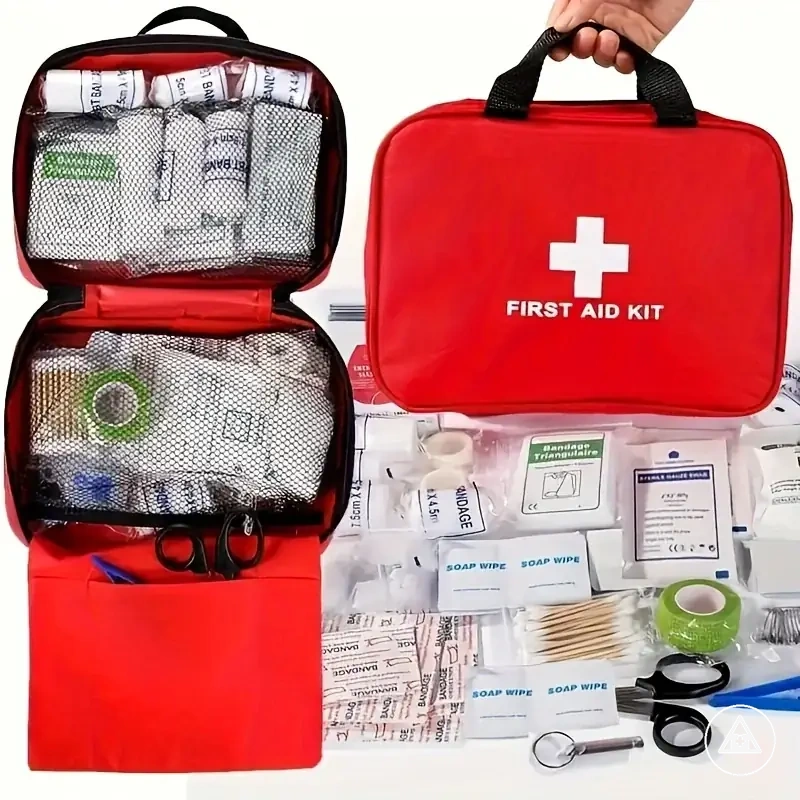
Here are product examples that may make comparison easier. Before buying, always review the compatibility criteria, essential features, and product details.
This chart organizes the key criteria for evaluating a vehicle emergency kit's coverage and value before purchase, focusing on practical quality over item count.
Roadside use and storage readiness
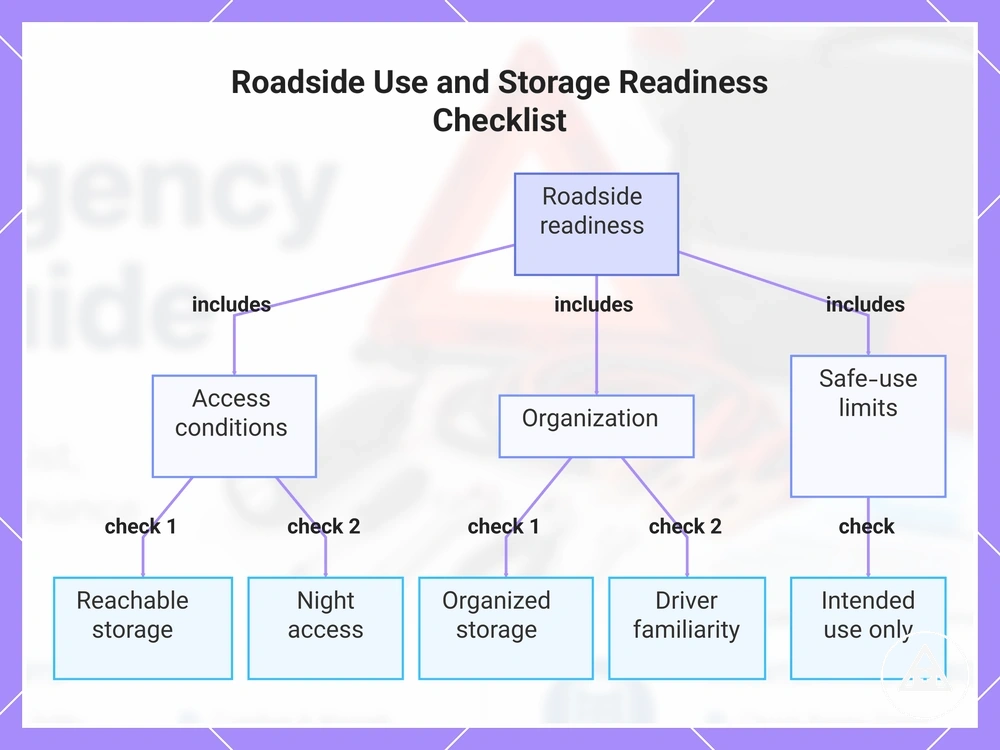
Roadside use and storage readiness depends on safe access and understanding safe-use limits before a roadside situation occurs. Access conditions and use conditions interact because a kit that cannot be reached or understood quickly may reduce roadside readiness. The outcome is stronger readiness when safe access, organized storage, and driver familiarity align.
Roadside use and storage readiness can be checked with a brief readiness checklist that verifies access, organization, and safe-use limits.
- Storage location: The kit remains reachable without unnecessary searching.
- Organized storage: Item organization supports fast access when needed.
- Driver familiarity: The driver recognizes the contents and their intended purpose.
- Night access: Visibility remains practical when roadside conditions occur in low light.
- Safe-use limits: Contents are used only within their intended purpose and conditions.
When a breakdown happens in darkness or poor visibility, stress may make item retrieval more difficult. Driver familiarity and clear item organization can help reduce confusion when access readiness becomes more important. The outcome depends on organization logic as much as kit contents.
Storage location affects readiness because access can become more difficult if kit storage is inconsistent or difficult to reach. Additional storage considerations are covered in where to keep a car emergency kit. This section focuses on access readiness and storage-depth boundaries rather than detailed storage-location decisions.
Safe-use limits remain important because roadside use depends on visibility, road conditions, and individual judgment. A car emergency kit may support roadside readiness, but it does not replace situation-specific safety decisions or create guaranteed safe use in every circumstance.
This chart shows the three main categories of checks for verifying that a car emergency kit is ready for roadside use: access, organization, and safe-use limits.
Maintenance checks and seasonal updates
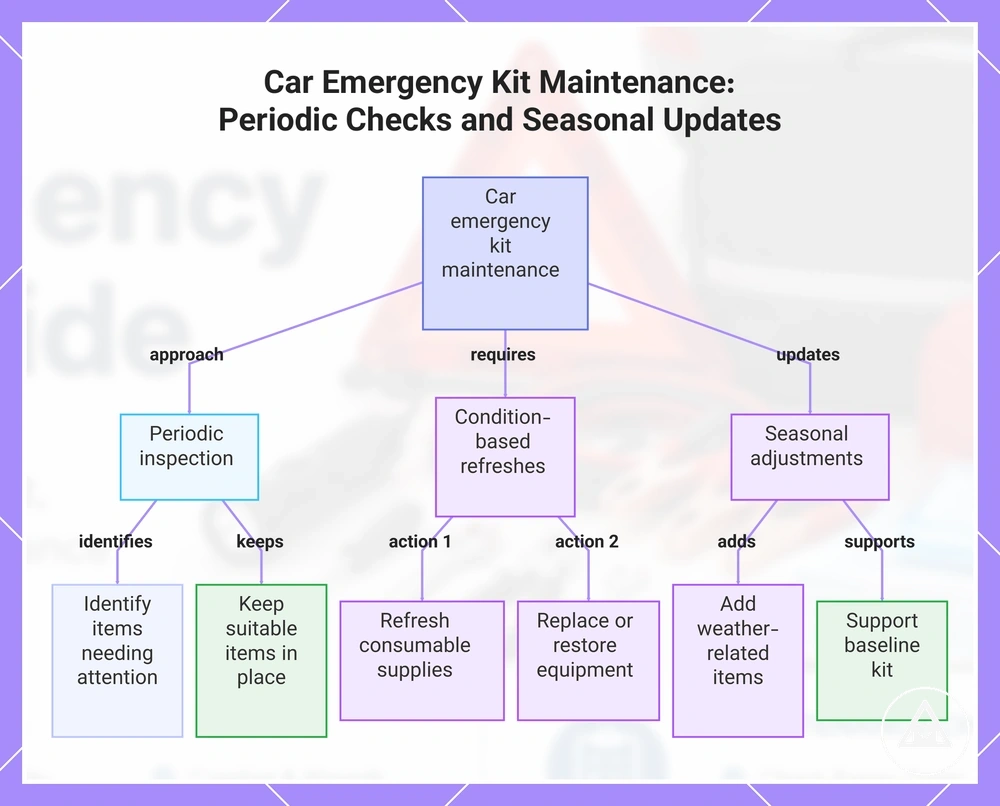
Maintenance checks and seasonal updates help a car emergency kit remain reliable through periodic inspection and condition-based updates. Item condition may change over time even when the core purpose of the kit stays the same. Reliability depends on checking condition changes and applying appropriate maintenance logic.
Maintenance checks and seasonal updates can be reviewed with a maintenance mini-checklist that separates stable baseline items from items that may expire, wear, or change seasonally.
- Expired first aid supplies: Review condition and refresh affected items when supplies are no longer suitable for use.
- Batteries: Check condition when stored power may have declined and refresh when needed.
- Water: Inspect stored water and replace it when condition or storage circumstances suggest a refresh action.
- Damaged tools: Replace or refresh tools when wear, damage, or reduced usability is identified.
- Missing items: Restore missing components when readiness gaps are found.
- Storage wear: Review bag condition and organization when kit storage shows signs of deterioration.
- Weather-related additions: Adjust seasonal items when conditions suggest different exposure needs.
Expired first aid supplies, batteries, water, damaged tools, and missing items may affect readiness when condition changes are left unchecked. Periodic inspection helps identify which items require attention while suitable items can remain in place. The appropriate response depends on item condition and the required refresh action.
Seasonal updates can introduce weather-related additions when climate or travel conditions change, but seasonal adjustments should support the baseline kit rather than replace it. The core readiness logic remains stable even when seasonal refresh decisions vary by conditions.
Additional guidance on inspection and condition-based updates is available in car emergency kit maintenance. Further seasonal considerations are covered in the seasonal car emergency kit checklist. Seasonal updates should adjust the baseline kit when conditions change, while the core readiness structure remains the foundation of long-term reliability.
This chart shows the key maintenance actions for a car emergency kit: periodic inspection to identify items needing attention, condition-based refreshes for expired or damaged items, and seasonal adjustments to support the baseline kit.
Residual questions about car emergency kits
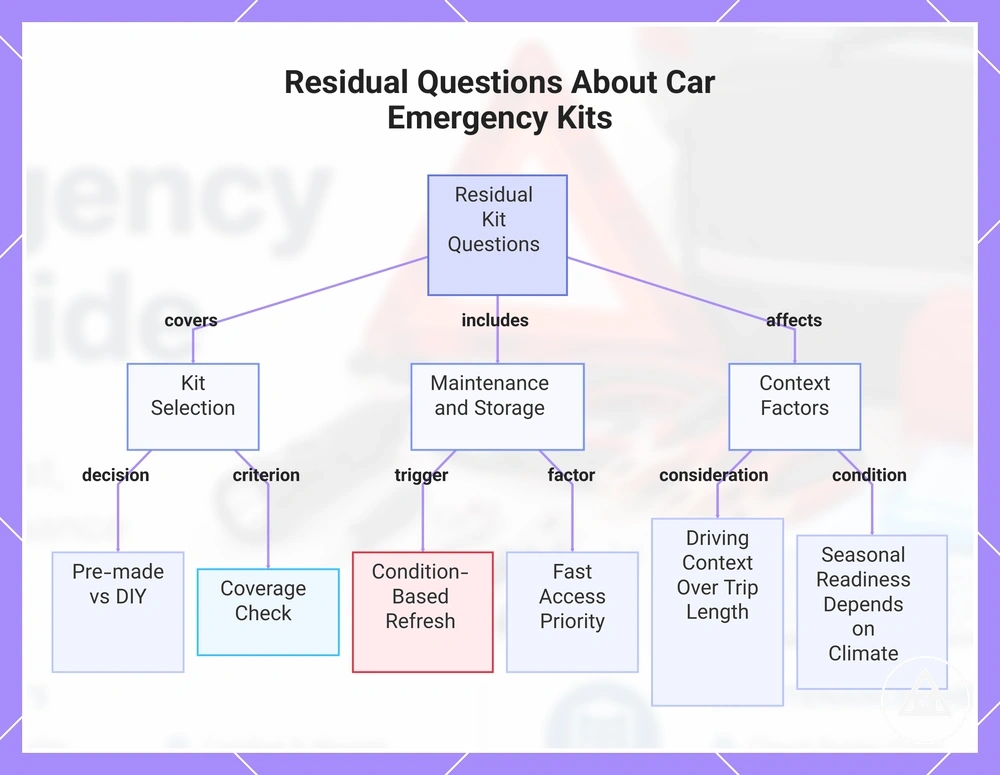
Residual questions about car emergency kits usually involve edge cases that remain after the main decision points have been covered. This FAQ addresses common kit doubts without repeating earlier sections in detail.
What if I only take short drives?
A car emergency kit may still be useful for short drives when delays, minor vehicle issues, or changing conditions occur unexpectedly. Driving context often matters more than trip length alone. Consider whether a basic kit aligns with your usual travel conditions.
Should I choose a pre-made kit or build my own?
Pre-made kits can be enough when their coverage matches your needs. A DIY kit may be more suitable when coverage gaps, storage preferences, or customization needs exist. The decision depends on the balance between convenience and customization.
When should I refresh supplies in a car emergency kit?
Refresh supplies when condition changes affect readiness. Expiry, batteries, damaged items, missing items, or storage-related issues may indicate a maintenance need. Item condition is usually a more useful guide than a fixed schedule.
Can storage location affect kit readiness?
Yes, storage location can affect readiness when access becomes difficult. Fast access may be more important during a roadside delay than the exact storage position. Storage should support practical access within the vehicle.
Is seasonal readiness necessary for every driver?
Not always. Seasonal readiness depends on climate, travel patterns, and likely exposure conditions. Seasonal adjustments may be more relevant when weather conditions change significantly.
How do I know if a car emergency kit has enough coverage?
A car emergency kit may have enough coverage when its contents align with likely roadside needs and driving conditions. Coverage depends on the vehicle, travel habits, and readiness expectations. Focus on suitability and condition rather than item count alone.
This chart summarizes the key considerations and answers for common edge-case questions about car emergency kits.