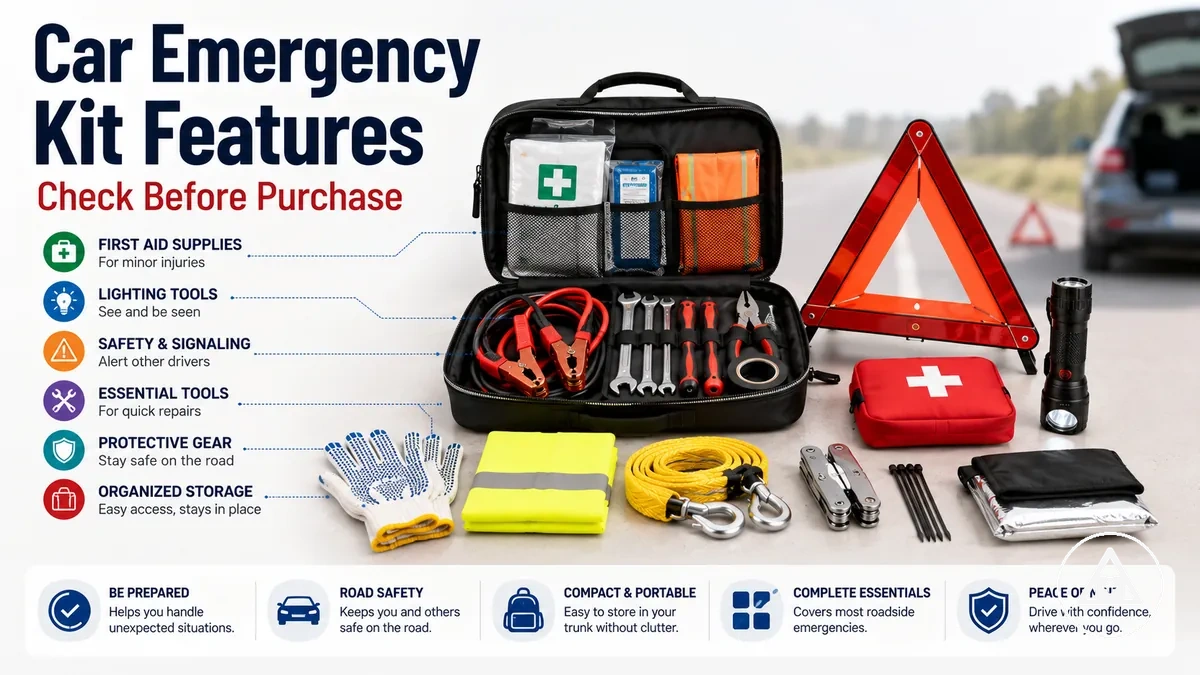
Car emergency kit features that matter before purchase
Car emergency kit features define how well a kit can support purchase-readiness before a roadside problem happens. The useful question is not only what the kit includes, but whether its coverage, access, safety support, first aid basics, storage bag, and value fit the way the vehicle is used.
For daily driving, a roadside emergency kit may need compact access, visibility items, and basic emergency supplies. For longer drives or less predictable routes, feature groups such as a tire inflator, jumper cables, warning triangle, flashlight, reflective gear, first aid supplies, and organized storage can matter more because tire problems, battery issues, visibility needs, and minor injury support may appear in different conditions.
Features matter because they turn a car emergency kit from a simple item bundle into a decision-support tool. A kit with usable coverage is often more helpful than a catalog-style count of small items when the parts are accessible, relevant, and suitable for the likely roadside situation. For the broader page context, see the car emergency kit hub.
Evaluative summary: Weak feature selection can make a kit look complete while leaving gaps in access, coverage, or purchase confidence. A practical review should qualify safety readiness, repair support, first aid preparedness, storage organization, and value without promising a certain outcome.
What feature coverage means in a car emergency kit
Feature coverage means the practical range of roadside support, safety support, first aid, lighting, and storage support a car emergency kit can provide. It defines the types of situations the kit is designed to help address rather than offering a complete guarantee of readiness. This makes feature coverage a useful selection filter.
A kit may include many items but still leave important gaps if key features are difficult to access, incomplete, or not aligned with likely roadside needs. Practical coverage improves when safety support, lighting, first aid, and storage functions work together in a usable way. The key distinction is between included items and usable coverage.
Item count does not automatically reflect practical value because duplication can increase quantity while missing essentials still create decision risk. Feature coverage focuses on whether an included item becomes a usable feature and whether a missing feature could limit support in a relevant situation. For a full inventory discussion, see essential kit contents.
Feature coverage means in a car emergency kit becomes easier to evaluate when coverage groups are viewed separately. The image below clarifies how roadside support, safety support, first aid, lighting, and storage contribute to overall kit coverage and selection risk.
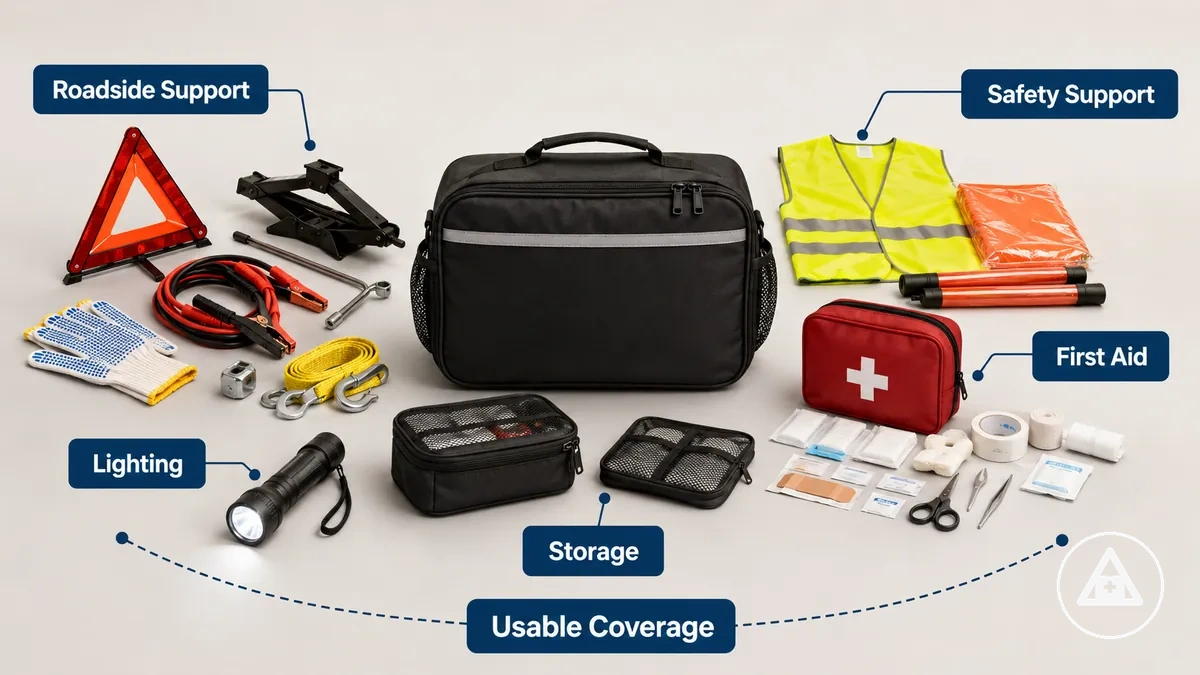
- Roadside support: Missing support features may reduce practical help when a tire problem, battery issue, or similar roadside need occurs.
- Safety support: Visibility and warning features can improve practical coverage when drivers need to make their presence more noticeable.
- First aid: Basic first aid features contribute to emergency coverage when supplies are accessible and suitable for the situation.
- Lighting: Lighting features can improve usability when visibility conditions make access or assessment more difficult.
- Storage: Organized storage helps convert included items into usable coverage by improving access and reducing the risk of overlooked features.
Roadside repair features for common vehicle problems
Roadside repair features support limited roadside problems rather than solving every breakdown. Their usefulness depends on the problem, tool rating, vehicle fit, and user capability. This means repair-oriented features are best understood as support tools for specific roadside situations.
A flat tire, weak battery, or minor recovery situation may require different roadside tools. A tire inflator or air compressor can provide flat tire support when the power source, tire condition, and pressure needs are suitable. Jumper cables may offer battery-start support when battery condition and clamp quality allow safe use. A tow strap may provide recovery support in limited situations, but the outcome depends on load-related considerations, attachment points, vehicle fit, and user capability.
Roadside repair features for common vehicle problems are easier to assess when each tool is viewed by capability and limitation rather than presence alone. The image below labels the main repair-oriented features and shows how they function as a grouped subset of the kit.
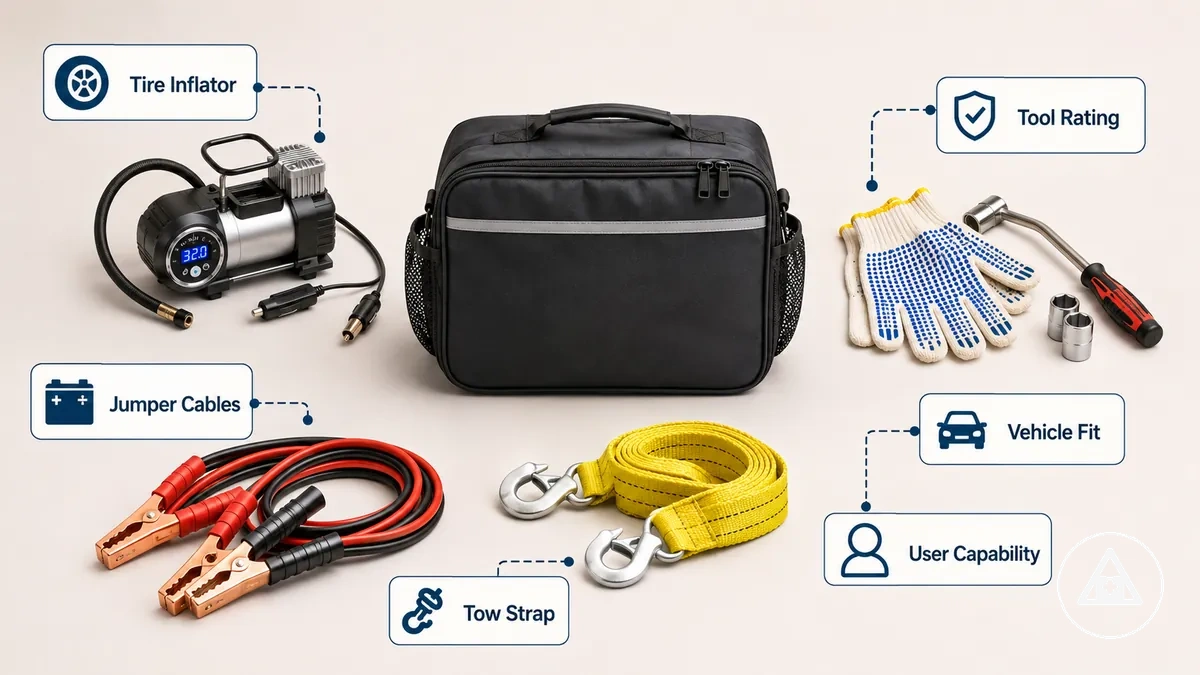
In a flat tire scenario, an inflator may help when the tire can still hold air. In a weak battery scenario, jumper cables may support a restart attempt when compatible conditions exist. In a limited recovery scenario, a tow strap may assist only when suitable attachment points and conditions are available. The table below organizes roadside repair features for common vehicle problems by capability and limitation.
| Entity/part | Attribute/criterion | Value/condition | Effect/risk/decision |
|---|---|---|---|
| Tire inflator or air compressor | Power source and inflation capability | Suitable power access and manageable tire condition | May support flat tire response; assistance may still be needed for major tire damage |
| Jumper cables | Clamp quality and battery-start support | Compatible connection points and suitable battery condition | May assist with a weak battery situation when used correctly |
| Tow strap | Tool rating and attachment compatibility | Appropriate attachment point and vehicle fit | Recovery support may be limited by conditions and safety limitation factors |
| Gloves or basic tool support | Handling assistance | Usable condition and user capability | Can improve access and control but does not replace repair expertise |
Air compressor and tire inflator capability
Air compressor and tire inflator capability depends on pressure needs, hose reach, power source, and duty limit. A tire inflator is more useful when its pressure rating, connector fit, and gauge suit the intended vehicle and usage conditions, so flat-tire support depends on fit and realistic operating limits.
Air compressor and tire inflator capability is easier to assess when the main components are viewed together rather than as a single feature. The image below labels the capability checks that influence usability, including the gauge, hose, power connection, and tyre valve access.
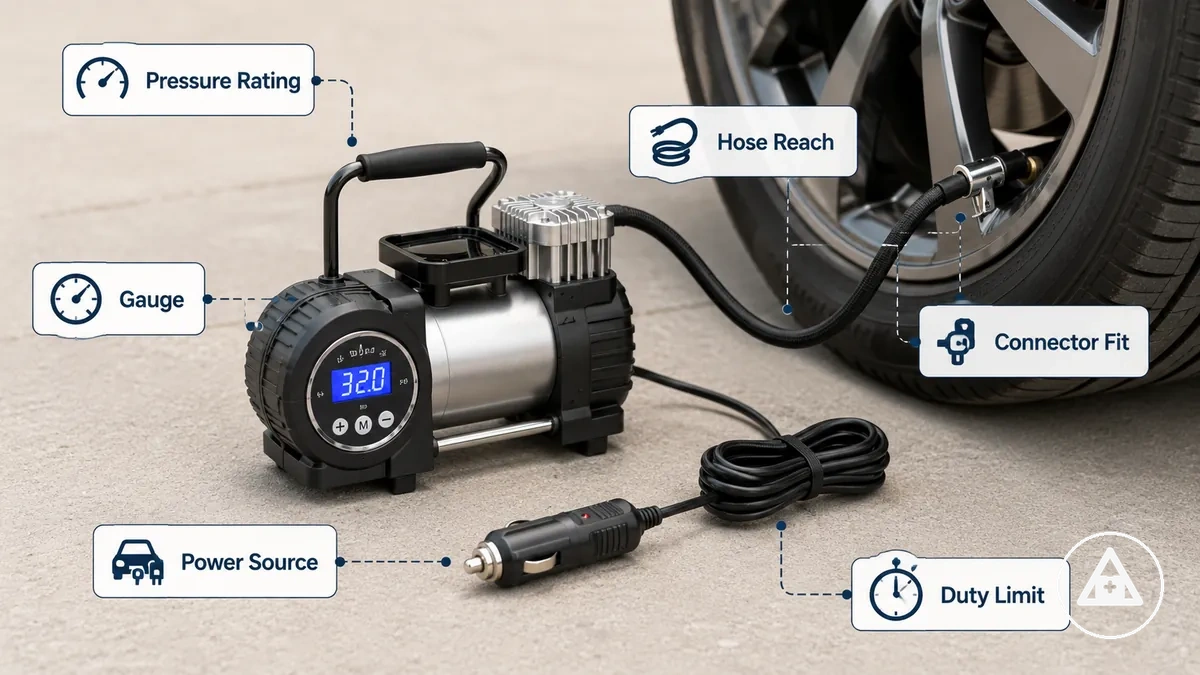
Air compressor and tire inflator capability should be checked against fit, power, and realistic limits before purchase. The mini-checklist below helps verify whether the inflator supports expected inflation needs without implying universal suitability.
- Pressure rating: Qualifies whether the tire inflator may be appropriate for the intended inflation requirement.
- Gauge: A readable gauge can help inform pressure-related decisions during inflation support.
- Hose reach: Hose reach affects access to the tyre valve and overall usability.
- Connector fit: Connector fit influences how securely the tyre inflator connects to the valve.
- Power source: Vehicle socket compatibility and power connection design affect practical operation.
- Duty limit: A duty limit helps define operating boundaries and may require caution during extended use.
A portable inflator may help with a slow leak when the tyre can still accept and hold air. A damaged tyre may still require professional assistance beyond the compressor unit, so flat-tire support remains conditional and subject to tyre condition.
Jumper cables and battery-start support
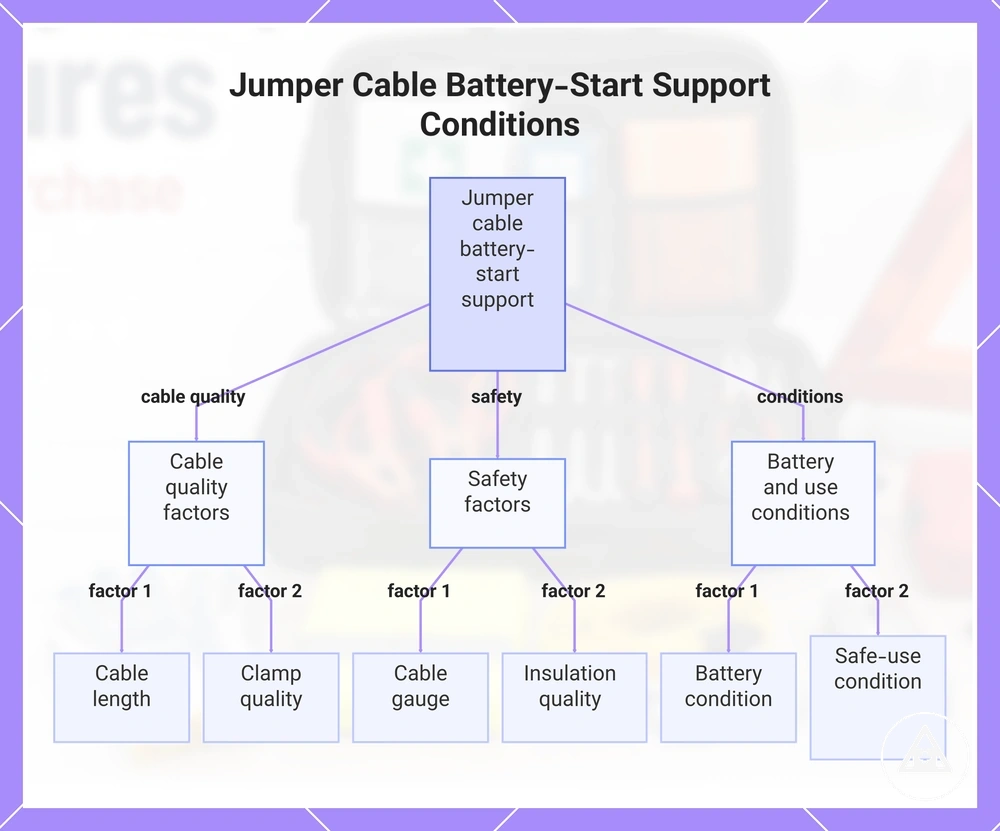
Jumper cables are useful for battery-start support only when cable build and battery condition support safe use. Cable length, clamp quality, gauge, and insulation help determine whether jumper cables are suitable for the intended situation. Battery-start support remains conditional because usefulness depends on both cable construction and battery condition.
A weak battery may lead drivers to consider battery-start support, but jumper cables should be evaluated by build quality before purchase. Cable length influences usability, while gauge and insulation help qualify handling and safe-use condition expectations. Clamp quality can affect connection reliability, and battery condition may limit whether support is practical in a given situation. Jumper cables and battery-start support are easier to assess when cable quality and safe-use conditions are reviewed together.
- Cable length: Longer reach can improve positioning flexibility and overall usability.
- Clamp quality: Well-built clamps may support more reliable connections when conditions are suitable.
- Gauge: Cable gauge helps differentiate current-handling capability and selection suitability.
- Insulation: Insulation quality contributes to handling protection and safe-use condition assessment.
- Battery condition: Battery-start support may remain limited when battery condition extends beyond a low-charge situation.
- Safe-use condition: Vehicle fit and connection context should be reviewed because start-support outcomes can vary.
This chart shows the cable build and condition factors that determine safe battery-start support with jumper cables.
Tow strap strength and recovery limits
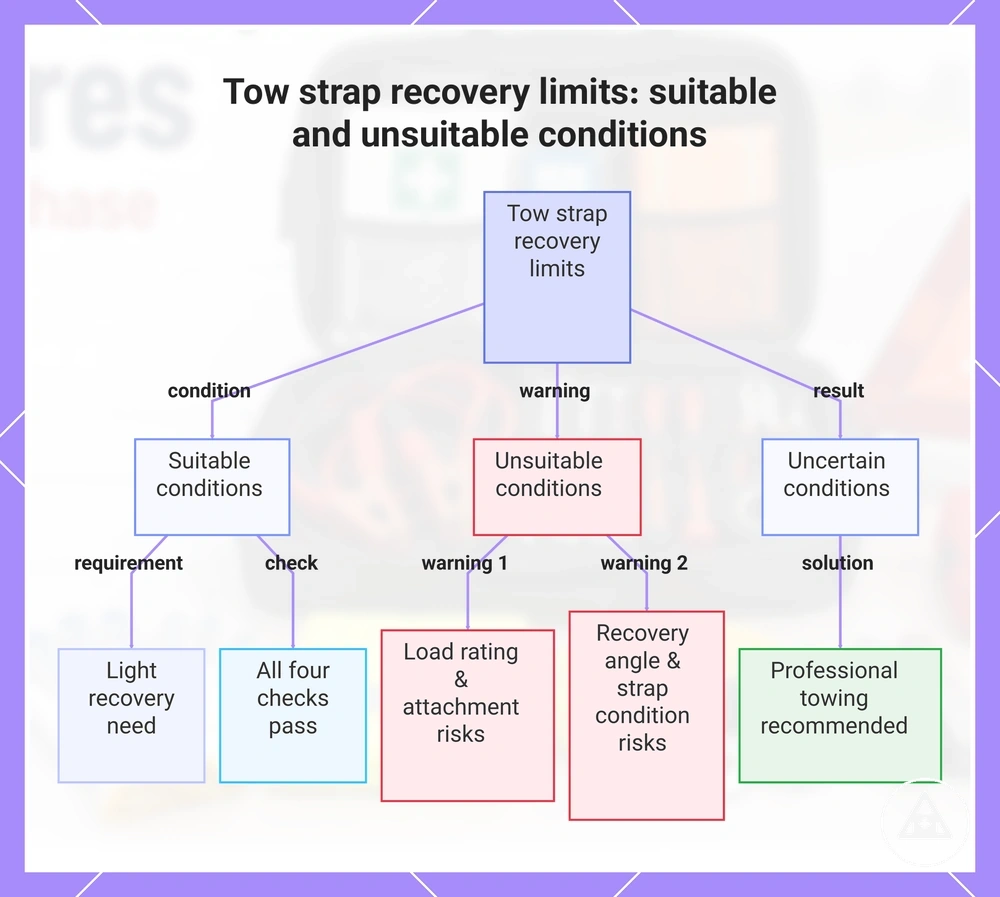
A tow strap is limited recovery support, not a universal towing solution. Tow strap usefulness depends on load rating, attachment points, strap condition, and vehicle weight rather than strap presence alone. Recovery limits qualify when a tow strap may assist and when the situation exceeds its intended support role.
When a vehicle needs light recovery support, a tow strap may be considered if load rating, hooks or loops, stitching, and attachment points appear suitable for the situation. In contrast, uncertain vehicle weight, unsuitable attachment points, damaged stitching, or an unfavorable recovery angle can increase risk and reduce confidence in strap suitability. Tow strap strength and recovery limits are easier to evaluate when unsuitable conditions are identified early. When recovery conditions remain uncertain, professional towing support is often the safer option.
Caution: Tow strap strength and recovery limits should be reviewed carefully because the checklist below helps identify conditions where the strap may be unsuitable.
- Load rating concerns: A tow strap may be unsuitable when vehicle weight appears inconsistent with the strap's intended support range.
- Attachment point uncertainty: Unclear or unsuitable attachment points can increase recovery risk.
- Hooks or loops damage: Worn, bent, or damaged connection components may reduce confidence in use.
- Stitching deterioration: Visible stitching wear can indicate reduced strap condition.
- Recovery angle concerns: An unfavorable recovery angle may increase strain and affect suitability.
- Strap condition issues: Excessive wear, cuts, or deterioration can be warning signs that recovery limits may already be compromised.
This chart shows the conditions under which a tow strap is suitable for light recovery, the warning signs that indicate unsuitability, and the recommended action when conditions are uncertain.
Safety and visibility features for roadside stops
Safety features and visibility features help reduce roadside exposure risk before repair or waiting situations begin. Warning signals, visibility gear, and lighting can improve awareness of a roadside stop, although effectiveness depends on road conditions, weather visibility, and surrounding circumstances. Their role is to support visibility and recognition during roadside stops, helping to reduce roadside exposure risk.
Safety and visibility features for roadside stops are easier to evaluate when visibility items are organized by purpose, useful condition, and selection signal. The table below classifies common visibility items using those criteria.
| Visibility item | Main purpose | Useful conditions | Selection signal |
|---|---|---|---|
| Warning triangle | Provide a visible warning signal | Roadside stops where additional visibility is needed | Easy deployment and clear visibility |
| Reflective gear | Increase personal visibility | Low-light roadside situations | High visibility and practical storage |
| Flashlight | Support visibility and lighting needs | Night and low-light conditions | Reliable lighting and fast access |
| Emergency lighting | Improve visibility awareness | Poor weather and reduced visibility | Noticeable illumination and storage accessibility |
When a roadside stop occurs at night, in low light, or during poor-weather conditions, visibility features may become more important because warning triangle visibility, reflective gear effectiveness, and lighting support can vary. Weather visibility and placement practicality can influence how useful a visibility item may be in a given situation. Selection should therefore consider night, low-light, and poor-weather conditions.
Limited storage accessibility can make roadside safety items harder to reach when visibility support is needed quickly. Organised storage and fast access can improve practical usefulness during roadside stress without guaranteeing any safety outcome. These conditions help qualify item-level selection signals when comparing safety and visibility features.
Reflective triangles and roadside warning signals
Reflective triangles and roadside warning signals are visibility tools whose warning value depends on reflectivity, base stability, foldability, and visibility distance. A warning triangle can help make a roadside stop more noticeable, but effectiveness may vary with lighting, weather, roadside surface conditions, and user judgment. Signal value is therefore closely tied to visibility conditions.
Limited reflectivity, poor base stability, or difficult access can reduce the usefulness of roadside warning signals when visibility support is needed. A reflective warning sign with a stable base, visible reflective surfaces, and compact storage may be easier to use under suitable conditions. Visibility distance can vary with weather, road position, and available light, so warning value should be viewed as conditional rather than absolute. Any legal considerations may differ by location and should not be assumed from product features alone.
Reflective triangles and roadside warning signals should be checked for visibility quality and storage practicality before comparison.
- Reflectivity: Reflective surfaces help qualify warning value when visibility conditions are reduced.
- Base stability: A stable base can improve reliability on different roadside surfaces and in changing weather.
- Foldability: Foldable construction may improve usability and simplify storage.
- Compact storage: Compact storage can support faster access during a roadside stop.
- Visibility distance: Visibility distance may vary depending on lighting, weather, and positioning conditions.
- Access and condition: Easy access and undamaged components can improve practical readiness.
This chart shows the main factors that influence the warning value of reflective triangles, along with important limitations such as conditional effectiveness and legal variability.
Flashlight and emergency lighting reliability
Flashlight and emergency lighting reliability depends on brightness, battery type, runtime, weather resistance, and storage readiness. A flashlight or emergency light can support roadside visibility and task completion when lighting is needed, but usefulness may vary with power condition and operating environment. Lighting value is therefore closely connected to reliability.
Flashlight and emergency lighting reliability is easier to assess when lighting attributes are compared rather than individual products. The comparison below focuses on attributes that influence roadside usability and readiness.
| Feature | Why it matters |
|---|---|
| Battery type | Battery type qualifies power availability and long-term readiness. |
| Runtime | Runtime may influence how long lighting remains available during a roadside stop. |
| Beam mode | Beam mode can differentiate lighting patterns for different roadside tasks. |
| Weather resistance | Weather resistance may improve usability when conditions are damp or unpredictable. |
| Headlamp or hands-free use | A headlamp can support hands-free use during roadside tasks when appropriate. |
When roadside conditions reduce visibility, a flashlight can provide directed lighting while a headlamp may improve usability by keeping both hands available. Neither flashlight nor emergency lighting should be treated as a replacement for warning signals because they serve a different purpose. Spare batteries or rechargeable power can reduce the risk of unavailable lighting, while storage readiness helps keep emergency lighting accessible when needed.
First aid and personal protection features
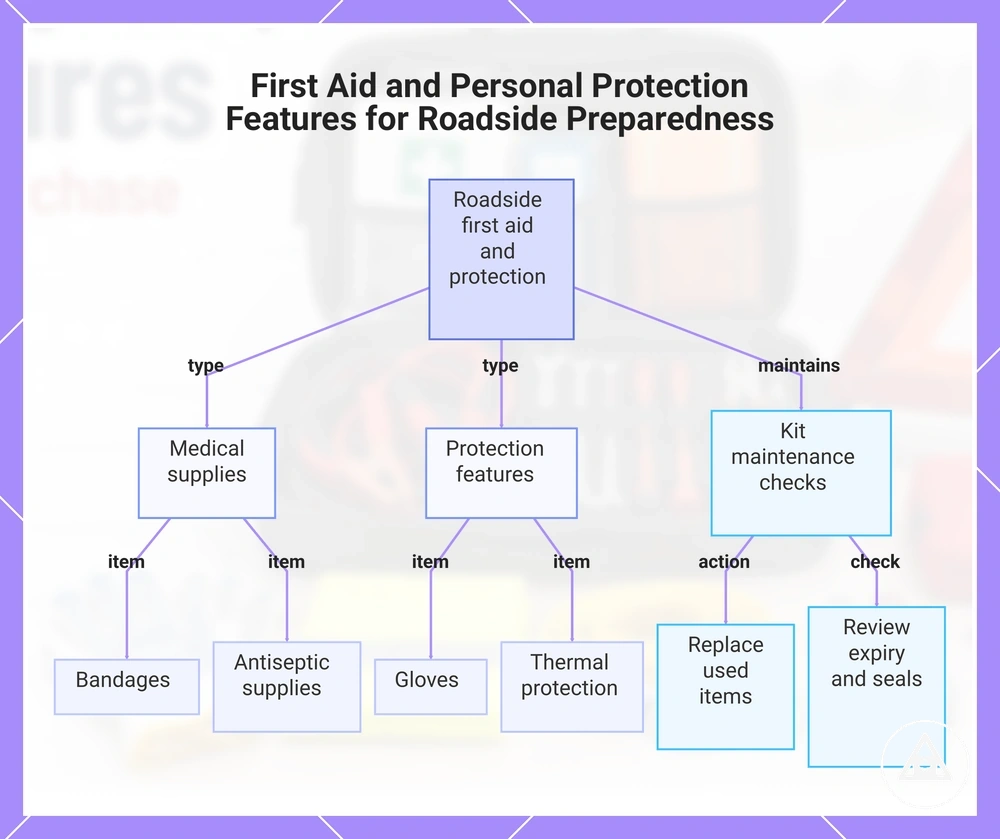
First aid and personal protection features support preparedness for minor injuries, hygiene needs, and safer handling during roadside incidents. First aid supplies such as bandages, antiseptic items, and basic wound care materials can help improve readiness when minor issues occur, while personal protection features focus on reducing direct exposure during handling tasks. First aid support should be viewed as preparedness assistance rather than professional care.
When a roadside incident involves a minor injury or handling task, organized supplies can be easier to access and assess. First aid and personal protection features are most useful when medical supplies remain separate from protective items so each serves a clear preparedness role. The checklist below separates medical supplies from protection features and highlights the attributes that support readiness.
- Bandages: Basic bandages support wound care readiness for minor injuries.
- Antiseptic items: Antiseptic supplies contribute to hygiene-focused preparedness when suitable for the situation.
- Gloves: Gloves support personal protection, hygiene, and safer handling during roadside tasks.
- Thermal protection: Thermal protection items may help improve preparedness in challenging roadside conditions.
- Visibility or handling aids: Protective items can support safer access and handling when conditions are less predictable.
- Sealed packaging: Sealed packaging helps preserve item condition and readiness until use.
Replenishment is important for maintaining first aid and personal protection features. Used, damaged, or missing items can reduce kit reliability, making replenishment checks worthwhile. Expiry dates and sealed packaging should be reviewed regularly because item condition can affect preparedness and readiness.
This chart shows the main categories of first aid and personal protection supplies, along with essential maintenance checks to ensure kit reliability.
Storage bag quality and portable kit organization
Storage bag quality and portable kit organization affect how easily emergency supplies can be carried, located, and used when needed. A storage bag with suitable bag durability, water resistance, compartments, closure design, handle quality, and vehicle storage fit can improve portability and help keep items accessible. Storage quality therefore directly influences feature access.
Storage bag quality and portable kit organization are easier to assess when storage attributes are reviewed as usability signals rather than appearance features. The table below organizes storage quality by usability signal.
| Storage attribute | What to check | Why it matters |
|---|---|---|
| Material | Bag durability and water resistance | Can help protect contents from wear and environmental exposure |
| Compartments | Internal organization and item separation | Supports faster access speed during roadside stress |
| Closure | Zipper, flap, or fastening condition | Helps keep items contained and organized |
| Size | Compactness and vehicle storage fit | Fit may vary depending on available vehicle storage space |
| Access speed | Item visibility and layout | Can reduce search time when equipment is needed |
When a storage bag relies on loose item bundles, important features may be harder to locate during roadside stress. By contrast, portable kit organization with dedicated compartments can improve feature access and make item placement easier to manage. Useful organization signals include compartments, closure reliability, handle quality, and practical internal organization.
A larger storage bag does not automatically provide better usability. Portable kit organization often depends more on structure, compactness, and access than on storage volume alone. The tradeoff between organized feature access and loose item bundles can also influence selection decisions, which connects to pre-made and DIY tradeoffs when comparing different organization approaches.
Item count versus usable emergency coverage
Item count versus usable emergency coverage depends on relevance, quality, duplication, missing essentials, and the emergency type being considered. A higher item count can create the impression of stronger preparedness while still leaving important feature gaps when duplicate minor items replace more useful functions. Item count is only one signal when evaluating usable emergency coverage.
Item count versus usable emergency coverage becomes clearer when count signals are compared with coverage signals. The contrast below clarifies how item quantity should be judged against practical coverage.
| Count signal | Coverage signal |
|---|---|
| Higher number of items | Coverage across different emergency types |
| Duplicate minor items | Relevance of included features |
| Large item total | Presence or absence of missing essentials |
| Count inflation | Practical coverage and usability |
Count inflation can increase decision risk when duplication creates the impression of broader preparedness while missing essentials remain unaddressed. A kit quantity may be useful when the included items match a likely emergency type and contribute to practical coverage, but usefulness depends on quality, relevance, and whether feature gaps remain. Item quality and relevance therefore provide a stronger coverage signal than item count alone.
Bag durability, access, and vehicle storage fit
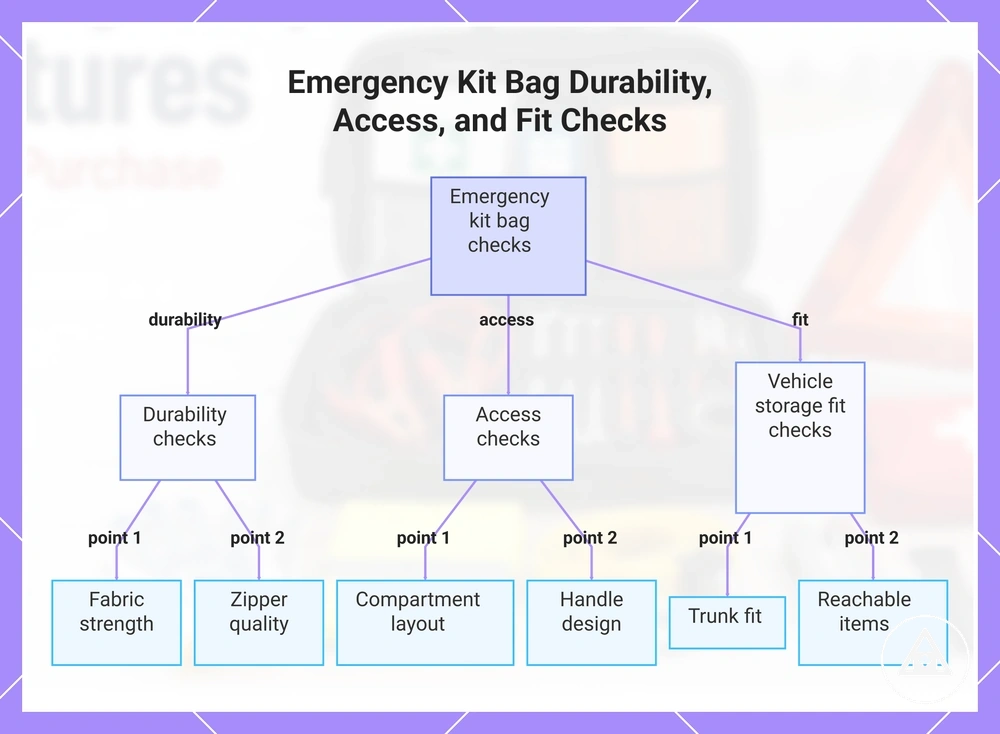
Bag durability, access, and vehicle storage fit affect how quickly emergency items can be retrieved and how reliably the kit remains usable during roadside stress. Fabric strength, zipper quality, compartment layout, and handle design are direct selection checks that help qualify storage access and bag reliability. Vehicle storage fit also affects whether key items remain reachable during retrieval.
When a trunk is crowded or carrying a luggage load, access to emergency supplies may become more difficult. Bag durability, access, and vehicle storage fit should be evaluated together because reachable items depend on both compartment layout and available vehicle space. Trunk fit may vary based on vehicle space and load conditions.
Bag durability, access, and vehicle storage fit can be checked using the points below to verify durability, access, and fit.
- Fabric strength: Inspect material condition and construction quality for signs of long-term reliability.
- Zipper quality: Check that zippers operate smoothly and appear dependable during repeated use.
- Compartment layout: Confirm that the layout helps keep frequently needed supplies organized and reachable.
- Handle design: Inspect handle attachment and comfort to support carrying and quick retrieval.
- Trunk fit: Verify that the kit bag fit suits available vehicle space, as fit may vary by vehicle and luggage load.
- Reachable items: Check whether key items remain accessible when other cargo is present.
This chart shows the key checks for evaluating emergency kit bag durability, access, and vehicle storage fit.
Feature fit by driving need and vehicle use
Feature fit by driving need and vehicle use depends on driving context, vehicle use, and the roadside situations most likely to occur. Different driving patterns, trip lengths, and risk conditions can change which features deserve priority. Feature fit therefore depends on driving context.
Feature fit by driving need and vehicle use becomes clearer when driving needs are matched to feature priorities, conditions, and selection outcomes. The table below matches driving contexts to the features that may matter most in each use case.
| Driving context | Feature priority | Condition to check | Selection outcome |
|---|---|---|---|
| Daily commuting | Core safety and compact access | Frequent short trips and routine travel | Feature fit may favor essential visibility and emergency-access features |
| Long drives | Tire inflator and first aid support | Extended travel distance and longer exposure time | Selection outcome may favor broader emergency coverage |
| Remote routes | Repair support and self-sufficiency features | Limited access to nearby assistance | Higher-coverage features may become more relevant |
| Older vehicles | Jumper cables and repair support | Greater likelihood of roadside interruptions | Selection outcome may prioritize recovery-oriented features |
| Family travel and weather exposure | First aid, visibility, and thermal protection | Passenger needs and changing conditions | Feature fit may emphasize preparedness and risk reduction |
For daily commuting, core safety features and compact access often deserve greater attention than extended recovery coverage. When travel is routine and support may be easier to reach, the selection outcome may focus on visibility, preparedness, and core feature needs.
For long drives or remote routes, roadside conditions may be less predictable and assistance may be farther away. Features such as a tire inflator, first aid supplies, and repair support can become more relevant when travel distance or route remoteness increases. These driving contexts may justify higher-coverage needs.
When older vehicles face a greater possibility of roadside interruptions, recovery-oriented features may influence the decision process. Jumper cables and repair support can become more relevant when vehicle condition increases the likelihood of needing assistance. For broader selection criteria, see choosing a car emergency kit.
Here are product examples that may make comparison easier. Before buying, always review the compatibility criteria, essential features, and product details.
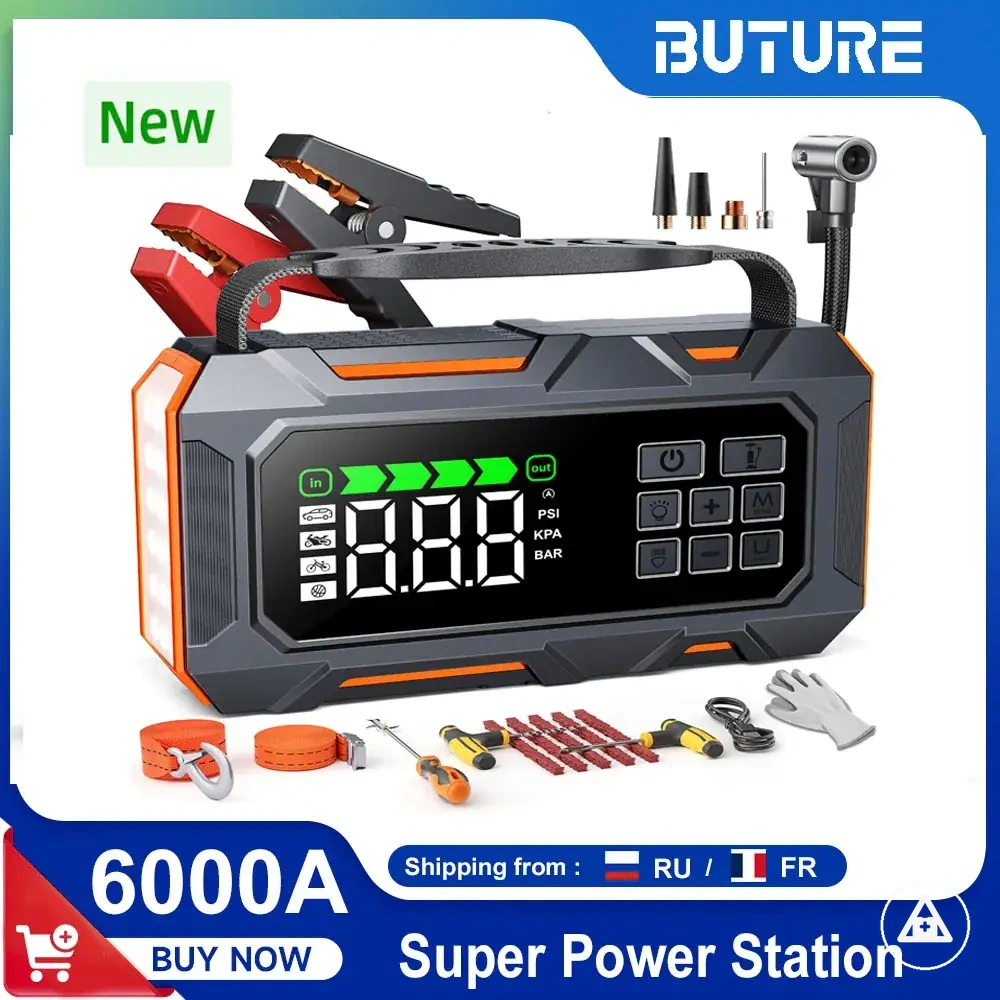
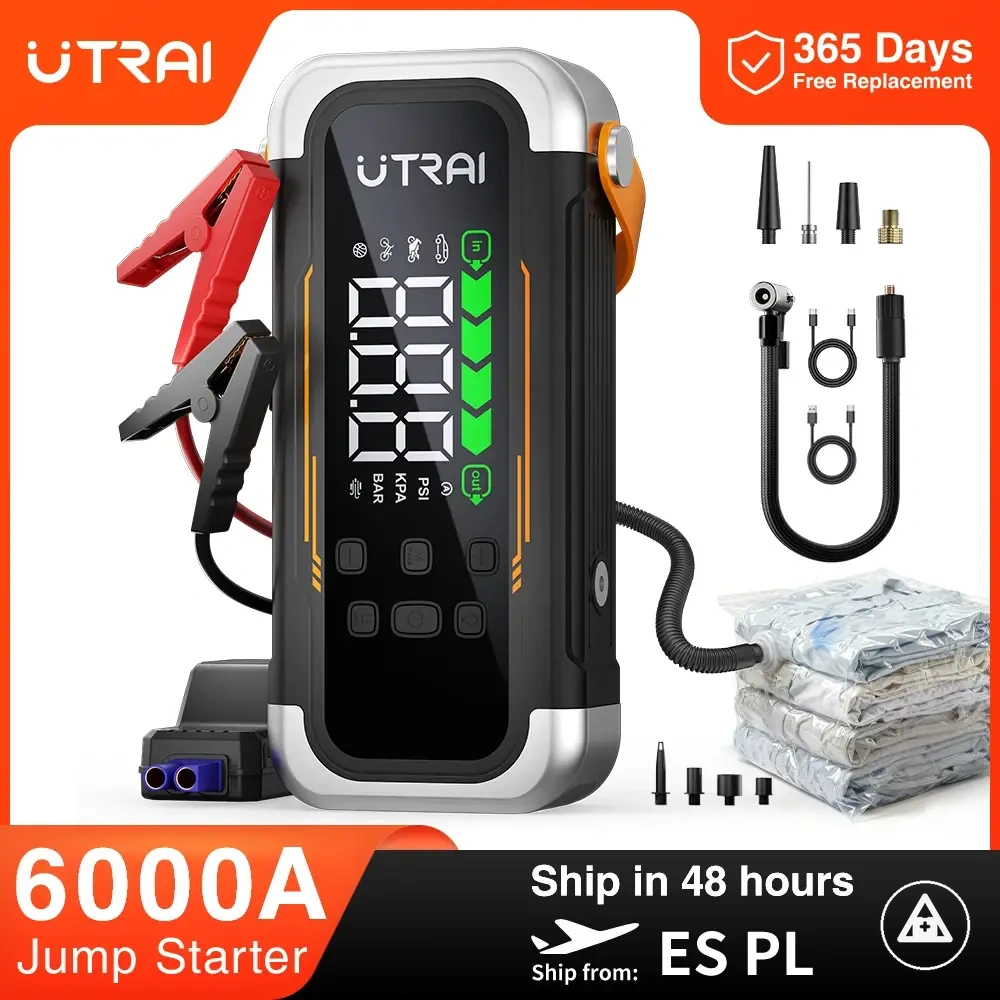
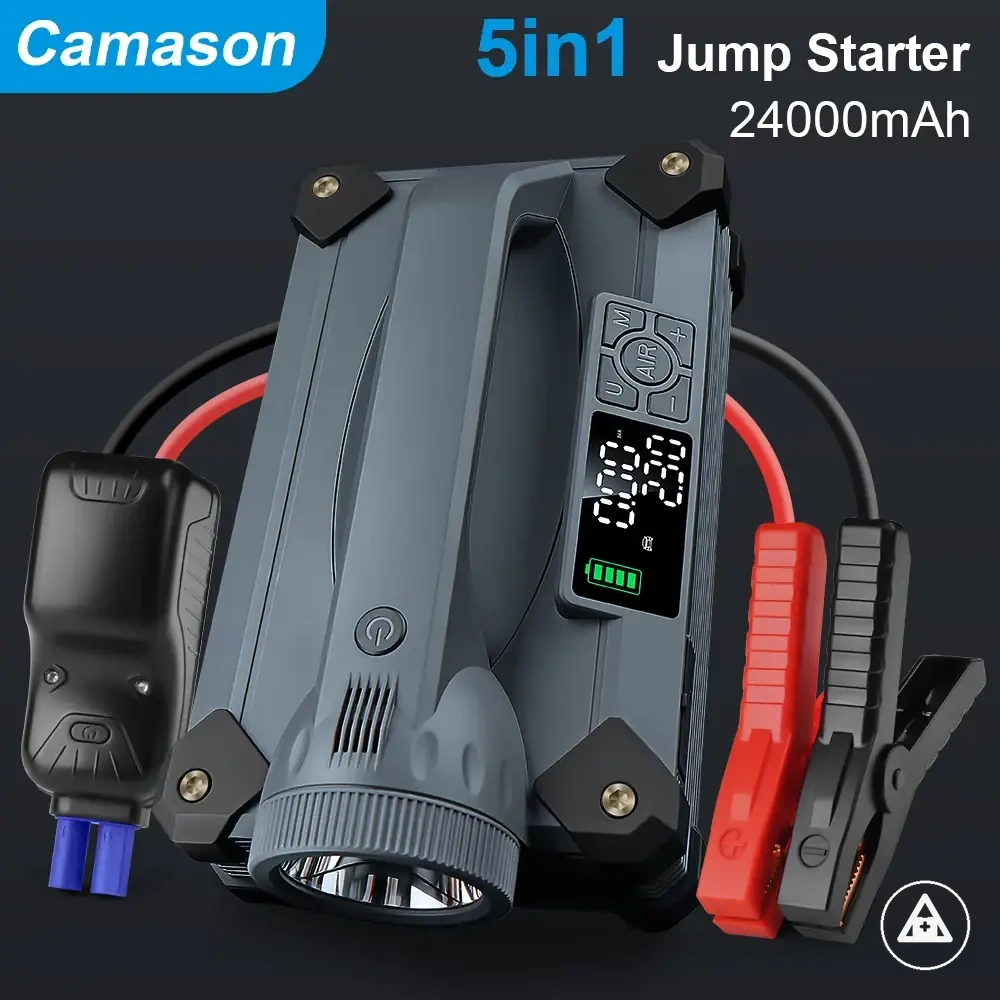
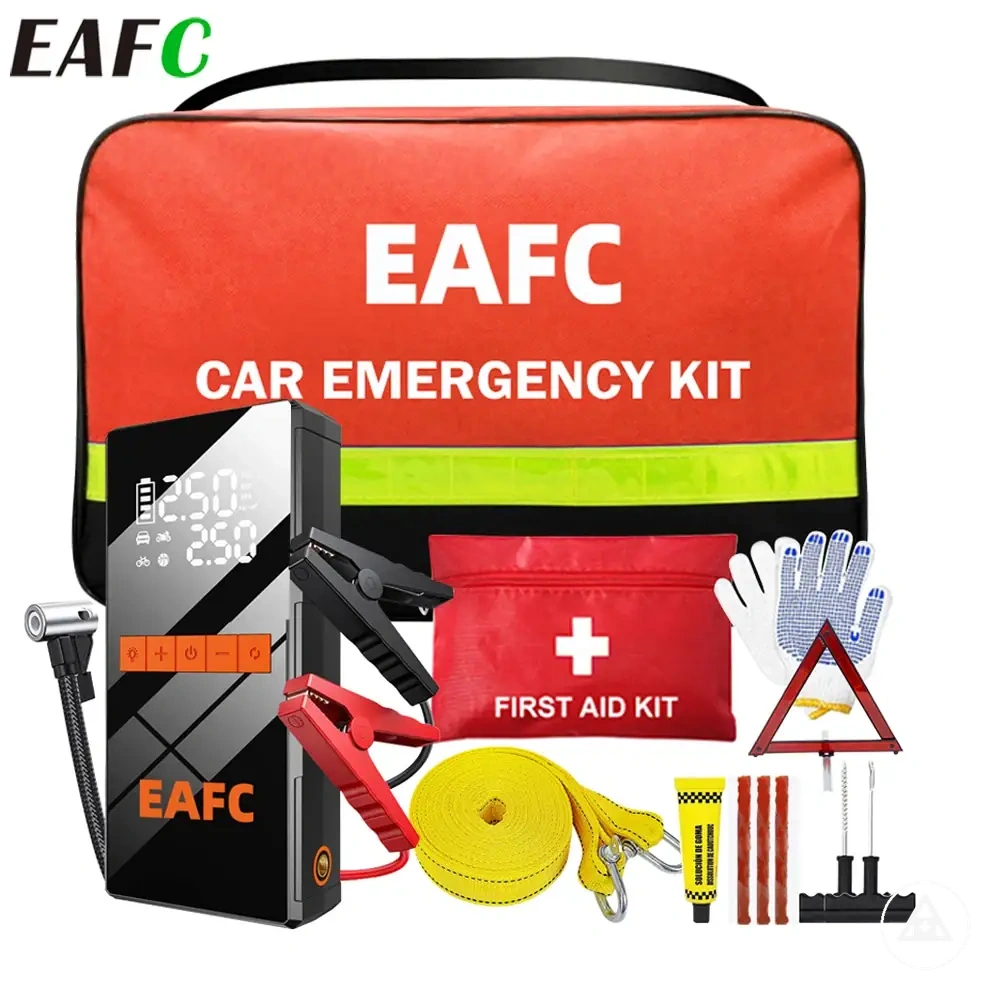
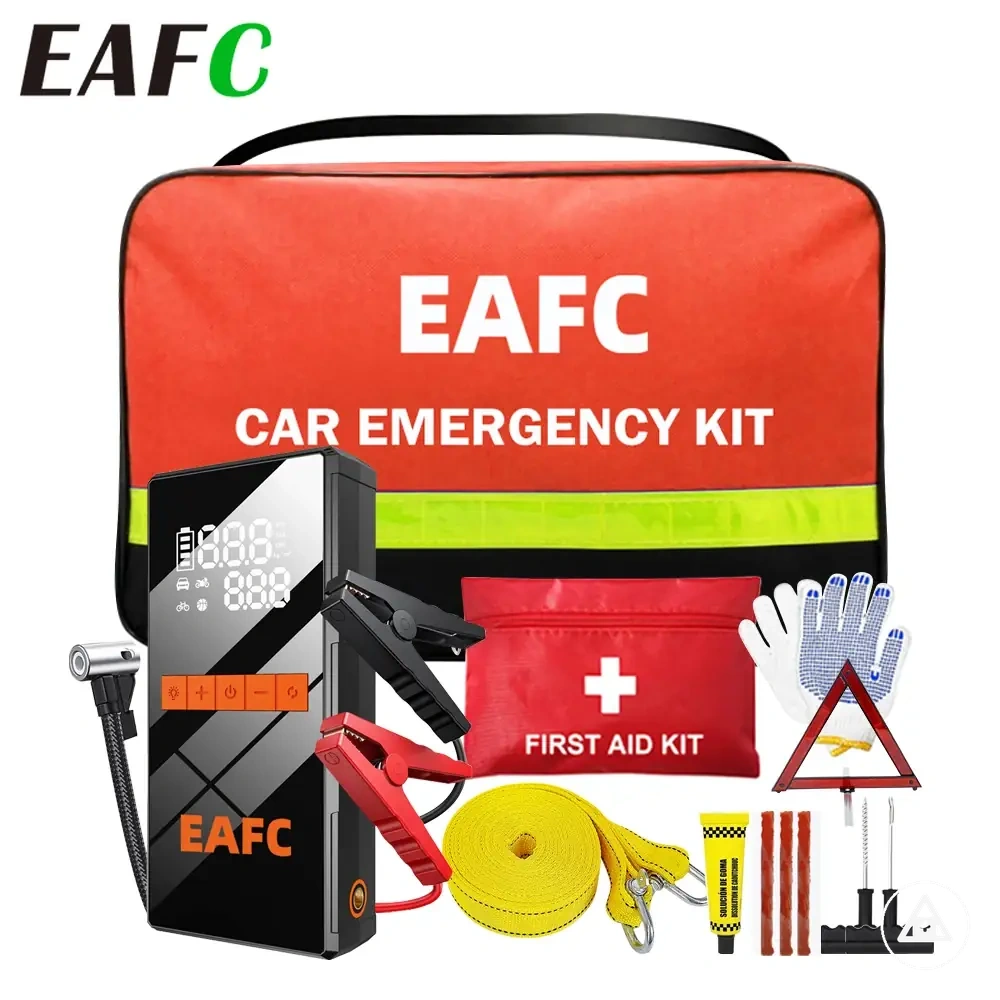
Feature fit should be filtered by driving need, vehicle use, family travel requirements, and weather exposure. A selection outcome becomes more useful when the needed feature matches the travel need, driving pattern, and expected roadside risk rather than relying on a single use case.
Feature quality signals that affect value
Feature quality and value depend on usable coverage, durability, replaceability, and safety relevance rather than price alone. A kit may offer stronger practical value when quality checks support real roadside needs and long-term usefulness. Value is therefore defined by usable quality rather than price alone.
Feature quality signals that affect value can be compared more effectively when quality signals are organized by value effect. The table below organizes quality signals by value effect and decision risk.
| Quality signal | What to inspect | Value effect | Risk if weak |
|---|---|---|---|
| Build quality | Material condition, construction, and durability | Can support long-term usefulness | Reduced reliability during use |
| Usable coverage | Presence of relevant emergency features | May improve practical value | Preparedness gaps for expected situations |
| Replaceability | Ability to replace used or worn items | Supports ongoing usefulness | Reduced long-term usefulness |
| Storage quality | Organization, access, and bag condition | Can improve practical access | More difficult retrieval during roadside stress |
| Safety relevance | Alignment between features and likely roadside needs | May improve coverage value | Missing essentials for relevant situations |
When build quality is weak, durability concerns can reduce practical value even when feature lists appear comprehensive. Stronger construction and better storage quality can improve long-term usefulness when repeated use is expected. Build quality therefore contributes to risk reduction.
When supplies are used over time, replaceability and refill needs become part of the value decision. Missing essentials can reduce safety relevance, while limited replacement options may reduce long-term usefulness. These conditions highlight the importance of missing essentials and refill needs.
Feature quality, usable coverage, durability, replaceability, and storage quality are stable criteria that help guide value comparisons. Premium features may add value only when they address a real roadside need and contribute to practical usefulness. For broader evaluation criteria, see value factors to consider.
Here are product examples that may make comparison easier. Before buying, always review the compatibility criteria, essential features, and product details.
Value screening should focus on whether feature quality supports practical roadside use, long-term usefulness, and safety relevance. A value outcome may be stronger when usable coverage, storage quality, refill needs, and durability align with expected roadside situations.
Replacement readiness for batteries, supplies, and expired items
Replacement readiness protects long-term reliability after feature quality has been evaluated. Batteries, supplies, and expired items can affect usefulness over time, so replacement readiness serves as a practical reliability check. Replacement readiness therefore supports long-term reliability.
When replacement items are unavailable, reliability can decline even if kit contents appear complete. Refill availability and consumable refresh options help guide long-term usefulness, while visible wear or expiry conditions can warn when replacement is needed. Batteries, supplies, and expired items should remain refillable or replaceable to support ongoing reliability.
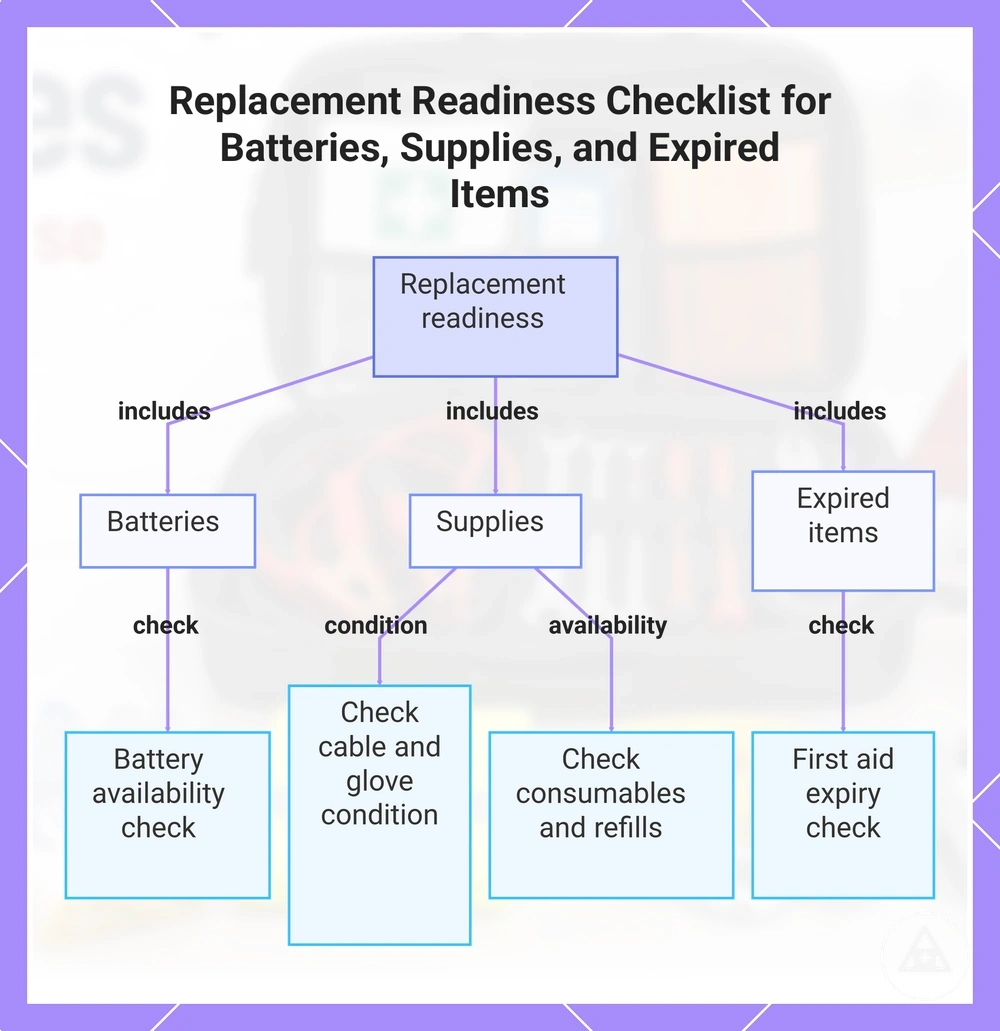
Replacement readiness for batteries, supplies, and expired items can be checked with the checklist below to verify replaceable items and reliability effects.
- Batteries: Check battery availability for flashlight use because battery condition can affect runtime readiness.
- First aid expiry dates: Review visible first aid expiry dates and sealed packaging because expiry status may influence the reliability effect of supplies.
- Damaged cables: Inspect cables for visible damage because damaged cables can increase safety risk and indicate replacement needs.
- Worn gloves: Replace worn gloves when wear reduces protection or usability.
- Missing consumables: Check for missing consumables because missing items can reduce long-term value and preparedness.
- Refill availability: Confirm refill availability for commonly used supplies because refill readiness helps guide future replacement decisions.
This chart outlines the three categories of replacement readiness—batteries, supplies, and expired items—and the key checks for each to ensure long-term reliability.