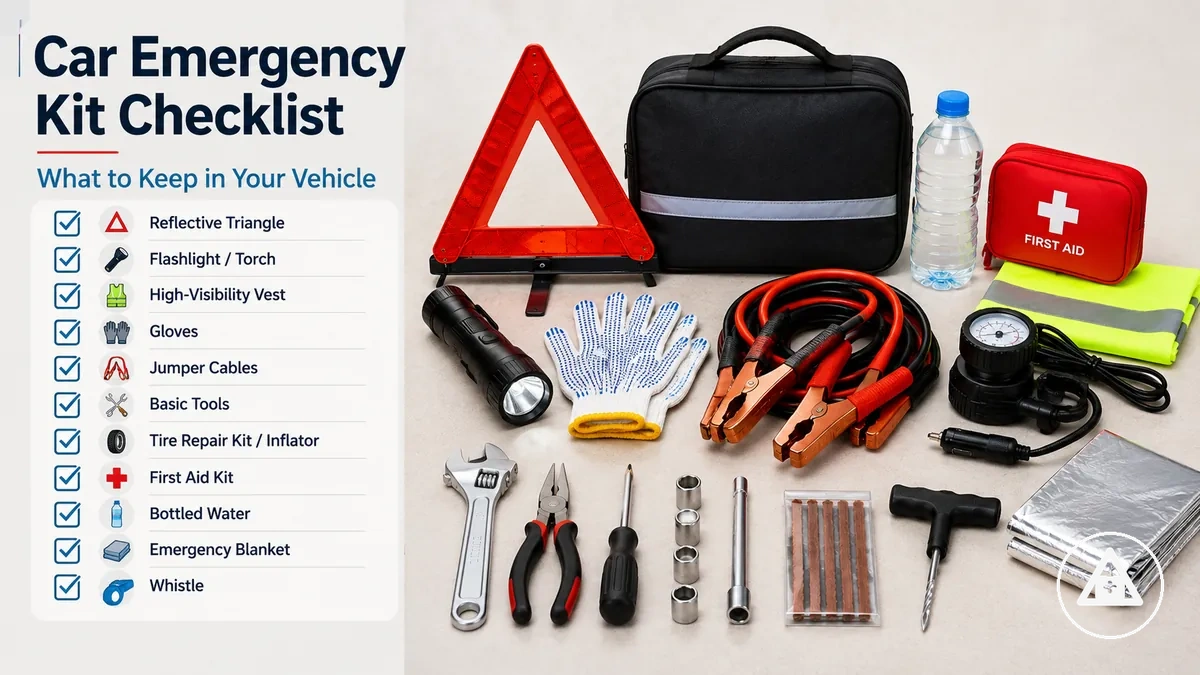
Car emergency kit checklist for essential vehicle safety items
A car emergency kit checklist is a vehicle-readiness tool that helps a driver verify essential items before buying, packing, or refreshing a roadside emergency kit. The checklist organizes emergency supplies by purpose so the kit supports roadside safety, basic visibility, first aid, power, repair support, and waiting needs.
A breakdown can become harder to manage when a kit has missing supplies, weak item coverage, or items that are no longer ready to use. A checklist gives the driver a practical way to review what is present, what may need replacing, and what should be adjusted for the vehicle, route, weather, or passengers. The checklist supports common roadside preparedness, but it does not replace safe roadside behavior or professional help when a situation is unsafe or serious.
This car emergency kit checklist for essential vehicle safety items organizes baseline items, situational add-ons, buying checks, printable review points, and maintenance reminders. For broader page context, use the car emergency kit hub before moving into the baseline item groups below.
A complete kit can look different depending on driving distance, storage space, weather exposure, and passenger needs, so the checklist should be used as a decision-support framework rather than an exact universal requirement.
- Essential items: core vehicle safety items such as first aid basics, lighting, power support, warning gear, water, and basic roadside supplies.
- Situational items: additions that may become more relevant for long travel, limited service access, seasonal exposure, or passengers.
- Review items: checks for missing supplies, item condition, storage fit, and whether the roadside emergency kit is still easy to access.
Essential items every car emergency kit should include
Essential items every car emergency kit should include are baseline item groups that cover roadside safety, first aid, lighting, power, repair support, and waiting needs. The exact mix can vary by vehicle, route, climate, passengers, and trip length, but a useful car emergency kit should provide coverage for the most common roadside situations.
Essential items every car emergency kit should include are easier to review when the checklist organizes supplies by safety purpose rather than random item order. The image below labels the main item groups so readers can identify core coverage areas before reviewing the checklist. For deeper item-level detail, see the essential kit contents guide.
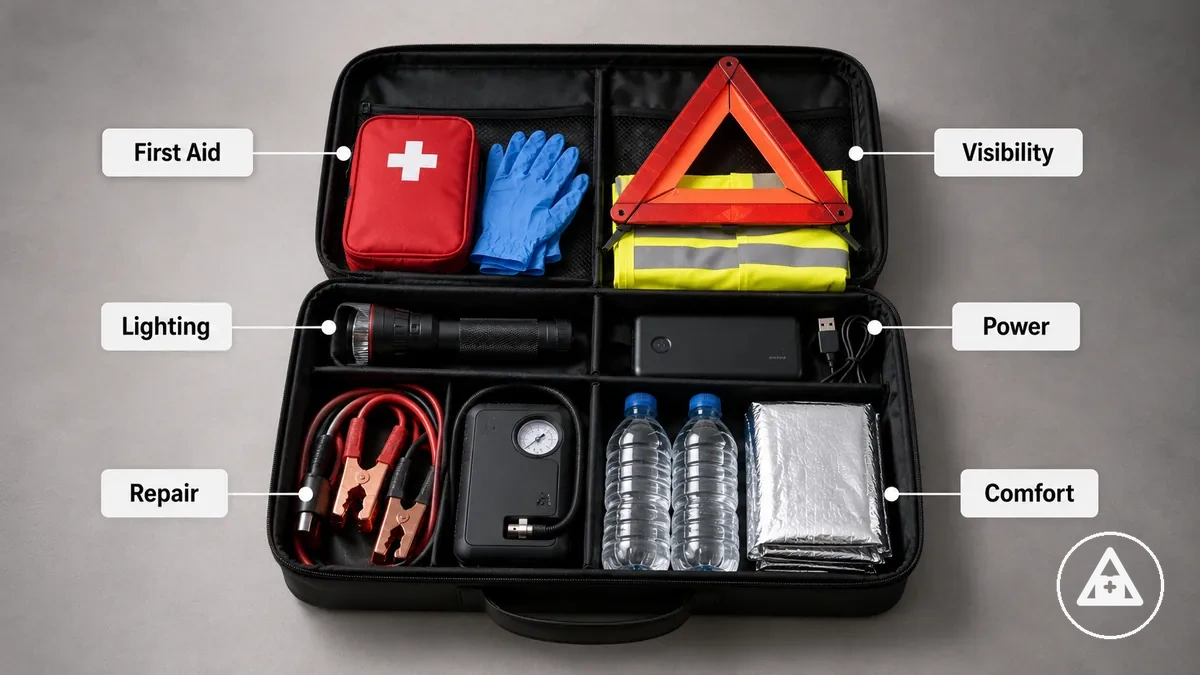
Each item group supports a different readiness effect. First aid items help address minor injury situations, visibility items improve roadside awareness, lighting and power items support communication and visibility, repair-support items help with common vehicle-condition issues, and comfort supplies can make waiting periods easier when assistance is delayed.
- First aid and protection: first aid kit, gloves, bandages, and antiseptic wipes support basic protection and minor injury readiness.
- Visibility and warning: warning triangle, reflective vest, warning light, and other visibility aids help reduce roadside risk by making the vehicle and driver easier to notice.
- Lighting and communication: flashlight, spare batteries, power bank, and charging cable support visibility and communication when power access is limited.
- Battery and tyre support: jumper cables, jump starter, tyre inflator, and tyre gauge can help address common battery or tyre-related situations when appropriate for the vehicle and conditions.
- Basic repair support: gloves, multi-tool, tape, and simple repair tools assist with minor roadside handling tasks and temporary support needs.
- Waiting and comfort: water, emergency blanket, non-perishable food, and hygiene supplies help support comfort during unexpected delays.
Common gaps often include missing power support, expired first aid supplies, limited visibility equipment, or a lack of water and comfort items. Keeping baseline essentials separate from situational add-ons helps maintain practical coverage without turning the car emergency kit into an oversized collection of rarely used supplies.
First aid and personal protection items
First aid and personal protection items support minor injury response, hygiene needs, and safe waiting during a roadside situation. These protective items help protect drivers and passengers by providing basic care supplies and reducing exposure to common roadside conditions.
First aid and personal protection items are easier to review when protective supplies are grouped by function. The image below highlights the protective supplies a driver may check before packing.
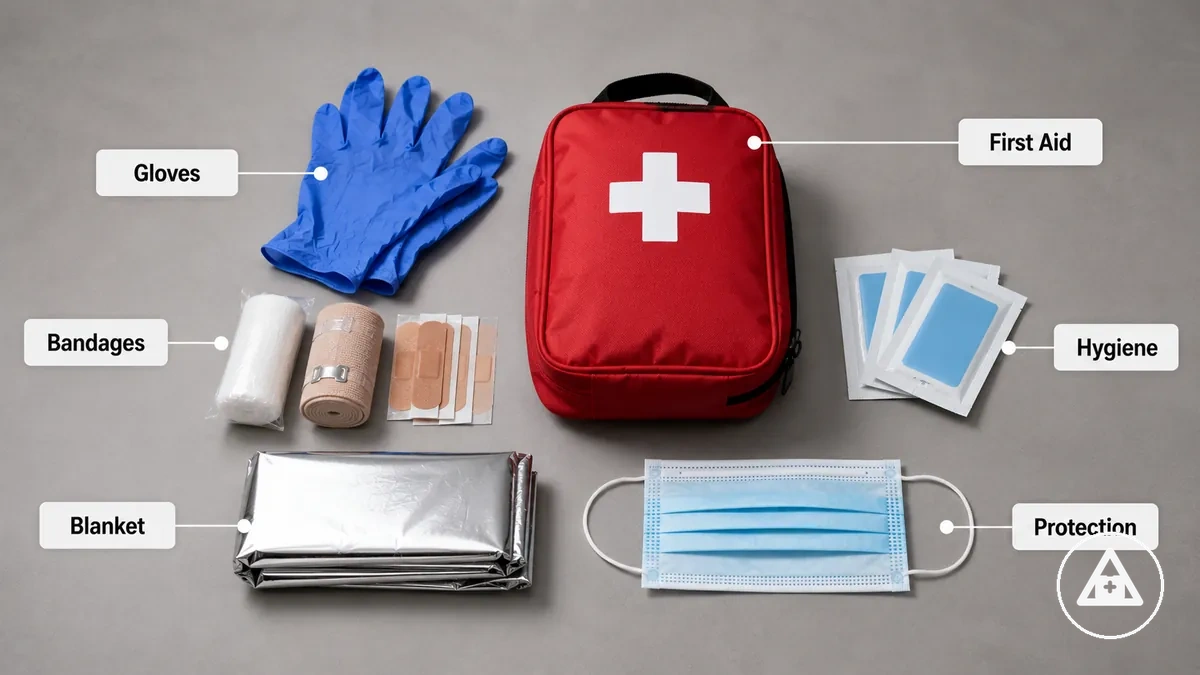
- First aid kit: bandages and antiseptic wipes support minor injury situations and basic care readiness when small cuts or scrapes occur.
- Gloves: protective gloves support hygiene and can help reduce contamination risk when handling supplies or assisting with basic care tasks.
- Hygiene supplies: antiseptic wipes and similar items support cleanliness when washing facilities are unavailable or limited.
- Emergency blanket: an emergency blanket supports safe waiting and may help reduce exposure to cold conditions during unexpected delays.
- Protective basics: personal protection items such as masks can support comfort and exposure control when conditions make their use appropriate.
These emergency supplies support basic protection and minor injury readiness, but they do not replace professional medical help for a serious injury or medical emergency.
Visibility, warning, and roadside safety items
Visibility, warning, and roadside safety items help the vehicle and driver be seen during a breakdown, especially in low light or poor weather. These items support roadside safety by improving visibility for approaching traffic when a vehicle is stopped on a shoulder or near a roadway.
Visibility, warning, and roadside safety items are easier to review when the checklist organizes how drivers and vehicles become more visible. The image below highlights gear that improves vehicle and driver visibility during common breakdown conditions.
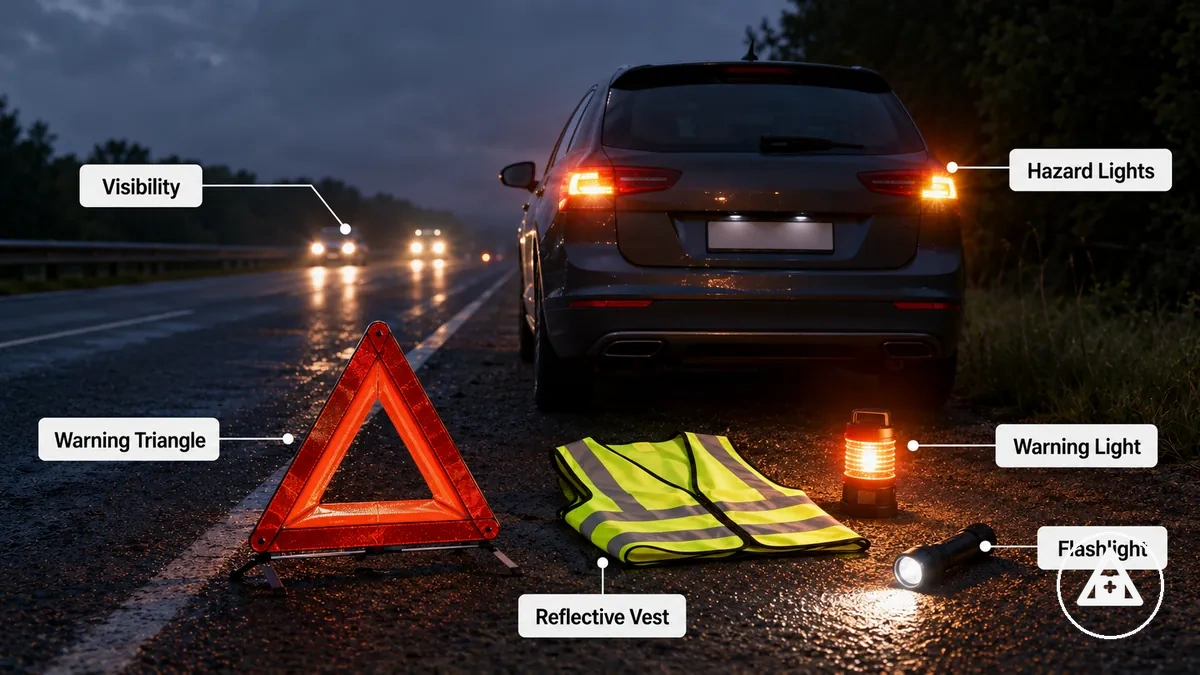
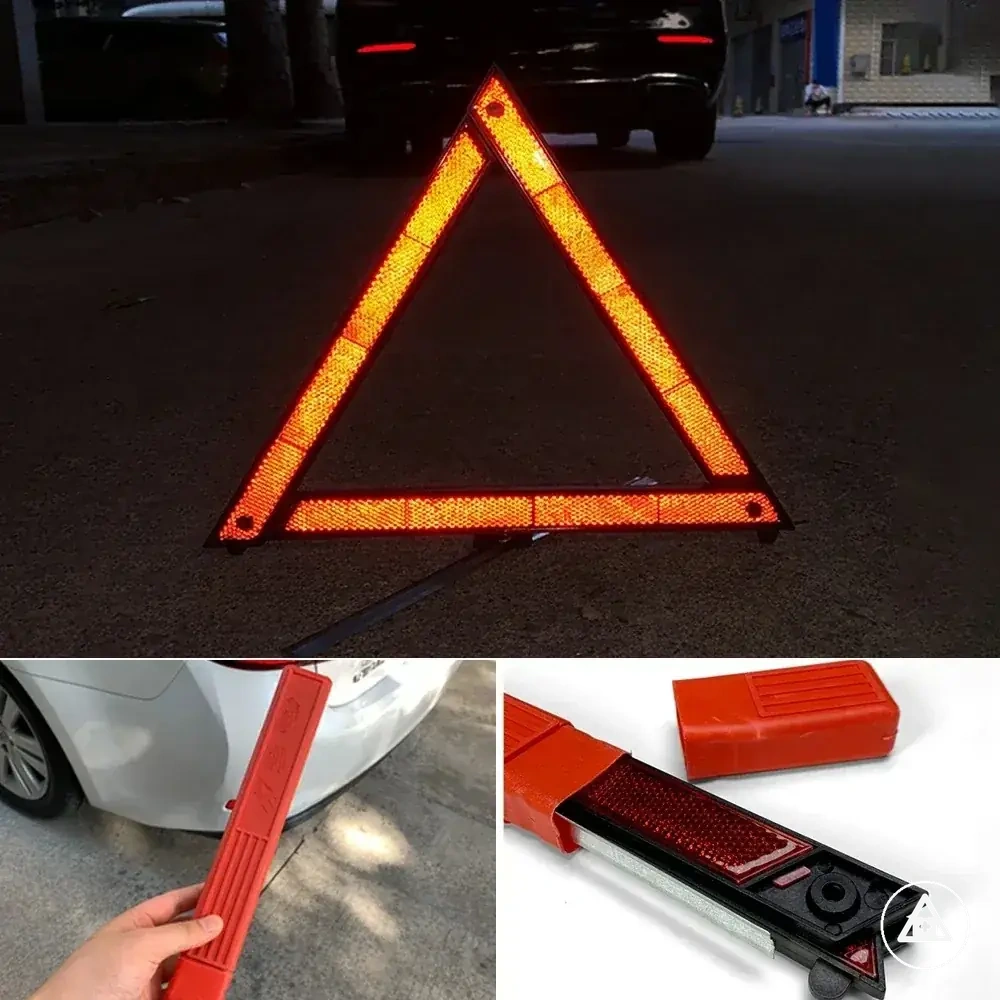
- Warning triangle: provides a visible roadside signal that can help approaching traffic notice a stopped vehicle during a breakdown.
- Reflective vest: increases driver visibility in low-light conditions when outside the vehicle near a shoulder or roadside area.
- Hazard lights: signal that a vehicle issue is present and improve vehicle visibility during poor weather or reduced light.
- Warning light: creates an additional visibility cue that can help draw attention to a stationary vehicle when visibility is limited.
- Flashlight: supports visibility around the vehicle and can help a driver remain more visible when checking surroundings in dark conditions.
Road rules, placement practices, and visibility requirements can vary by location and road condition, and being visible does not always mean a vehicle is positioned in the safest possible location.
Lighting, power, and communication items
Lighting, power, and communication items help a driver see, maintain phone access, and contact help during a roadside situation. These components support visibility, backup power, and communication support, but their usefulness depends on charge level, working condition, signal availability, and storage readiness.
| Item | Check | Why it matters |
|---|---|---|
| Flashlight or torch | Confirm the light operates and batteries are in working condition. | Supports visibility during a night breakdown or low-light situation. |
| Batteries | Check charge status or expiry condition when applicable. | Help battery-powered items remain ready for use. |
| Power bank | Verify charge level and recharge when needed. | Provides backup power that may help keep a phone available for communication. |
| Charging cable | Check for damage and confirm it matches the phone connection type. | Supports phone charging when a compatible power source is available. |
| Phone and emergency contact details | Confirm the phone is charged and emergency contact information is accessible. | Can help communication when signal and local conditions allow contact. |
Review charge level, expiry status, storage condition, and overall working condition regularly so lighting, power, and communication items remain ready when needed.
Tyre, battery, and basic repair items
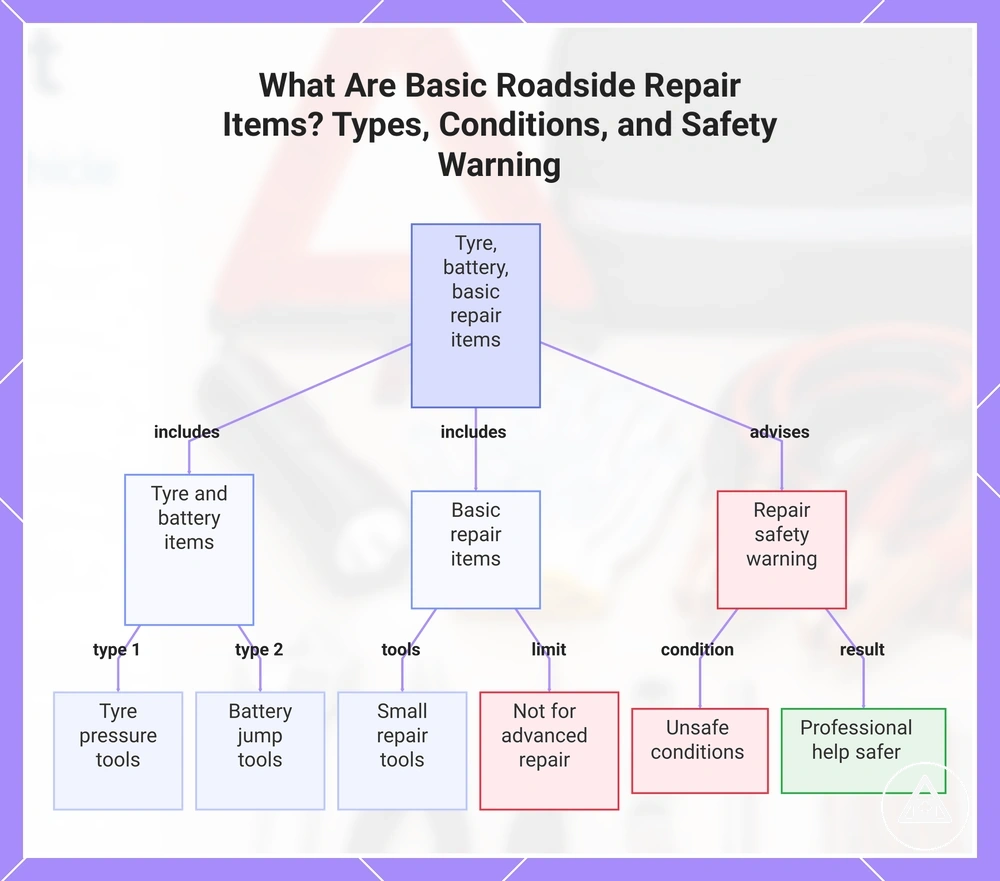
Tyre, battery, and basic repair items support simple vehicle immobilization problems without replacing mechanical skill or professional help. These roadside tools are useful when the item suits the vehicle condition, the driver can use it safely, and the situation does not require advanced repair.
Tyre, battery, and basic repair items are easier to review when the checklist separates tool purpose by vehicle issue.
- Tyre inflator: supports temporary tyre pressure needs when the tyre condition and inflator suitability allow safe use.
- Tyre gauge: helps check pressure condition before deciding whether tyre support is appropriate.
- Jumper cables: provide battery support when a suitable assisting vehicle and safe conditions are available.
- Jump starter: can support battery-related immobilization when the device is charged, compatible, and used under safe conditions.
- Basic repair tools: gloves, a multi-tool, and tape can help with small handling tasks or temporary support needs without becoming advanced repair equipment.
Drivers should avoid repair attempts when traffic, weather, vehicle position, or the fault itself makes the situation unsafe, and professional help may be the safer option.
This chart shows the three main categories of basic roadside repair items (tyre/battery/basic tools), along with a key safety warning about when to avoid repair and seek professional help.
Food, water, warmth, and comfort items
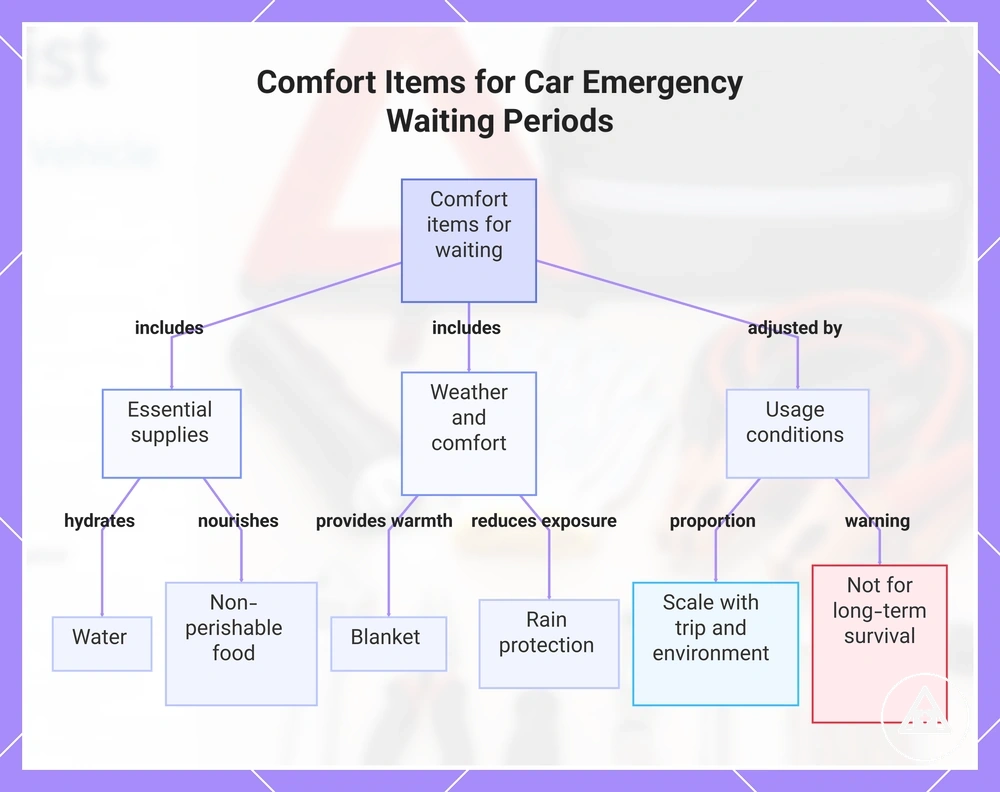
Food, water, warmth, and comfort items support drivers and passengers during waiting periods after a delay or breakdown. These comfort items should stay proportional to trip length, environment, passengers, and the likelihood of a longer wait.
Food, water, warmth, and comfort items are easier to review when the checklist organizes waiting-support needs by condition.
- Water: supports hydration during waiting, especially when heat, passengers, or a longer delay may make the stop less comfortable.
- Non-perishable food: supports comfort during a longer wait when access to services may be limited.
- Blanket: supports warmth during cold, windy, or exposed conditions while waiting for help.
- Rain protection: helps reduce exposure during wet weather when a driver or passenger may need to wait near the vehicle.
- Hygiene basics: basic hygiene supplies support cleanliness when washing facilities are unavailable or limited.
Remote areas, passengers, weather exposure, and longer travel can make these waiting-support items more useful, but ordinary driving does not require turning a car emergency kit into long-term survival storage.
This chart shows the essential comfort and support items to include in a car emergency kit and the conditions that determine how much to bring.
Checklist adjustments by driving situation
Checklist adjustments by driving situation depend on changing item priority, not on increasing the number of items in the baseline checklist. The baseline checklist remains stable, while situational add-ons help improve the readiness outcome for a specific driving situation, route, vehicle use case, or passenger need.
The comparison below organizes checklist adjustments by driving situation and highlights what changes versus what stays the same. Item priority may vary based on service access, weather, storage limits, passengers, and expected waiting conditions.
| Driving situation | What changes | Keep from baseline | Why it matters |
|---|---|---|---|
| Daily driving | Prioritize fast access and items that support common roadside problems. | Core safety, communication, and support categories. | Supports practical readiness for routine driving conditions. |
| Long travel | Add waiting-support and comfort-focused items when service access may be limited. | All baseline checklist functions. | May improve readiness during longer waits or remote stretches of travel. |
| Seasonal exposure | Increase focus on weather-related visibility, warmth, or comfort needs. | Core emergency kit structure. | Helps align item priority with expected environmental conditions. |
| Limited storage | Favor compact items while maintaining broad coverage. | Essential baseline functions. | Supports a balance between storage limits and readiness. |
| Passenger needs | Adjust hydration, comfort, and waiting-support items when appropriate. | Baseline safety and communication support. | May improve comfort and readiness for additional occupants. |
These adjustments summarize how a driving situation can change item priority without replacing the baseline checklist. Longer travel, seasonal exposure, storage limits, and passenger-specific decisions are summarized here only and may depend on route, vehicle, weather, and waiting conditions.
Daily driving essentials
Daily driving essentials are the lean, fast-access version of the baseline checklist for a short commute, routine driving, and local trips. Daily driving essentials prioritize common roadside problems and quick access to key items rather than broader coverage for less common situations.
Daily driving essentials focus on everyday driving coverage and fast access when a minor issue occurs.
- Visibility: keep a warning item or visibility aid available to help make the vehicle easier to notice during a roadside stop.
- First aid basics: carry basic protection supplies that can support minor issues involving drivers or passengers.
- Lighting: keep a flashlight or similar lighting tool available for low-light checks and visibility needs.
- Phone charger: maintain contact support by keeping a compatible charger available when phone battery levels become a concern.
- Tyre support and battery support: keep simple support items that can help with common local-trip issues when conditions and vehicle needs allow.
If longer trips, remote routes, or additional passenger needs are expected, a fuller travel kit may justify extra situational add-ons beyond this lean checklist.
This chart shows the main categories and essential items for a daily driving essentials checklist, focused on common roadside problems and quick access.
Long-distance travel additions
Long-distance travel additions become more important when distance, wait time, or limited service access can increase the impact of a delay. Travel additions build on the baseline checklist by adding support for longer-distance driving conditions where communication, comfort, and roadside assistance may take more time.
Long-distance travel additions focus on situations where distance and access conditions change and additional preparedness may improve the readiness outcome.
- Extra water: becomes more relevant when a longer wait time, passengers, or limited service access could extend a roadside delay.
- Food: helps support comfort during a delay when access to services may be reduced along a long-distance travel route.
- Warmth: an added blanket or similar warmth item can become more useful when weather exposure or longer response times are possible.
- Charging: backup charging support helps maintain phone communication when route length increases reliance on mobile contact.
- Tyre support: additional tyre support items may improve readiness when longer-distance driving increases the consequences of a tyre-related problem.
- Backup visibility: an extra visibility aid can help improve roadside awareness when a stop occurs in a remote area or low-visibility condition.
Route conditions, weather, passengers, and expected response times can affect which travel additions are most useful, so final choices should reflect the travel situation rather than every possible journey scenario.
This chart groups key long-distance travel additions into three categories to help readers prepare for extended delays and limited service access.
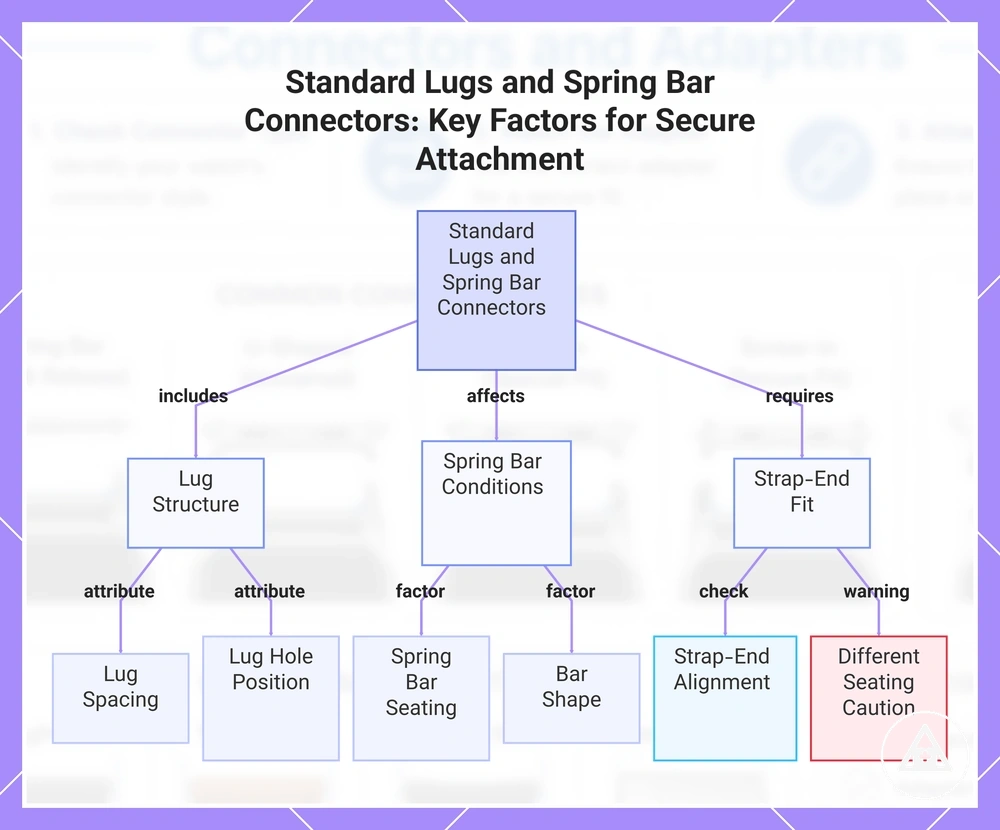
Seasonal and weather-sensitive additions
Seasonal and weather-sensitive additions depend on changing conditions because weather can change the priority of certain checklist items. Seasonal and weather-sensitive additions organize adjustment decisions by heat, rain, cold, visibility, waterproof storage, and warmth so the checklist reflects current driving conditions more effectively.
Seasonal and weather-sensitive additions organize item adjustments by driving condition rather than creating a separate checklist for every season.
- Heat: prioritize extra water when higher temperatures or longer waits may increase hydration needs during a roadside delay.
- Rain: consider waterproof storage when wet conditions could affect the condition or accessibility of emergency supplies.
- Cold: place greater emphasis on warmth items such as a blanket when colder conditions may increase waiting discomfort.
- Reduced visibility: prioritize visibility aids and lighting support when weather conditions can make a stopped vehicle harder to notice.
- Wet conditions: review waterproof storage and protection items when moisture exposure could affect emergency kit readiness.
- Changing routes and seasons: adjust warmth, visibility, and weather add-ons according to climate, route, and expected exposure as an adjustment decision rather than a fixed requirement.
For broader condition-specific planning, see seasonal checklist adjustments, which covers detailed seasonal variations without expanding this summary section into a full seasonal checklist.
Compact vehicle and limited-storage adjustments
Compact vehicle and limited-storage adjustments depend on matching item format to available vehicle space while maintaining core safety coverage. Limited storage changes kit size, storage bag selection, and item priority, but it does not remove the need for essential emergency preparedness items.
Compact vehicle and limited-storage adjustments organize space trade-offs so a compact vehicle can carry a practical checklist without creating unnecessary coverage gaps.
- Kit size: choose a kit size that fits the available storage area while preserving core safety coverage.
- Storage bag: select a storage bag shape that fits the intended compartment and supports a practical balance between space use and accessibility.
- Collapsible tools: consider collapsible tools when vehicle space is limited and a smaller item format improves storage efficiency.
- Multi-use items: prioritize multi-use items when they can reduce space demands without removing important checklist functions.
- Access location: place the kit in an access location that remains easy to reach during a roadside situation rather than focusing on storage efficiency alone.
- Space trade-off: reduce unnecessary bulk where possible, but avoid decisions that weaken core safety coverage in favor of the smallest possible kit.
If a longer trip, remote route, or extended waiting condition is expected, a compact kit may need travel supplements when limited storage creates a potential coverage gap.
What to check before choosing a complete kit
A complete car emergency kit should be judged by useful item coverage, usability, storage fit, and condition rather than item count alone. A complete kit only supports checklist needs when the supplies remain practical, accessible, and suitable for the vehicle and driving situation.
What to check before choosing a complete kit is easier when buying checks are organized by coverage and usability. The table below helps evaluate kit coverage without confusing item-count inflation with practical completeness.
| Check | What to look for | Red flag | Decision |
|---|---|---|---|
| Coverage | Item coverage matches core checklist needs. | Missing items in key emergency categories. | Consider gap-filling before relying on the kit. |
| Usability | Usable supplies that appear organized and accessible. | Items that are difficult to identify or use quickly. | Prefer practical usability over item quantity. |
| Storage fit | Storage fit supports vehicle space and access needs. | Oversized packaging that limits access location options. | Choose a kit that fits available vehicle space. |
| Replacement needs | Supplies can be reviewed and replaced when needed. | Items that may be difficult to maintain over time. | Include replacement needs in the buying check. |
| Item quality | Quality attributes support practical roadside use. | Filler items that increase count without improving coverage. | Focus on usefulness rather than item-count inflation. |
Decision signals should focus on whether a complete car emergency kit covers practical needs, remains usable, and avoids missing conditions that reduce suitability. For a more detailed evaluation framework, review features to check before buying as part of a criteria-based buying check.
A ready-made kit may still require upgrades when missing items, limited usability, storage constraints, or replacement needs create coverage gaps. The goal is not the largest emergency kit set, but a suitable combination of item coverage, quality attributes, usability, and storage fit for the intended vehicle and driving conditions.
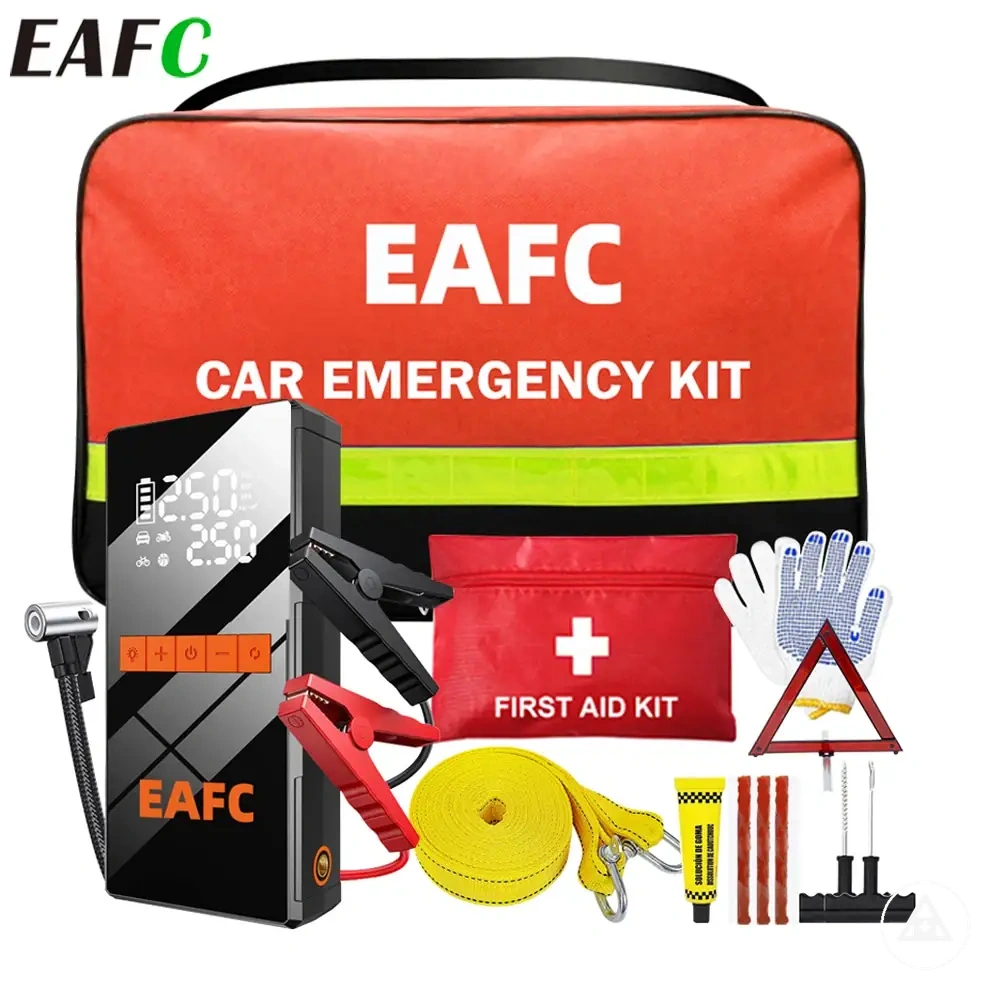
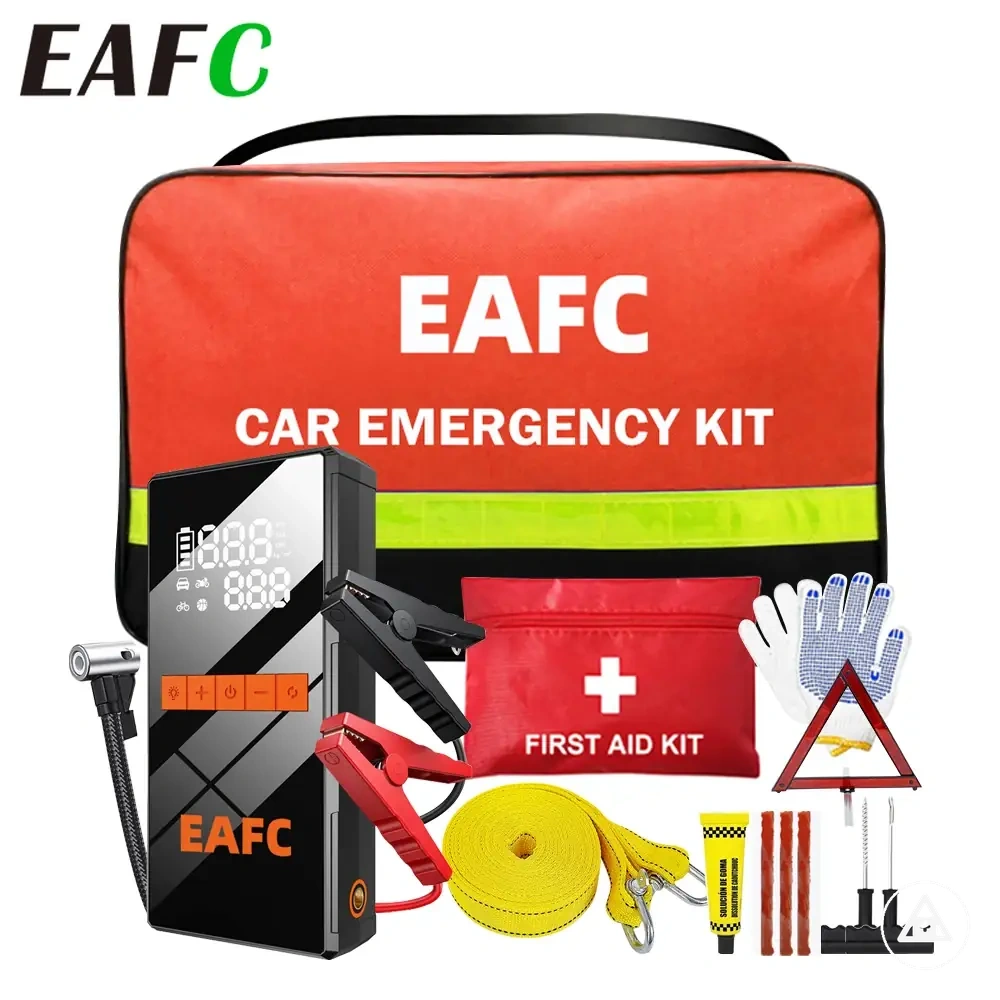
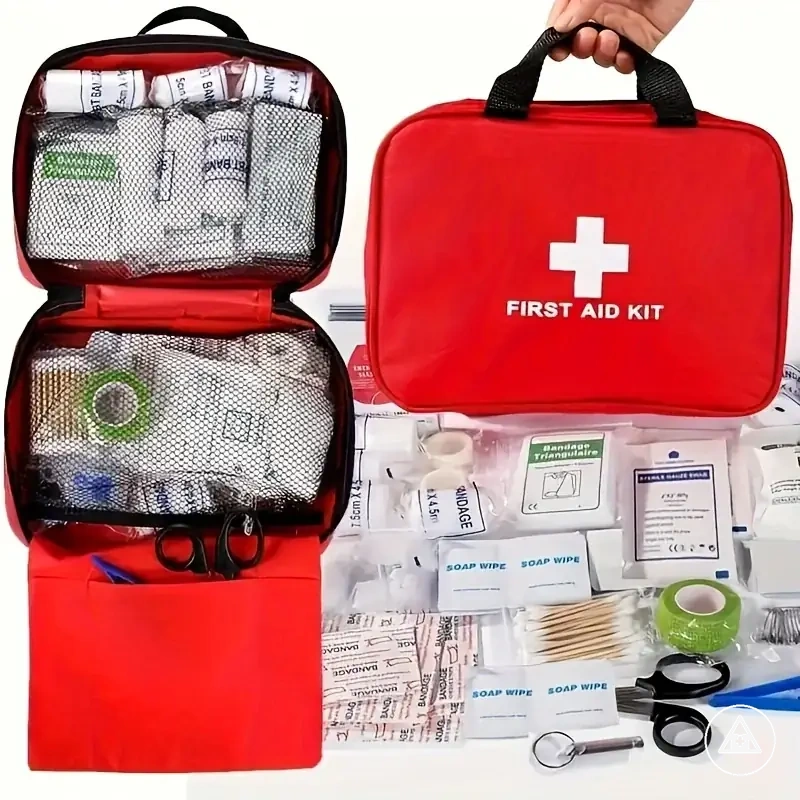
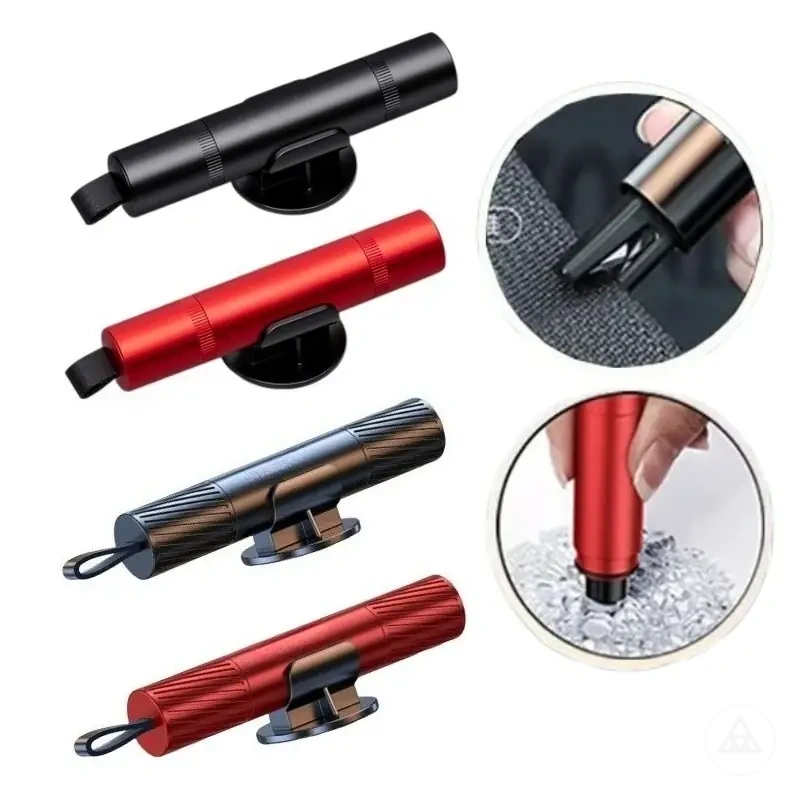
Here are product examples that may make comparison easier. Before buying, always review the compatibility criteria, essential features, and product details.
Practical item coverage
Practical item coverage depends on useful item categories and usable condition, not item count alone. A purchase decision should focus on whether included supplies match real roadside needs, avoid coverage gaps, and remain practical to use.
Practical item coverage is easier to judge when the list checks whether included items solve real roadside needs.
- Item category: confirm the kit covers practical supplies across core roadside needs rather than concentrating on one narrow item group.
- Usefulness: check whether each item has a clear roadside purpose and supports a realistic use case.
- Quality threshold: review whether supplies appear usable, accessible, and in suitable condition for the intended vehicle context.
- Redundancy: identify repeated low-value items that add count without improving useful coverage.
- Missing essentials: treat missing essentials as coverage gaps that may influence the purchase decision and require separate gap-filling.
Meaningful coverage supports checklist needs through useful, usable items, while filler items can increase item count without improving real-use coverage.
Kit size, portability, and storage fit
Kit size, portability, and storage fit depend on balancing storage compatibility, access, and coverage rather than choosing the smallest kit bag available. A portable kit should fit the intended vehicle, remain accessible from its access location, and support readiness without creating unnecessary storage limitations.
Kit size, portability, and storage fit are easier to evaluate when fit factors are organized by vehicle use and usability outcome.
| Fit factor | Check | Why it matters |
|---|---|---|
| Bag size | Confirm the kit size fits the available storage area. | Supports storage fit without reducing access. |
| Compartment layout | Review whether supplies are organized and easy to locate. | Improves readiness and usability during a roadside situation. |
| Weight | Check whether the kit can be carried comfortably when needed. | Supports portability and practical handling. |
| Handle design | Assess whether the handle design allows convenient carrying. | Can improve transport and retrieval from the vehicle. |
| Water resistance | Review whether the kit bag provides water resistance appropriate for the storage location. | May help protect supplies from moisture exposure. |
| Access location | Confirm the kit remains easy to reach in the intended vehicle condition. | Supports faster access when supplies are needed. |
A practical purchase decision balances portability with coverage, because reducing size alone does not necessarily improve readiness if important supplies become harder to store or carry.
Durable, usable, and expiry-sensitive supplies
Durable supplies, usable supplies, and expiry-sensitive items require condition checks because supplies that are present may still fail if they are expired, discharged, damaged, or incomplete. Quality-control criteria help identify condition-sensitive items that may need replacement before a kit can provide dependable roadside readiness.
Durable, usable, and expiry-sensitive supplies are easier to assess when the checklist verifies whether present items remain usable.
- Batteries: Check for discharge and overall condition. Replace batteries that no longer support readiness needs.
- First aid items: Review condition and any applicable expiry information. Replace items that appear expired, damaged, or incomplete.
- Adhesive supplies: Verify usability and attachment quality. Replace supplies that have deteriorated or no longer function as intended.
- Food and water: Check storage condition, packaging integrity, and any applicable label information. Replace items that show signs of deterioration.
- Tools: Inspect for damage, missing components, or reduced usability. Replace damaged or incomplete tools when necessary.
- Packaging: Review for moisture exposure, tears, or other damage that could affect stored supplies. Replace affected packaging or contents as needed.
An item may still be present but unusable if it is expired, discharged, damaged, or incomplete, so replacement decisions should follow product labels and manufacturer guidance when available rather than a fixed replacement schedule.
Printable car emergency kit checklist format
A printable checklist should help pack, shop, and audit a car emergency kit checklist by tracking what is present, what is missing, and what may need attention. The format works as a packing checklist, shopping checklist, and audit sheet because it connects item status, condition, and replacement actions in one place.
Printable car emergency kit checklist format organizes essential items, situational items, and review items through simple packing and audit fields. Use the checklist block below to record item name, category, present or missing status, condition, and replacement note.
| Item | Category | Present or missing | Condition | Replacement note |
|---|---|---|---|---|
| Item name | Essential, situational, or review item | Present / Missing | Good, damaged, discharged, expired, or incomplete | None or action required |
| Example: Flashlight | Essential item | Present | Batteries discharged | Replace batteries |
| Item name | Essential, situational, or review item | Present / Missing | Condition check result | Replacement note if needed |
A checked item may still require action if its condition creates an audit issue, such as damage, discharge, expiry, or missing components, even when the item remains listed as present.
Checking and refreshing the kit over time
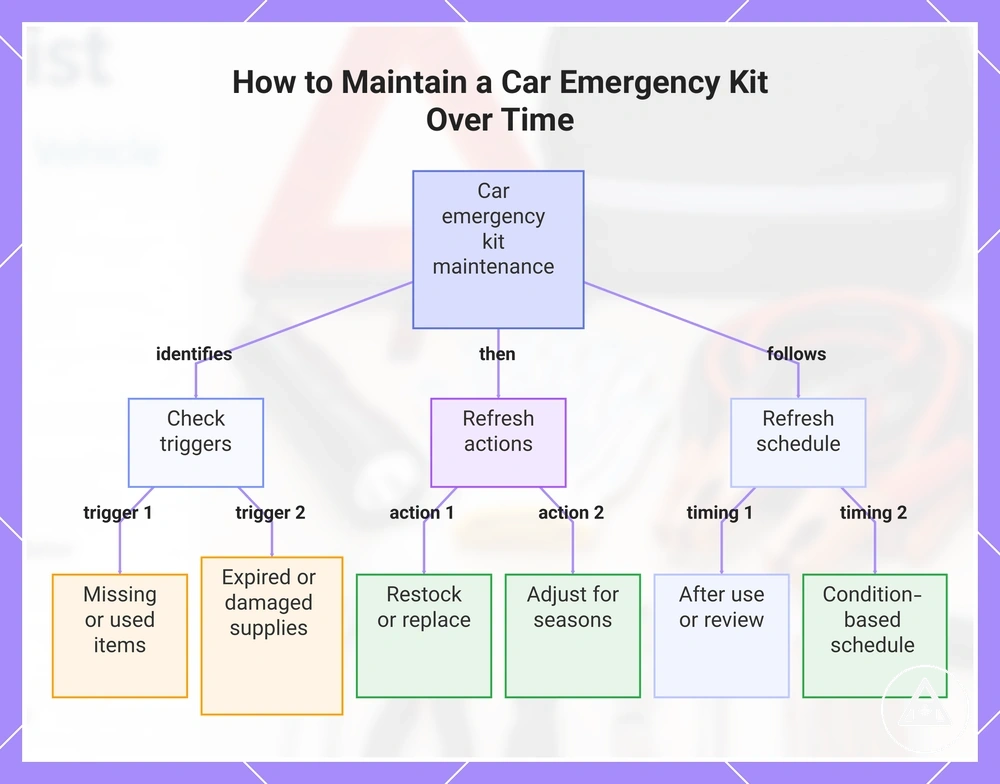
Checking and refreshing a car emergency kit should happen after use and during periodic reviews because missing items, expired supplies, discharged batteries, damaged tools, and used first aid items can reduce vehicle readiness. Ongoing checking helps identify each replacement trigger before a condition issue affects the usefulness of the kit.
Checking and refreshing the kit over time is easier when a maintenance checklist verifies ongoing readiness through condition checks and restocking decisions. For more detailed kit maintenance guidance, see how to keep the kit ready.
- Missing items: check whether any item has been removed or used, then restock missing items to restore readiness.
- Expired supplies: inspect expiry-sensitive supplies and label information, then replace items when expiry or condition creates a readiness concern.
- Discharged batteries: verify battery condition and function, then replace discharged batteries when they no longer support intended use.
- Damaged tools: inspect tools and packaging for damage or reduced usability, then replace or repair affected items when necessary.
- Used first aid items: review first aid contents after use, then restock used supplies to maintain kit completeness.
- Seasonal changes: review whether changing conditions justify adjustments to warmth, visibility, or weather-related supplies.
Refresh actions should follow condition checks, usage, expiry information, and seasonal changes rather than a fixed replacement schedule. Periodic review helps keep the checklist accurate and supports vehicle readiness over time.
Here are product examples that may make comparison easier. Before buying, always review the compatibility criteria, essential features, and product details.
This chart shows the main check triggers, refresh actions, and scheduling rules for keeping a car emergency kit ready.