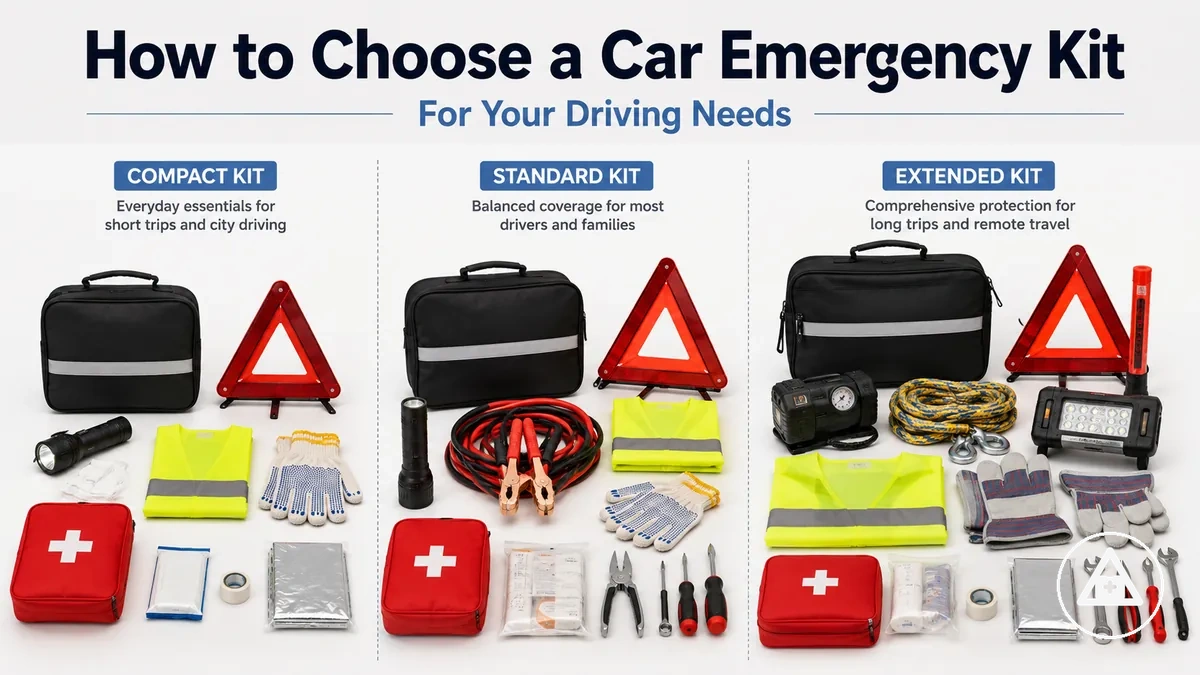
Car Emergency Kit Selection Guide for Driving Needs
A car emergency kit depends on driving needs, roadside coverage, and how well the kit coverage fits the situations the vehicle is likely to face. The selection decision should compare coverage level, portability, storage fit, and value before looking at individual product examples.
Daily driving may suit a compact kit when urban support is usually nearby and vehicle space is limited. Longer routes, lower-support areas, passengers, storage limits, and weather can increase the need for broader roadside coverage. A full roadside kit may be more suitable when the driver needs stronger support across item groups such as visibility, personal support, tools, tyre support, or power support. These conditions create the selection criteria for comparing kit type and coverage depth.
A larger item count does not automatically mean stronger value, and the largest kit is not always the better fit. A car emergency kit is useful when its usable items match the driving situation without creating overbuying risk or storage problems. Product examples are secondary here; this page focuses on choosing the kit type and coverage level through clear selection criteria.
Baseline Coverage a Car Emergency Kit Should Provide
Baseline coverage means the minimum functional coverage a car emergency kit should provide before comparing compact, full, or specialized options. It organizes roadside needs into practical coverage areas rather than a long item inventory. The main categories are visibility, first aid, basic tools, tyre support or power support, and storage.
A usable car emergency kit should cover visibility, minor first aid, basic tool support, tyre support or power support, and storage. A car emergency kit guide uses these categories as a functional minimum because missing coverage can create gaps even when a kit appears well equipped. Baseline Coverage a Car Emergency Kit Should Provide can be evaluated by organizing roadside needs into the minimum functions shown below.
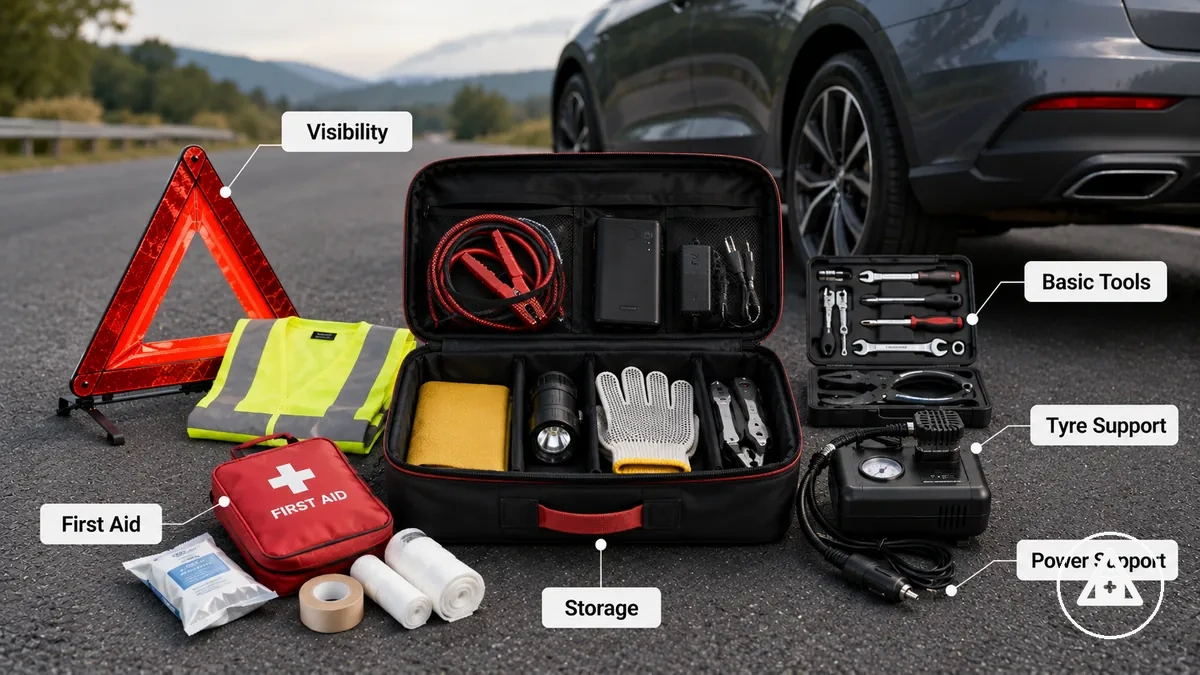
- Visibility: warning items or lighting support help improve awareness around the vehicle; missing coverage can increase roadside risk by reducing visibility.
- First aid: minor support supplies help with personal preparedness during waiting time; missing coverage can limit short-term support.
- Basic tools: basic tools may help address a minor vehicle issue when appropriate; missing coverage can reduce practical response options.
- Tyre support or power support: tyre support or power support items can assist with common vehicle-related disruptions when suitable; missing coverage can make recovery more difficult.
- Storage: a kit bag or storage solution helps maintain access and usable fit; missing coverage can make roadside supplies harder to locate or use.
Missing coverage can affect the usefulness of a car emergency kit because one weak area may limit the value of the rest of the kit. For example, a kit with basic tools but no visibility support may leave a roadside need uncovered. Checking for missing coverage is a practical way to evaluate baseline readiness before comparing larger feature sets.
This overview focuses on minimum functional coverage rather than a full inventory. For a more detailed breakdown of kit contents to compare, use the dedicated contents page after identifying any baseline coverage gaps.
Driving Situations That Change Kit Requirements
Driving situation affects kit requirements because the same emergency kit can be suitable for one driving context and less suitable for another. Distance, support access, passengers, weather exposure, and vehicle use all influence the level of coverage that may be appropriate. These factors explain why coverage requirements vary across different driving patterns.
Higher exposure or lower access to help usually increases coverage needs. Longer routes, low-support areas, night driving, or frequent vehicle use may increase the value of broader roadside support. Daily local driving with nearby assistance may place less pressure on coverage requirements, although roadside needs can still occur. Driving Situations That Change Kit Requirements can be evaluated by comparing how each context changes coverage expectations.
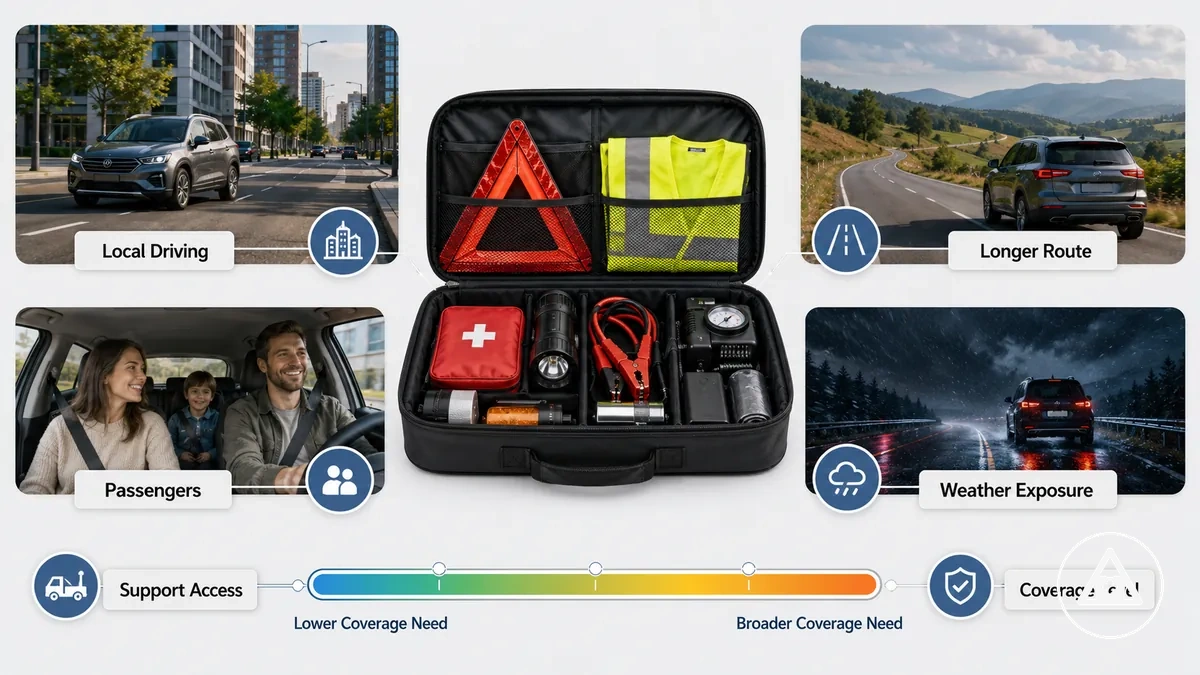
| Driving situation | Requirement change | Coverage implication | Selection caution |
|---|---|---|---|
| Daily local driving | Usually lower | Basic coverage may be adequate | Nearby roadside support may not be available immediately in every situation |
| Longer routes | Often higher | Broader coverage may be useful | Distance alone does not determine the right kit fit |
| Passenger-heavy trips | Can increase | Passenger needs may influence coverage requirements | Requirements vary by trip type and passenger profile |
| Weather exposure | Can increase | Roadside conditions and waiting time may become more important | Conditions differ by location and season |
| Work or frequent-use driving | Often higher | More consistent coverage may be preferred | Vehicle use and storage limits can affect kit fit |
The table is best used as a selection guide rather than a fixed rule set. A kit that may be adequate for short local driving with strong support access can become less suitable when distance, weather exposure, or roadside conditions change. These criteria-based differences provide context for the H3 examples that follow.
Everyday Driving and Local Errands
Everyday driving and local errands depend on maintaining baseline coverage even when trips are short and urban support is often nearby. Routine local use may involve lower exposure than longer routes, but visibility, first aid, and quick access can still matter when roadside needs arise. For this driving context, a compact kit should remain complete enough to support routine local use.
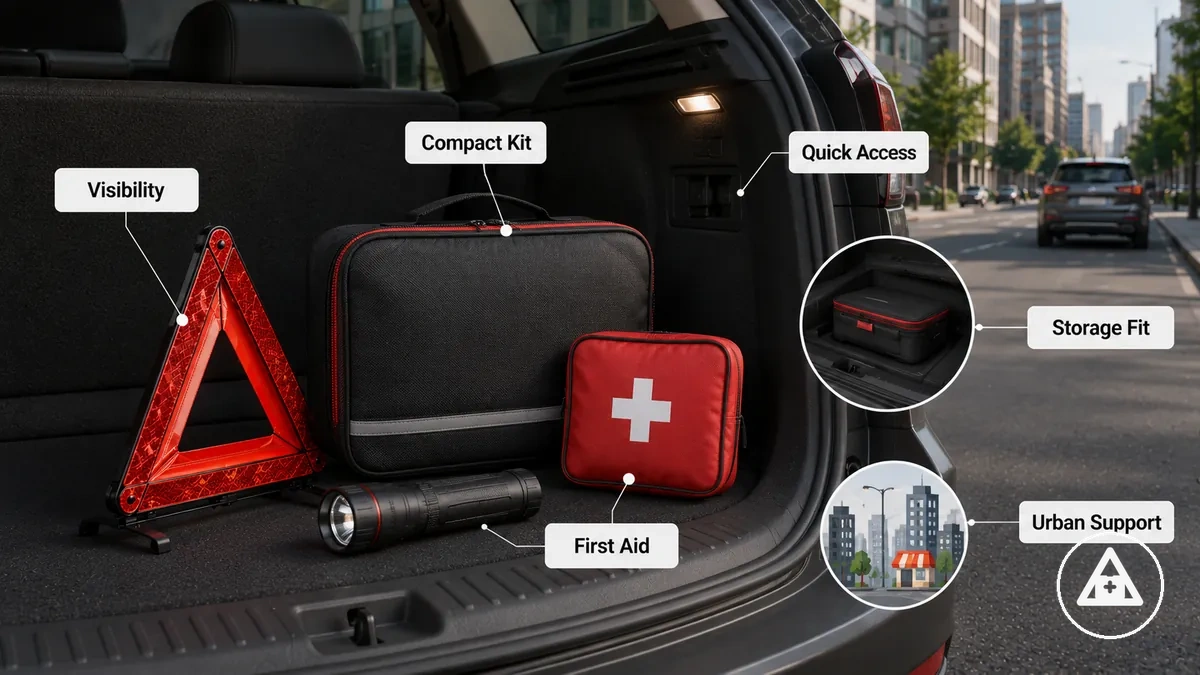
Everyday Driving and Local Errands can be checked against these local-selection criteria:
- A compact kit should fit available storage while remaining easy to access.
- Visibility support should remain included even when urban support is usually available.
- First aid supplies should remain part of the kit for local errands and daily driving.
- A small tool or torch can support basic roadside needs when appropriate.
- Storage layout should help keep important items easy to find during routine use.
Compact kit size may vary based on storage limits, commute pattern, and support access. The selection goal is a compact kit that balances quick access, storage fit, and practical coverage for local trips.
Longer Routes and Lower-Support Areas
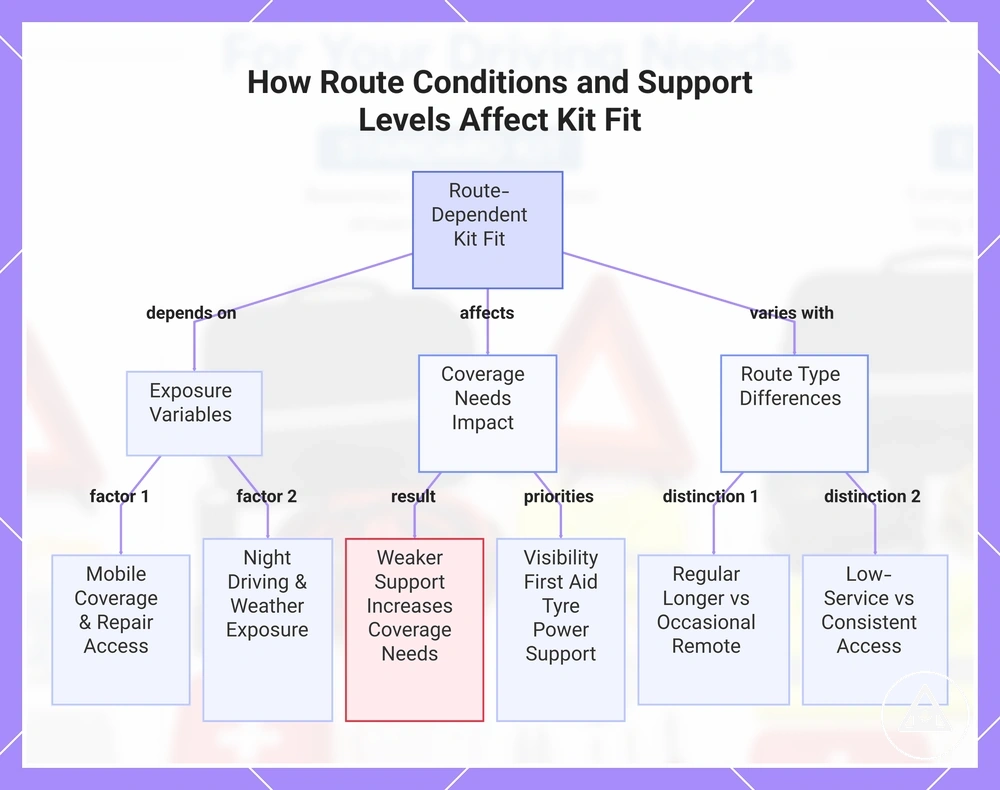
Longer routes and lower-support areas depend on how well a kit matches the driver's risk profile and route conditions. As distance increases and roadside support becomes less predictable, kit fit may depend more on mobile coverage, repair access, night driving, and weather exposure. These exposure variables can change the level of support a driver may want available during a travel route.
Weaker roadside support usually increases coverage needs because communication, assistance, or repair options may be less accessible when a problem occurs. Reduced mobile coverage, limited repair access, or extended night driving can increase the importance of visibility, first aid, tyre support, and power support. The appropriate level of coverage still depends on route type, vehicle condition, weather exposure, and individual circumstances. A suitable choice is often one that reflects the support conditions most likely to affect the route.
Regular longer routes and occasional remote trips can create different compatibility requirements even when travel distances appear similar. A low-service area with fewer support options may justify different coverage priorities than a route with more consistent access to assistance. For a broader evaluation of route-specific preparedness, see the kit for long trips page.
This chart shows the key factors, impacts, and route type differences that determine the appropriate kit fit for longer routes and lower-support areas.
Passengers, Weather, and Vehicle Use Patterns
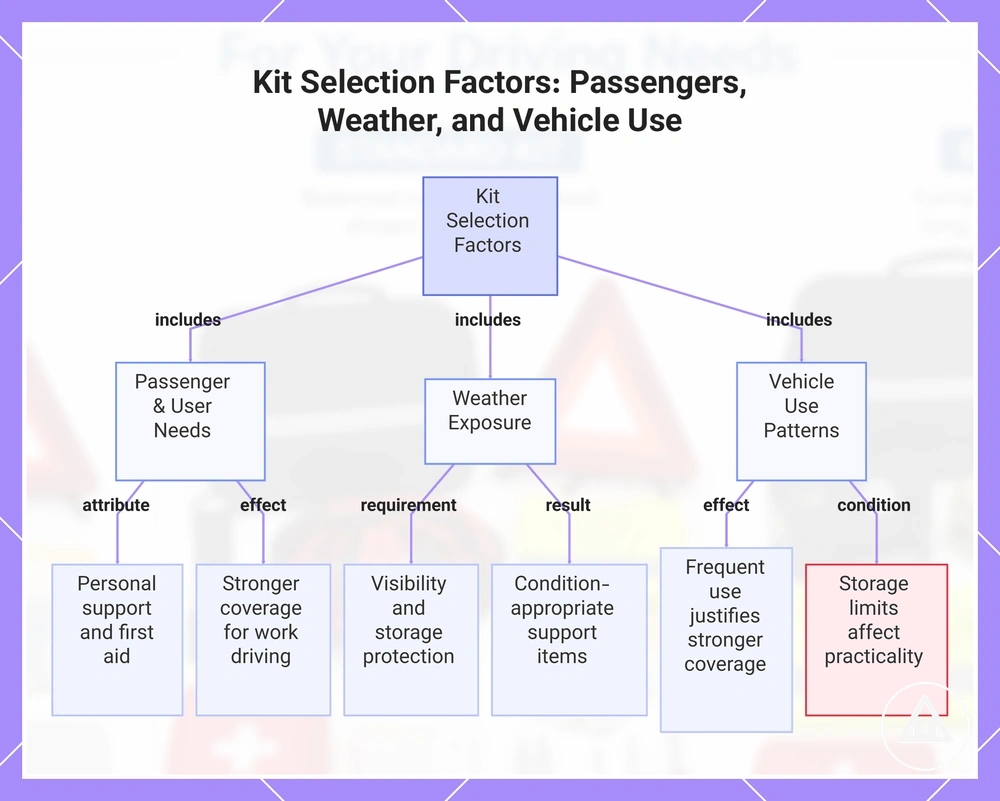
Passengers, weather exposure, and vehicle use patterns depend on who uses the vehicle and the conditions they are likely to encounter. Family passengers, pets, and work driving can change which support items matter most during a roadside delay or disruption. These user-specific factors help refine kit selection after the main driving-situation variables are considered.
Weather exposure and vehicle use affect coverage requirements because driving conditions and vehicle routine can influence what support may be useful. Family passengers or pets may increase the importance of personal support and first aid considerations during waiting time, while seasonal exposure can increase the relevance of visibility, storage protection, and condition-appropriate support items. Work driving and frequent use may justify stronger coverage when the vehicle is relied on more consistently, although storage limits can still affect what is practical to carry. The most suitable choice is usually the one that balances passenger needs, weather exposure, vehicle use, storage limits, and overall kit requirements.
This chart shows the three main factors—passenger needs, weather exposure, and vehicle use patterns—that refine roadside kit selection after considering driving conditions.
Compact, Portable, and Full Kit Trade-Offs
Compact, portable, and full roadside kits involve a trade-off between portability and coverage depth. Kit size affects storage fit, access speed, carrying burden, and the range of roadside situations the kit may help address. The right choice depends on how these factors align with driving needs and expected conditions.
A mismatch can occur when a compact kit saves space but leaves coverage gaps for the driver's situation, or when a larger kit provides more coverage depth but becomes difficult to store or access. A portable kit often sits between these extremes by balancing usability and vehicle space requirements. Compact, Portable, and Full Kit Trade-Offs are easier to compare when size, coverage, and storage implications are viewed side by side.
| Kit format | Main advantage | Main trade-off | Best-fit situation |
|---|---|---|---|
| Compact kit | Strong storage fit and quick access speed | May offer less coverage depth | Daily driving with limited storage space |
| Portable kit | Balances portability and usability | May require compromise between coverage and carrying burden | Drivers seeking moderate coverage without a larger kit |
| Full roadside kit | Greater coverage depth and broader support | Can require more storage space and create a higher carrying burden | Longer routes or situations where additional support may be preferred |
The table shows that each format fits different driving needs. A compact kit may be enough when storage fit and access speed are the main priorities, while a full roadside kit may be more suitable when coverage depth becomes more important. Portable kits often serve as a middle-ground option when vehicle space and usability must both be considered. For a deeper comparison of compact versus full kits, use the dedicated comparison page before making a selection decision.
Item Groups That Matter Most When Comparing Kits
Item groups matter more than item count when comparing car emergency kits because functional coverage shows what the kit can actually support. A high item count can look useful while still missing an important coverage group. The stronger comparison frame is safety items, first aid, tools, tyre support, power support, and storage.
Inflated item counts can hide coverage gaps when many small pieces belong to the same function. A kit may appear broad but still lack visibility support, usable tool coverage, or suitable storage. Item Groups That Matter Most When Comparing Kits are easier to evaluate when each group is tied to a roadside function and a selection effect.
| Item group | Attribute or function | Useful condition | Selection effect |
|---|---|---|---|
| Safety and visibility | Warning, lighting, and visibility support | Roadside stops, low light, or reduced driver awareness | Helps identify whether the kit supports visibility needs |
| First aid | Minor personal support and preparedness | Waiting time, passengers, or minor roadside needs | Shows whether the kit covers basic personal support |
| Tools | Basic handling or vehicle-support capability | Minor vehicle issue when safe and appropriate | Helps compare practical usefulness, not just item quantity |
| Tyre support | Tyre-related support items | Tyre pressure or tyre-related roadside concerns | Shows whether the kit addresses common vehicle disruption needs |
| Power support | Battery or power-related support | Power interruption or battery-related concern when compatible | Helps judge whether the kit adds useful vehicle support |
| Storage | Access, portability, and usable kit organization | Limited vehicle space or fast access needs | Shows whether the kit can stay reachable and organized |
Use the table to compare whether each item group solves a real condition for the driving situation. The strongest kit value usually comes from balanced functional coverage rather than repeated items inside one group. After group coverage is clear, the next selection layer is the specific features to look for within each coverage group.
Safety and Visibility Items
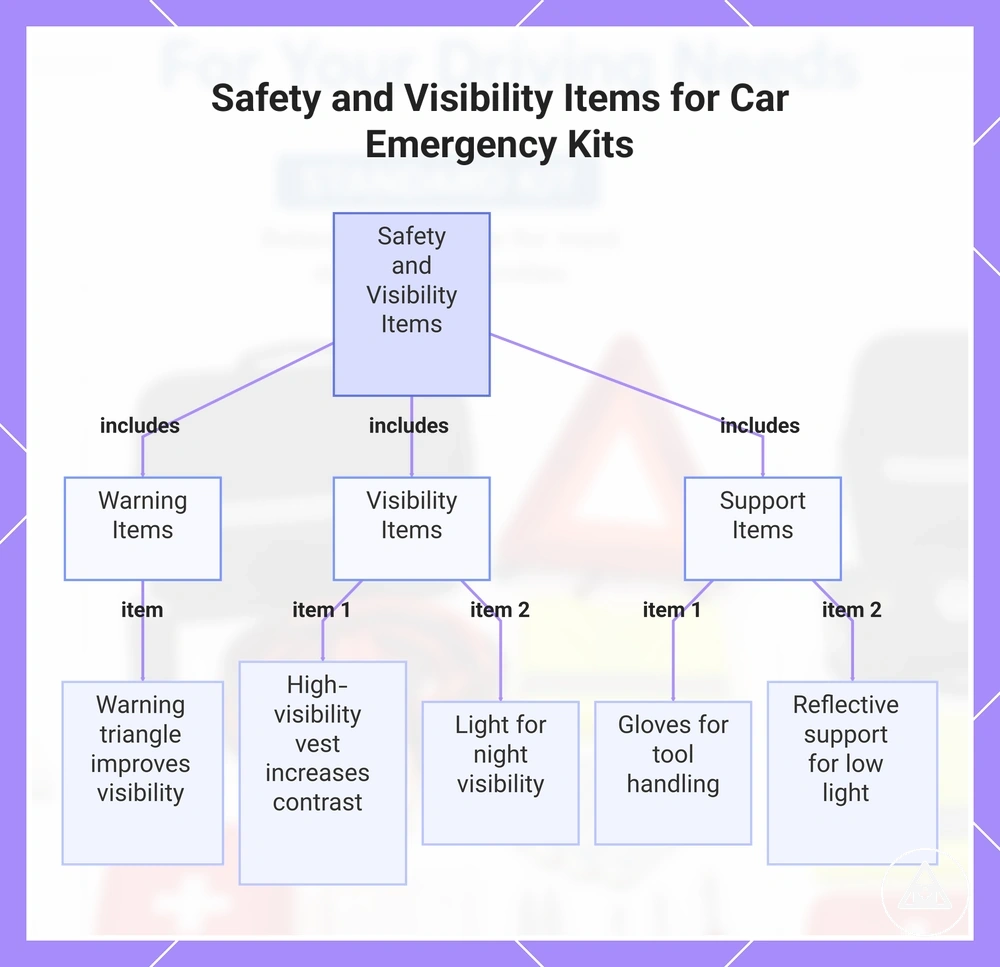
Safety items and visibility items help other road users notice the vehicle and driver sooner during a roadside issue. They support roadside risk reduction through warning, visibility, lighting, and handling functions that complement other item groups in a car emergency kit. The key item types include a warning triangle, high-visibility vest, light, gloves, and reflective support.
- A warning triangle provides a warning item that can improve roadside visibility and driver awareness when conditions allow effective use.
- A high-visibility vest supports separation between the driver and surrounding conditions by increasing visual contrast.
- A light supports visibility around the vehicle and can be especially useful during night driving or low-light conditions.
- Gloves support practical handling by helping with tools, storage access, or other roadside safety gear.
- Reflective support improves visibility recognition and can complement other visibility items in lower-light environments.
This chart shows the main safety and visibility items included in a car emergency kit and their key functions to improve roadside safety.
First Aid and Personal Support Items
First aid and personal support items improve short-term preparedness while waiting for help during a roadside delay. First aid supplies can support minor wound care needs, while personal support items can improve comfort and readiness in changing conditions. These items support immediate preparedness but do not replace emergency services.
Passenger needs, trip length, and expected waiting time can influence which support items are most useful in a kit. A blanket may support comfort during a prolonged wait, while hygiene items can help maintain personal support during a roadside delay. Wound care supplies can contribute to short-term preparedness, but the appropriate mix of support items depends on passenger needs, travel conditions, and expected waiting time.
The following checklist can help verify personal-support coverage:
- First aid supplies include basic wound care support.
- A blanket is available to support comfort during waiting time.
- Hygiene items support personal care during a roadside delay.
- Personal support items reflect likely passenger needs and trip conditions.
Tools, Tyre Support, and Power Items
Tools, tyre support, and power items add capability only when they are compatible with the vehicle and can be used safely. The practical value of jumper cables, an air compressor, a tyre inflator, a tow strap, a multi-tool, or gloves depends on vehicle condition, driver ability, and the type of roadside problem. A stronger kit fit depends on both compatibility and usability.
| Tool or device | Useful condition | Usability check | Selection caution |
|---|---|---|---|
| Jumper cables | Power-related vehicle issue | Compatibility and safe use should be confirmed | Not every battery issue can be addressed with power items |
| Air compressor or tyre inflator | Tyre-support need | Driver ability and safe use matter | Vehicle condition can affect usefulness |
| Tow strap | Vehicle-movement situation | Use depends on compatibility and risk conditions | Not suitable for every roadside situation |
| Multi-tool and gloves | Basic handling or roadside tasks | Practical use depends on the task | Presence alone does not create capability |
A common selection mistake is assuming that tool presence automatically creates usefulness. Tools, tyre-support items, and power support items provide value when they match the likely roadside problem and the driver can use them safely. Compatibility, usability, and vehicle condition often matter more than the number of devices included. For example, a tyre inflator may be useful only if the tyre condition allows inflation and the driver can use the device safely.
Storage, Portability, and Vehicle Fit
Storage, portability, and vehicle fit depend on whether a car emergency kit can be stored in the vehicle and reached when needed. A kit must fit available vehicle space and remain accessible to be useful during a roadside problem. The key compatibility factors are size, bag shape, weight, access point, weather resistance, secure placement, and overall usable fit.
Poor storage can reduce kit usefulness even when coverage is appropriate. A compact reachable kit may provide better access than a larger kit that is difficult to reach because of its bag shape, weight, or storage position. An awkward access point, weak weather resistance, or insecure placement can create an access problem that affects practical use. Storage, Portability, and Vehicle Fit can be checked with the following fit-verification criteria.
- The kit fits available vehicle space without creating a storage conflict.
- The access point allows the kit to remain reasonably reachable.
- The weight and portability suit how the kit may need to be moved.
- Secure placement helps maintain kit condition during normal vehicle use.
- Weather resistance helps protect the kit from likely storage conditions.
The right fit depends on vehicle layout, cargo use, and expected storage conditions. A larger kit may offer broader coverage but can create a usability issue if access becomes difficult, while a smaller reachable kit may provide stronger practical access. The preferred choice is usually the one that balances coverage, portability, protection, and usable fit without turning storage into the primary decision factor.
This chart shows the main verification criteria for car emergency kit storage fit, including space, access, portability, protection, and the key takeaway on balancing coverage and usability.
Pre-Made, DIY, and Hybrid Kit Choices
Pre-made, DIY, and hybrid kits differ by convenience, control, completeness, and upkeep. A pre-made kit may reduce setup effort, a DIY kit provides greater customization and control, and a hybrid kit combines ready-made coverage with targeted additions. The most suitable choice depends on the driver's priorities and preferred kit-building path.
Each kit path can leave gaps if it is not checked against the driving situation. A pre-made kit may offer convenience but still require a coverage check for completeness. A DIY kit provides customization and control but can increase maintenance burden because item selection and upkeep remain ongoing responsibilities. A hybrid kit uses gap-filling to adjust coverage, making a direct path comparison useful before making a decision.
| Kit path | Control and convenience | Completeness and upkeep | Selection fit |
|---|---|---|---|
| Pre-made kit | Higher convenience with less setup effort | Completeness may require review for possible gaps | May fit drivers who prefer a ready-made starting point |
| DIY kit | Higher customization and control | Often involves a greater maintenance burden | May fit drivers who want coverage tailored to specific needs |
| Hybrid kit | Combines convenience with targeted customization | Uses gap-filling to adjust coverage over time | May fit drivers seeking a balance between control and completeness |
No kit-building path is universally superior because driving situation, maintenance burden, and willingness to customize can vary. A hybrid kit may suit one driver better, while a pre-made kit or DIY kit may align more closely with another set of needs. For a deeper comparison of pre-made versus DIY kits, use the dedicated comparison page, while this section focuses on choosing the most suitable path.
Value, Coverage, and Overbuying Risk
Value depends on usable coverage matched to realistic need, not item count or price alone. A kit with fewer relevant items may provide stronger practical value than a larger kit filled with duplicate items or weak coverage. The value frame should compare coverage depth, item quality, storage fit, and likely upgrade need.
Undercoverage occurs when a kit looks sufficient but misses a useful item group for the driving situation. Missing safety, first aid, tyre support, power support, or storage function can create an upgrade need after purchase. This can reduce kit value because the driver may need to add items later to reach usable coverage. The first criteria check is whether the kit covers the conditions the driver is likely to face.
Overbuying risk appears when a kit includes more coverage depth than the driver is likely to use or store well. Duplicate items can inflate item count without adding meaningful coverage relevance. A larger kit may also create a storage fit problem if the extra contents make the kit harder to keep accessible. The second criteria check is whether extra items solve a realistic need or simply add bulk.
Value, Coverage, and Overbuying Risk can be compared with a short matrix that separates good value from undercoverage and unnecessary extras. The matrix helps connect usable coverage, item quality, duplicate items, storage fit, and upgrade need to a selection response. For a deeper criteria view, use the car emergency kit cost and value page after the local value signals are clear.
| Value signal | What it shows | Risk if ignored | Selection response |
|---|---|---|---|
| Good value | Usable coverage matches the driving need | Low item quality or weak storage fit may still reduce practical value | Prioritize relevant coverage groups over raw item count |
| Undercoverage | A missing item group creates an upgrade need | The kit may be too limited for the driving situation | Consider broader coverage or a hybrid kit |
| Overbuying risk | Duplicate items or unnecessary extras add bulk | The kit may become harder to store, carry, or access | Consider a smaller kit when coverage depth exceeds realistic need |
Broader coverage is rational when the driving situation increases the need for more complete roadside support. Smaller coverage may be rational when the driver needs compact storage, quick access, and baseline functional coverage. Hybrid coverage may be the better fit when a kit is mostly suitable but needs targeted additions rather than a full replacement.
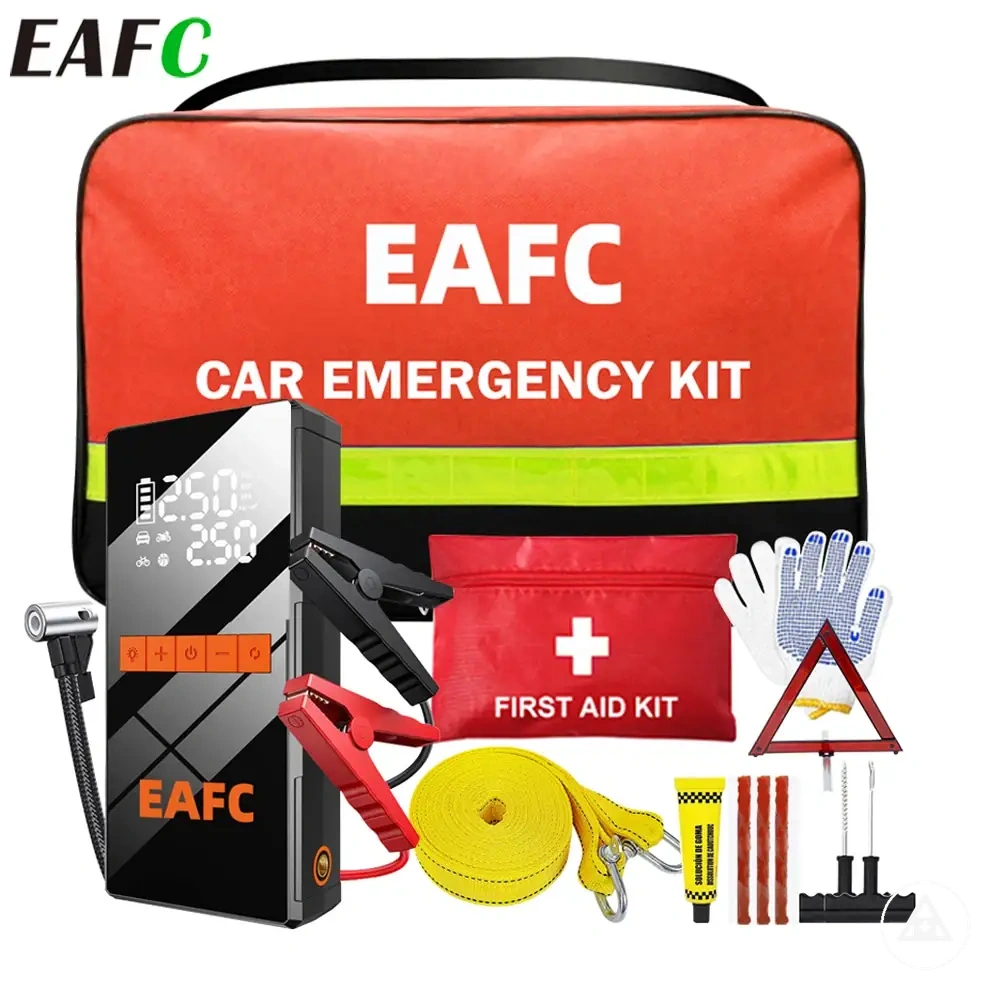
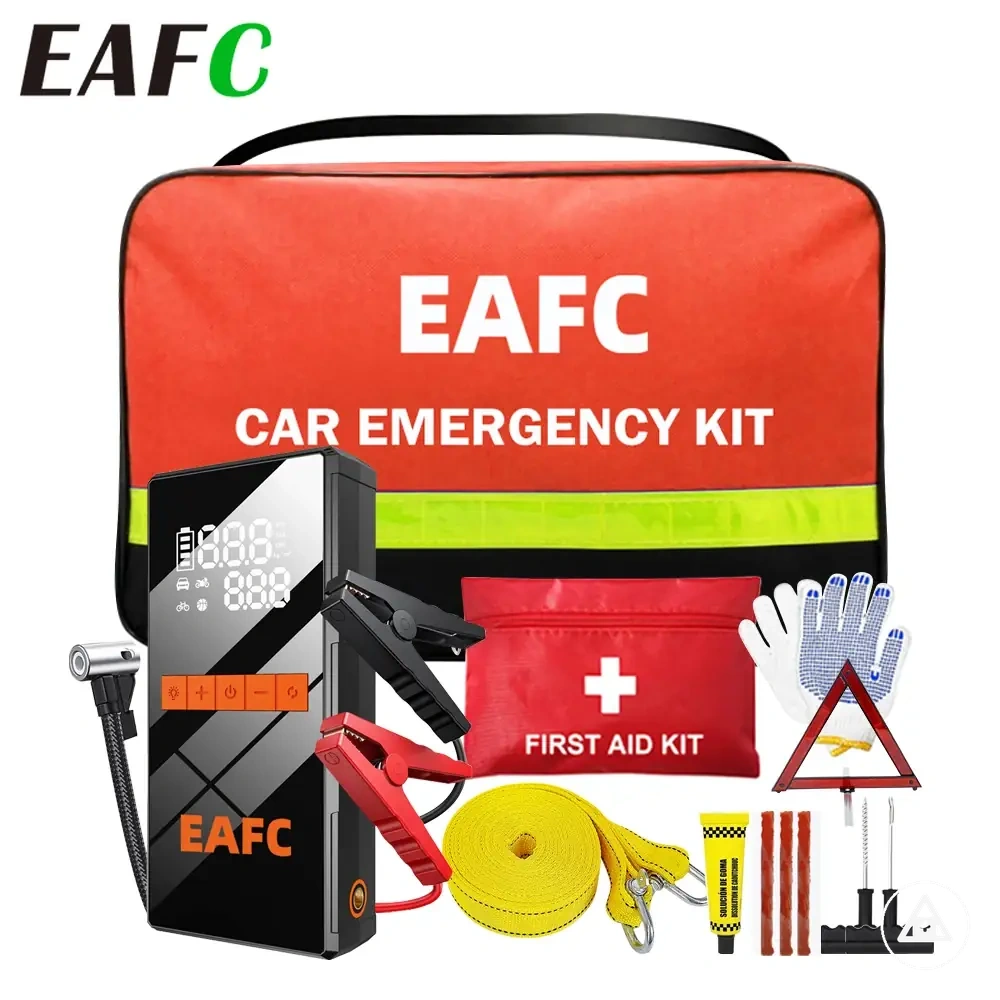
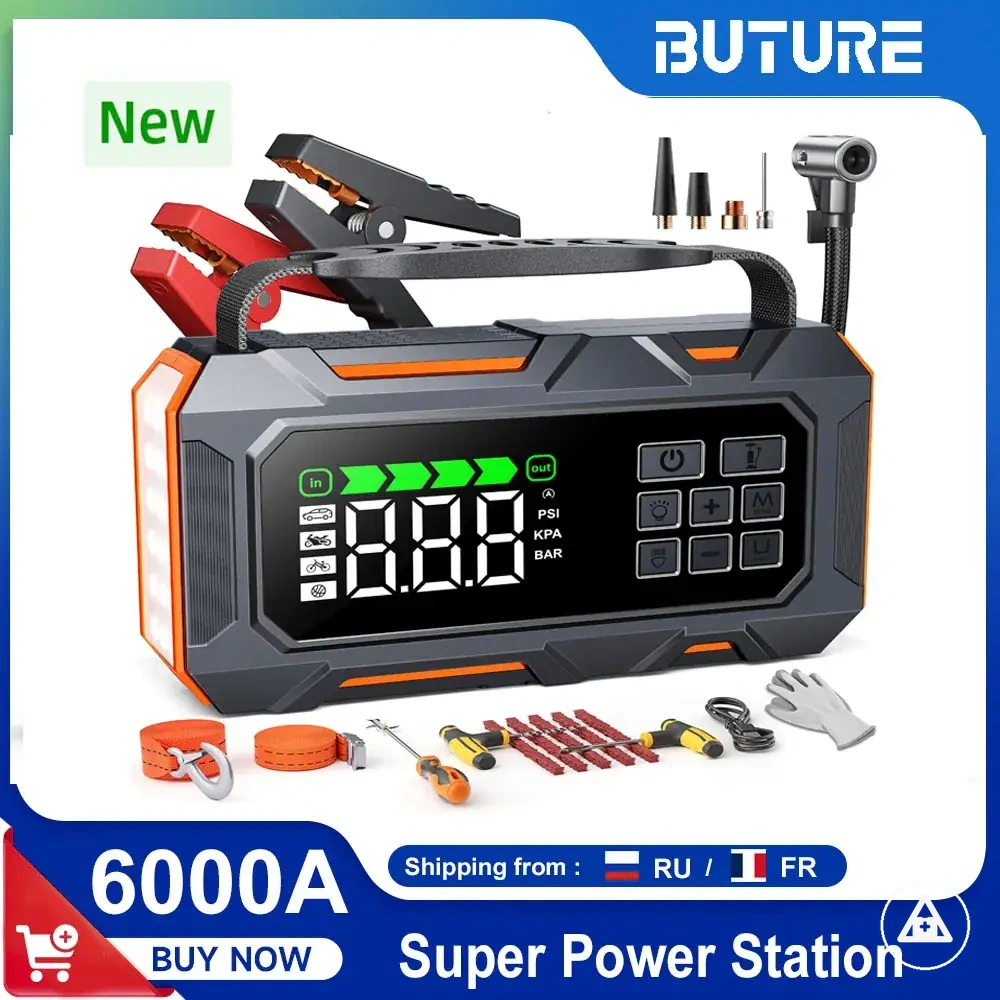
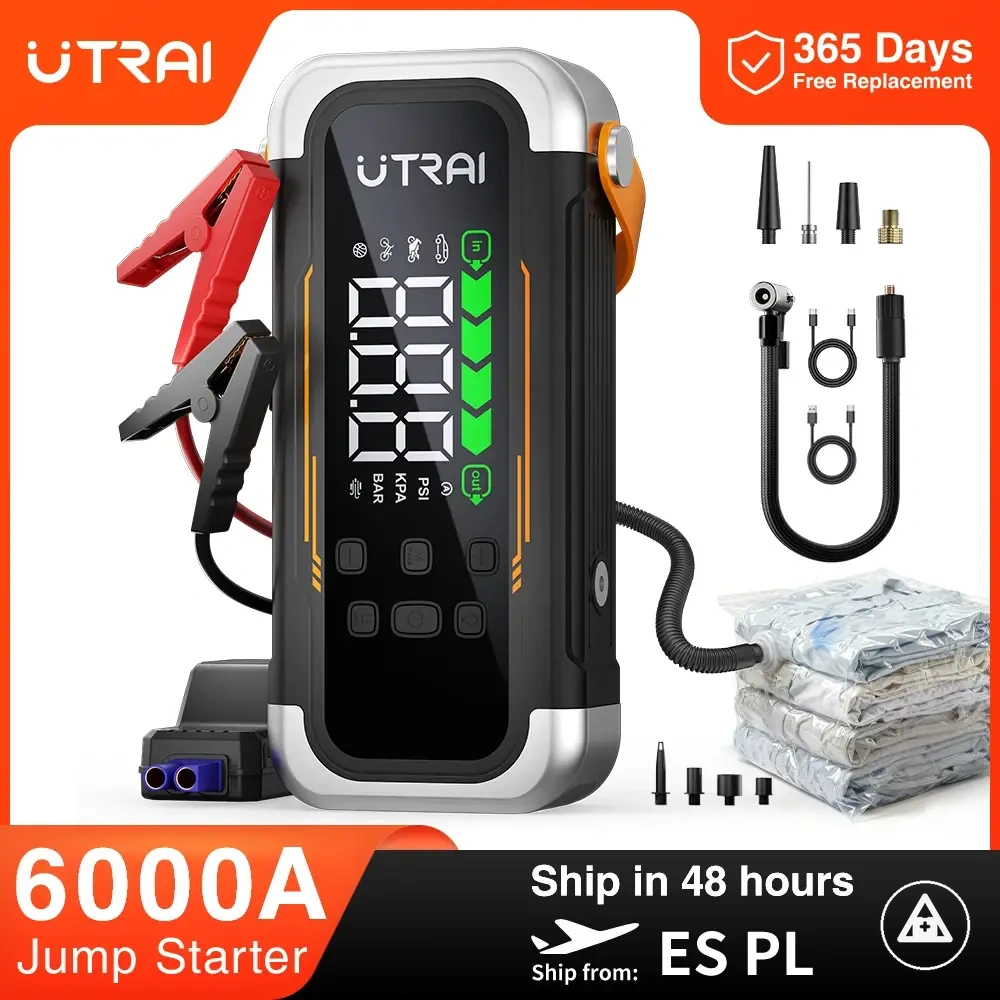
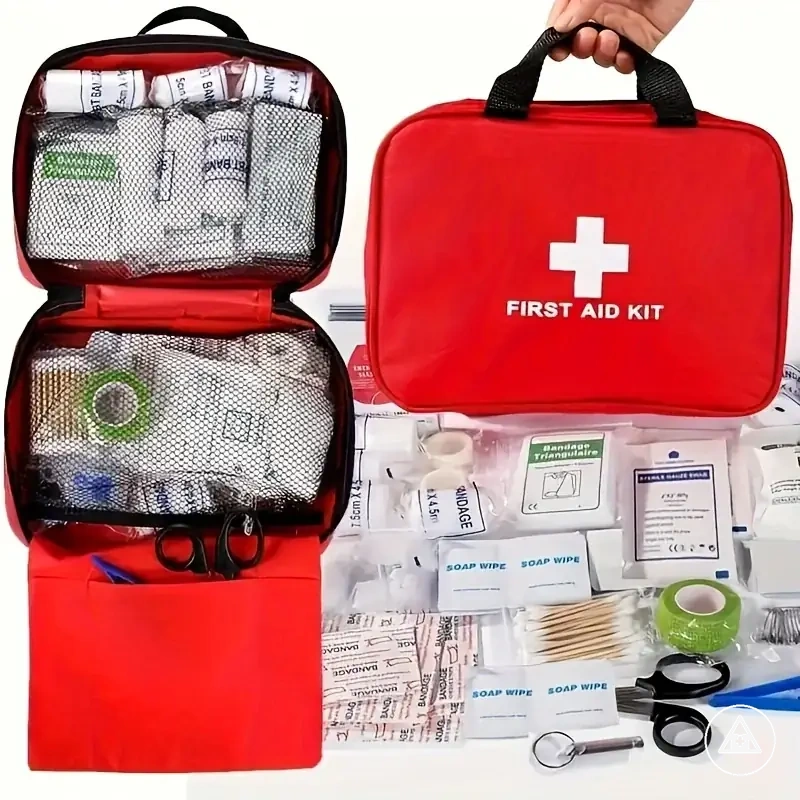
The products below are useful examples for comparing available options. Before buying, check that the compatibility criteria, key features, and product details match your needs.
Final Checks Before Choosing a Car Emergency Kit
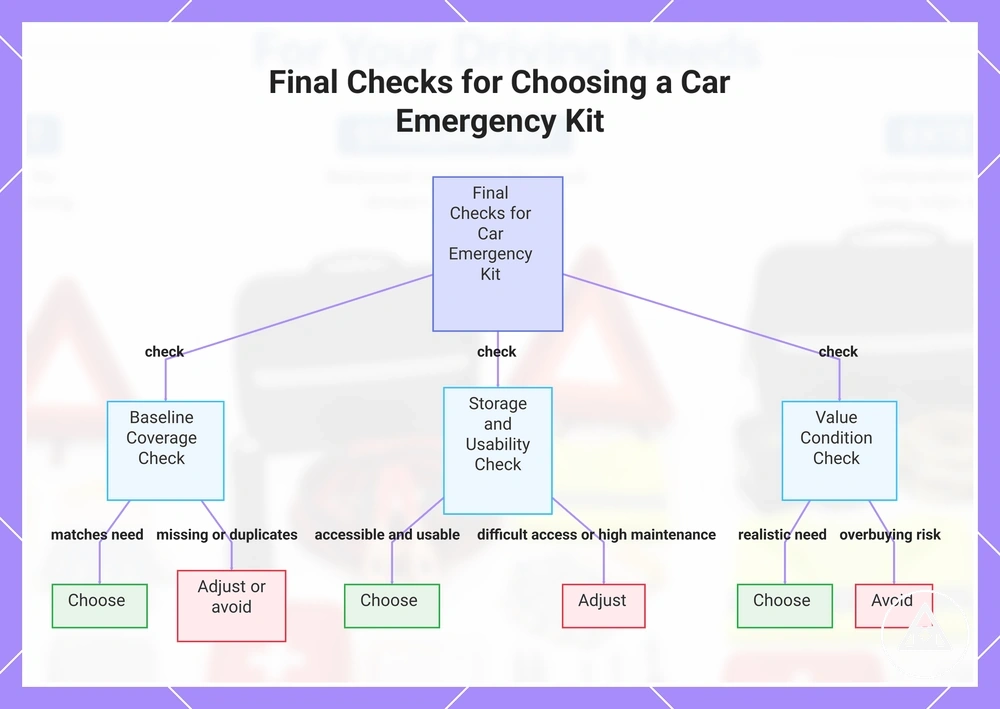
Final checks confirm fit before choosing a car emergency kit and moving toward a purchase decision. The goal is to verify coverage, fit, usability, and value condition without reopening every earlier comparison. Final Checks Before Choosing a Car Emergency Kit should work as a mini-checklist for choose, adjust, or avoid decisions.
Baseline coverage should be confirmed before comparing extras, kit path, or item count. Use the checklist before choosing to verify whether key item groups are present and relevant. Coverage is confirmed when the kit supports the likely driving need without obvious missing items.
- If baseline coverage matches the driving need, choose; if an item group is missing, adjust.
- If item groups are present but duplicate items add little use, adjust or avoid.
- If storage fit keeps the kit reachable and usable, choose; if access is difficult, adjust.
- If the kit path creates too much maintenance burden, adjust toward a simpler option.
- If the value condition reflects realistic need, choose; if extras create overbuying risk, avoid.
Storage fit, kit path, and usability should be checked together because a well-covered kit can still be weak if it is hard to reach or maintain. A pre-made, DIY, or hybrid path may be suitable when the upkeep level matches the driver’s routine. If storage, access, or maintenance burden creates friction, adjust the kit choice or avoid that option.
Value checks should compare usable coverage against realistic need. Missing coverage can create later upgrade pressure, while unnecessary extras can increase overbuying risk. The final decision prompt is whether the kit solves likely roadside needs without adding avoidable gaps, bulk, or upkeep.
Choose the kit when coverage, storage fit, kit path, usability, and value condition align with the driving need. Adjust when one part is close but incomplete, and avoid when missing coverage, unnecessary extras, or maintenance burden make the kit a weak fit.
The products below are useful examples for comparing available options. Before buying, check that the compatibility criteria, key features, and product details match your needs.
This chart shows the three key checks—coverage, storage and usability, and value condition—that guide the final decision to choose, adjust, or avoid a car emergency kit.